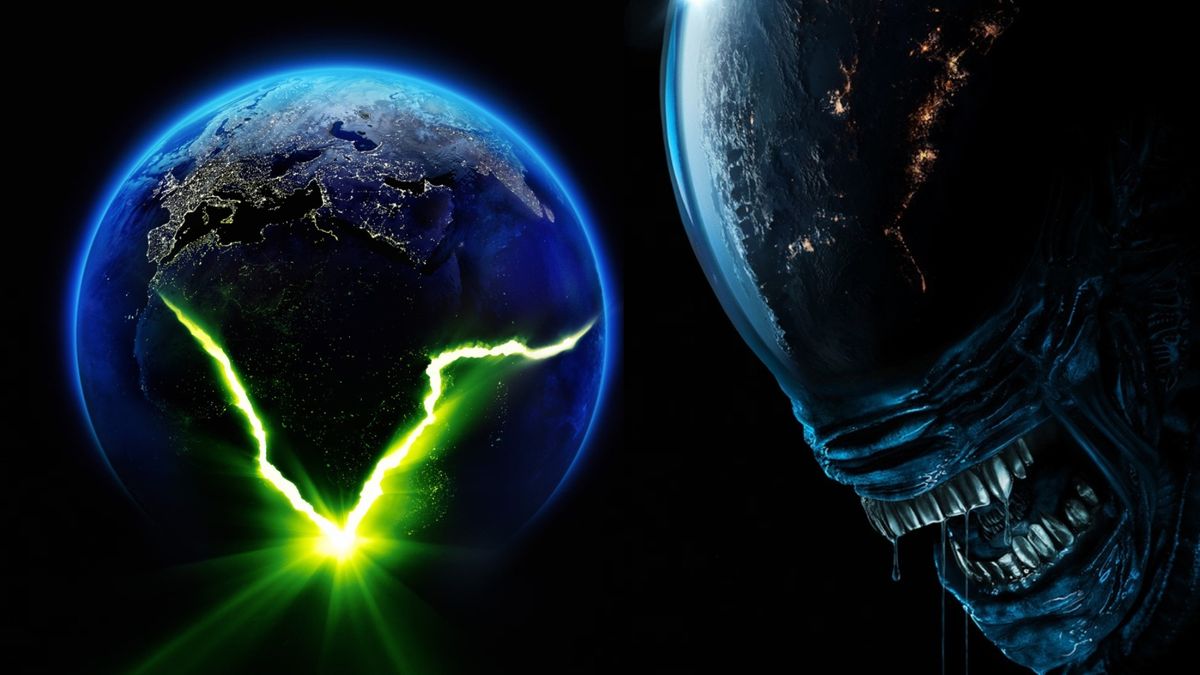
When Noah Hawley set out to create Alien: Earth, he made his priorities crystal clear: only the original 1979 Alien and its 1986 sequel Aliens mattered to him. “It’s not my instinct to care about it necessarily,” Hawley admitted on FX’s official podcast, dismissing the wider canon in favor of creating something new. Yet ironically, his FX series is quietly rehabilitating ideas from one of the franchise’s most maligned entries: 1997’s Alien: Resurrection.
The Xenomorph Whisperer Returns
The most striking parallel emerges in Alien: Earth’s sixth episode, “The Fly,” where Wendy (Sydney Chandler) communicates with a baby xenomorph in a developmental stage never before seen on screen. This immediately calls to mind Resurrection’s Ripley-8, the eighth clone of Ellen Ripley created with mixed human and xenomorph DNA, who could telepathically connect with the alien creatures.
Both characters represent a bridge between human and alien consciousness, but Hawley’s approach strips away the controversial sexual undertones that made Resurrection so divisive. While Sigourney Weaver’s Ripley-8 embodied “a mix of revulsion and sexual yearning” toward the creatures, Chandler plays Wendy’s xenomorph interactions with “childlike delight.” This shift transforms the concept from body horror into something closer to a twisted coming-of-age story.
The Earth Question That Wouldn’t Die
Perhaps the most significant connection lies in the very premise of taking the Alien franchise to Earth itself. Resurrection famously ended with a xenomorph-carrying ship crash-landing on our planet, with Ripley-8 and the android Call looking down at Earth, wondering what awaited them there. Joss Whedon had written five different versions of the film’s ending, all culminating on Earth, arguing that audiences needed to see something they’d never experienced before in the franchise.
That Earth-based sequel never materialized—Weaver herself expressed disinterest, telling MTV in 2009, “It took place on earth. Which, I have to say, just really didn’t interest me.” The poor box office and mixed reception of Resurrection killed those plans entirely.
Yet here we are, 28 years later, with Hawley answering that very question: “What if a spaceship carrying the xenomorph crashed into Earth?” Alien: Earth explores exactly the scenario Resurrection set up but never delivered, examining what our planet might look like in a corporate-dominated future where the line between human and artificial intelligence has blurred beyond recognition.
Synthetic Souls and Hybrid Hearts
The parallels extend beyond plot to character archetypes. Wendy, with her bob haircut and humanistic demeanor, bears an uncanny resemblance to Winona Ryder’s Annalee Call from Resurrection—an android who gained human consciousness and severed ties with Weyland-Yutani. Both characters grapple with questions of identity and consciousness that go beyond their artificial origins.
Where Resurrection featured the grotesque Newborn—a pale, drippy hybrid of human and xenomorph that represented the franchise’s most controversial creature design—Alien: Earth takes a more elegant approach. Instead of the “uncanny valley” horror that divided audiences, Hawley presents us with a baby xenomorph that maintains its alien nature while forming an almost maternal bond with Wendy.
Execution Over Ideas
The creative tensions that plagued Resurrection offer a perfect case study in how execution can make or break ambitious concepts. Whedon and director Jean-Pierre Jeunet clashed over the film’s tone and approach, with Whedon later stating they “did everything wrong that they could possibly do.” Jeunet, meanwhile, dismissed Whedon’s vision as “something for morons” and “Marvel films.”
This creative discord resulted in a film with fascinating ideas poorly executed—a lesson Hawley seems to have taken to heart. By serving as showrunner, writer, co-writer, and director across Alien: Earth’s first season, he maintains the singular vision that Resurrection lacked.
Sigourney Weaver’s Seal of Approval
Even Ripley herself has weighed in positively on Alien: Earth. At TIFF while promoting Dust Bunny, Weaver praised the series for transcending typical Alien conventions: “What I admire about it is it’s not Alien-centric. It is about what world we will be living in 100 years… I think the scope of it is so much bigger than an Alien project.”
Her endorsement carries particular weight given her previous reluctance to return to Earth-based storylines. Weaver’s appreciation for Hawley’s approach suggests that Alien: Earth has found the right way to explore themes that Resurrection introduced but couldn’t quite execute.
The Power of Redemption
Alien: Earth proves that there truly are no bad ideas, only bad execution. By taking Resurrection’s core concepts—human-alien consciousness bridging, Earth as the final frontier, synthetic beings achieving humanity—and approaching them with clearer vision and stronger execution, Hawley has created something that feels both fresh and familiar.
The series set in 2120 presents a world governed by five mega-corporations where cyborgs, synthetics, and the new hybrid beings coexist in an uneasy balance. When Weyland-Yutani’s ship crashes into Prodigy City, unleashing xenomorphs into this carefully constructed society, we finally get to see the Earth-based Alien story that fans have been waiting decades for.
Whether Alien: Earth can fully rehabilitate Resurrection’s reputation remains to be seen, but early signs are promising. By honoring the controversial film’s ambitions while learning from its mistakes, Hawley has created a series that feels like the natural evolution of ideas that were simply ahead of their time. Sometimes the best way to honor the past is to improve upon it—and Alien: Earth is doing exactly that.