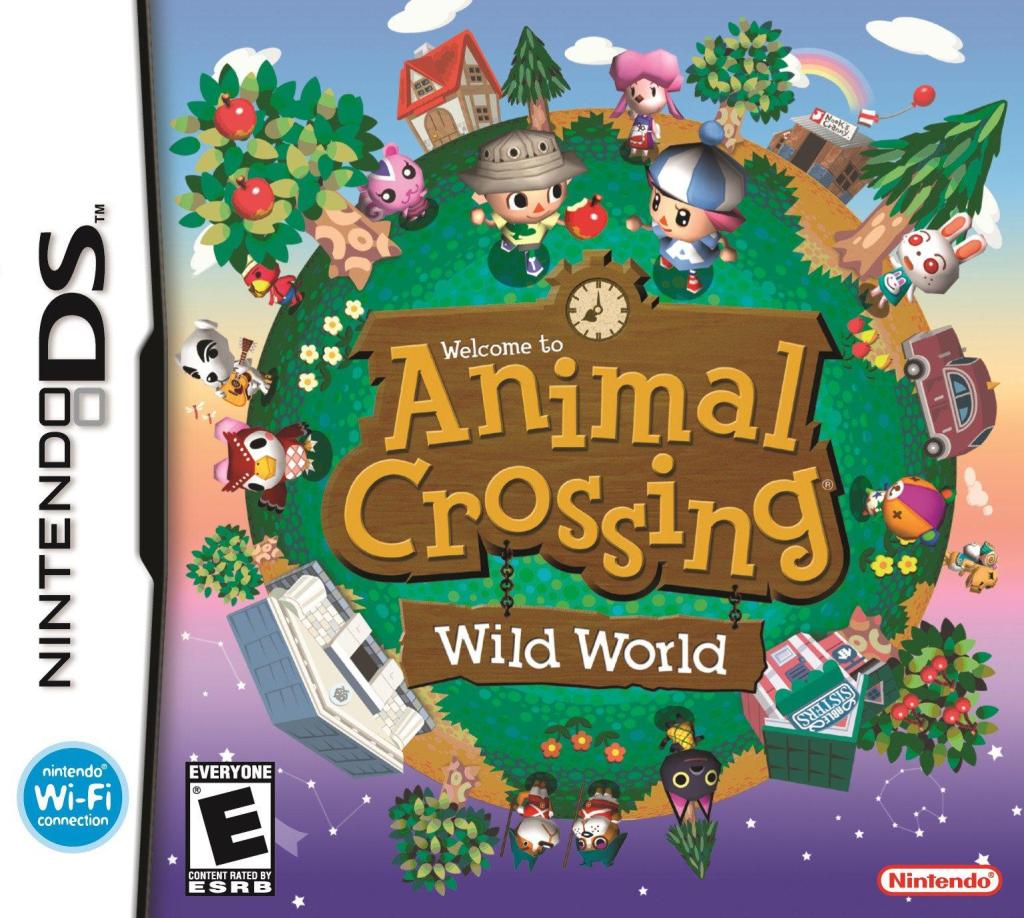
When “Animal Crossing: Wild World” launched on the Nintendo DS exactly 20 years ago, few could have predicted it would lay the groundwork for a cultural phenomenon. Yet this seemingly modest sequel introduced two crucial elements that would eventually propel the series to unprecedented heights: handheld portability and online connectivity.
From Niche to Mainstream
Today, “Animal Crossing” feels inevitable—a franchise so embedded in popular culture that it hosted celebrity appearances and political campaign events during the pandemic. But this success wasn’t instantaneous. The series started in 2001 as “Dōbutsu no Mori” (Animal Forest), a Japan-exclusive N64 release that sold around 200,000 copies. Its English localization for GameCube performed respectably with 2.5 million sales, but Tom Nook was hardly a household name.
“Animal Crossing: New Horizons” eventually became the highest-selling game of 2020 (about 32 million copies that year) and one of the best-selling games ever (nearly 50 million copies to date). But that meteoric rise took two decades—and “Wild World” was the pivotal turning point.
The Portable Revolution
Wild World’s transition to the DS proved essential to the series’ explosive growth. While “Animal Crossing: City Folk” for Wii sold 4.3 million copies despite the console’s massive install base, “Wild World” moved 11.75 million units. Its successor, “New Leaf” on 3DS, sold 13 million copies despite the 3DS having a significantly smaller install base than the Wii.
The correlation is clear: Animal Crossing thrives on handhelds.
Why? The game’s low-key, lackadaisical pace is perfectly suited to portable gaming’s stop-and-go nature. You can check on your town during a commute, play for five minutes between activities, or spend an hour fishing on your couch while someone else uses the TV. There’s no risk of costly in-game death if you’re interrupted—just pause and pick up where you left off.
Having this idealized, simulated world in your pocket also provides a readily accessible escape from daily stresses. It’s like an advanced Tamagotchi, but without the guilt when you inevitably neglect it. This portability would prove so fundamental that even the Switch’s hybrid nature—blurring lines between handheld and home console—couldn’t diminish Animal Crossing’s appeal.
Connecting Villages, Building Community
Beyond portability, Wild World introduced online multiplayer features that fundamentally changed what Animal Crossing could be. While rudimentary by modern standards, players could add friends via code and visit each other’s villages over the internet or local Wi-Fi. Up to four players could fish together, trade items, or playfully torment villagers with bug nets in unison.
The Tag Mode was particularly crucial for fostering interconnectivity. With it enabled, you could receive messages from other players and even get traveling villagers from their towns. Combined with direct multiplayer, it created a sense of a wider world that changed in response to more than just your actions. There were new reasons to beautify your village and check in regularly to see what had happened.
This social element became increasingly important as the series evolved, eventually culminating in New Horizons’ unprecedented role as a virtual gathering space during pandemic lockdowns.
The Trade-offs
Wild World wasn’t purely additive. For every new feature—the town hall, Roost café, observatory for drawing constellations, watering can, slingshot—there were removals.
Localized holidays like Christmas were replaced with fictional festivals to ease localization. While events like Yay Day and the Acorn Festival (with its unsettling mascot Cornimer, who looks like he escaped from “Halloween III: Season of the Witch”) have their own charm, some players missed celebrating familiar holidays.
The library of playable NES games from the GameCube version vanished, presumably so Nintendo could sell them elsewhere. Around 170 villagers were cut, reducing the roster from 284 to 150. These weren’t insignificant losses.
The Legacy Problem
Returning to Wild World in 2025 is admittedly awkward. Nintendo shut down the game’s online features years ago, gutting the interconnectivity that was core to its appeal. Compared to later entries, it feels like a rougher first draft—”New Leaf” is richer and more aesthetically realized, while “New Horizons” pivots toward village customization and speculative turnip trading (perhaps too much of both).
The original Animal Crossing retains its own charms through relative simplicity and historical significance. Plus, it lets you play Excitebike, which is pretty rad.
The Blueprint for Success
Despite its dated feel, Wild World established a template that every subsequent Animal Crossing game would follow. Its combination of portability and connectivity created a formula that would eventually produce New Horizons’ cultural dominance.
The game didn’t just influence its own franchise—it helped popularize life-simulation games more broadly. While Animal Crossing can’t claim sole credit for the genre’s explosion (Harvest Moon and others deserve recognition), it’s undeniable that this series, and this second installment in particular, played a significant role in bringing cozy gaming to the mainstream.
Wild World proved that a game about paying off home loans to a tanuki, chatting with anthropomorphic animals, and catching bugs could be not just successful, but transformative. It demonstrated that players wanted games they could carry with them and share with friends—even if those friends lived on the other side of the world.
Nintendo may have unceremoniously killed Wild World’s online features, taking the game “behind the barn” in the cruelest sense. But that doesn’t diminish how its emphasis on connection—both physical and social—changed Animal Crossing forever.
Two decades later, as millions of players continue their island lives in New Horizons, it’s worth remembering that the blueprint for that success was sketched on the Nintendo DS screen, one adorable animal neighbor at a time.