Three years ago, I sat down to watch Avatar: The Way of Water with one burning question: Could James Cameron deliver a sequel to his 2009 blockbuster that’s worth a thirteen-year wait? Three hours and twelve minutes later, it was abundantly clear that yup, the master filmmaker still had it.
Earlier this month, when I sat down to watch Avatar: Fire and Ash, I had considerably more questions. A couple were about loose ends from the previous film, but my more pressing queries were about the film itself. Would a new Avatar film after just three years pack as much of a punch as one that benefited from over a decade of anticipation? Also, Cameron’s made some of the best sequels of all time, but what does a James Cameron threequel look like? Well, three hours and seventeen minutes later, I didn’t have quite as definitive an answer to either of those questions… but I did have one huge smile on my face.
The Sully Family’s Journey Continues
Avatar: Fire and Ash picks up immediately after the events of The Way of Water. Jake (Sam Worthington), Neytiri (Zoe Saldaña), and the rest of the Sully family are mourning the devastating loss of their eldest son, Neteyam (played by Jamie Flatters in The Way of Water). They’ve finally been accepted into the Metkayina clan, but aside from the looming threat of retaliation from the RDA, there are several factors preventing them from properly settling down. For one, Jake’s preferred form of grieving involves preparing for war with the humans—an interest the peace-loving Metkayina clan doesn’t share. Two, they have a kid who literally can’t breathe. Their adopted son, Spider (Jack Champion), still needs a rebreather to survive in Pandora’s atmosphere, and they only have one backup battery—which, to put it lightly, is dangerously risky.
So Jake makes the unpopular call that Spider should go live with other humans, and to soften the blow, proposes that they make a family vacation out of it by hitching a ride with the nomadic airborne Tlalim clan, aka the Wind Traders. It’s a decision that sets the entire film in motion and provides our entry point into some of Pandora’s most breathtaking new locations.
A Visual Evolution That Never Stops Dazzling
Aside from all the grieving, Fire and Ash looks and feels very similar to The Way of Water in the early portions of the film. While that’s by no means a bad thing, it’s initially lacking in the spectacle, novelty, or for lack of a better word, “newness” I was hoping for from another Avatar adventure. However, that quickly changes with the arrival of the Wind Traders, and wow, what an arrival it is. The Avatar movies have always been a visual feast, but an armada of vessels suspended from enormous flying jellyfish-like Medusoids pulled by cephalopodian Windrays literally and figuratively blows the more familiar imagery out of the water, especially in 3D on a huge screen. For fans who’ve been craving new corners of Pandora to explore, this delivers in spectacular fashion.
Cameron has always had an undeniable flair for large-scale spectacle, but I was equally impressed with the quieter shots of the Wind Traders hawking their wares. In terms of narrative or action, nothing particularly exciting takes place in these sequences, but they’re so densely packed with detail, activity, and cultural richness that I found myself sitting forward in my seat, absorbing every frame. If you’re not as impressed by baskets and gourds at a Na’vi swap meet as I am, don’t worry—the Fire Nation shows up soon enough, and they bring the heat.
My one hangup about Fire and Ash is that it gave me a sense of déjà vu, but looking at Cameron’s past work, this is a feature and not a bug.
Villains That Command the Screen
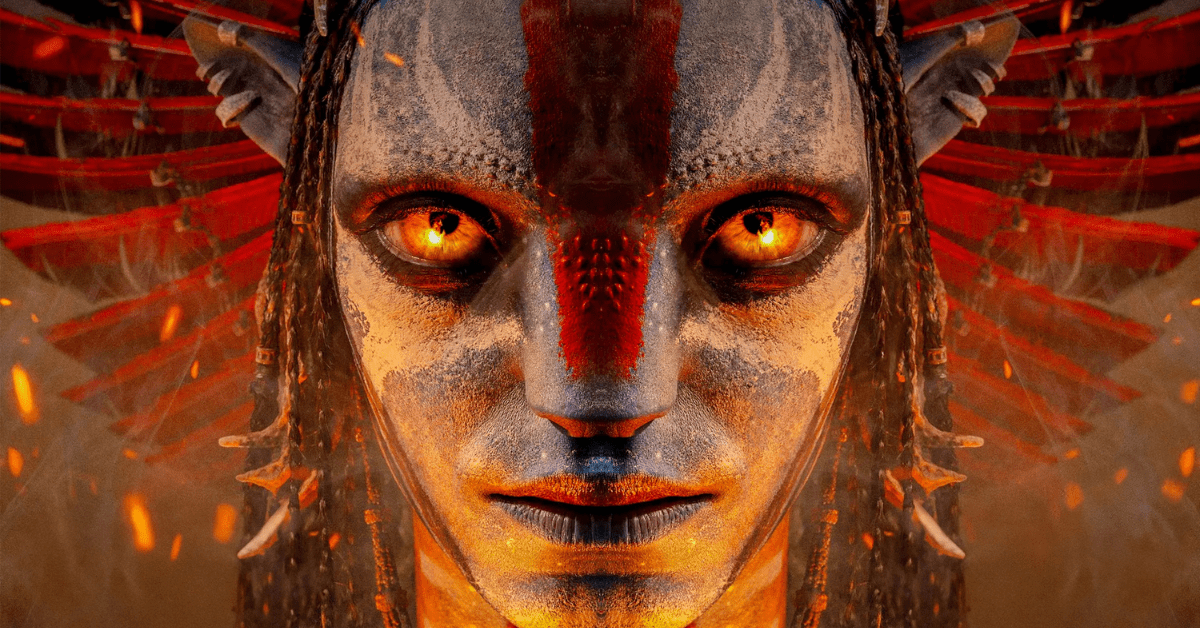
They are the Mangkwan clan—a ruthless and quite literally godless group of Na’vi led by Varang (Oona Chaplin), who is absolutely one of the highlights of the film. Chaplin’s performance is properly terrifying, and her whole crew looks and acts more like denizens of Mordor than Pandora. Varang has no qualms about breaking Eywa’s laws and is extremely eager to get her hands on human weapons. And you know who has access to plenty of those, plus a similar penchant for torching Na’vi villages? Miles Quaritch (Stephen Lang). Naturally, they hit it off like gasoline meeting an open flame.
When Quaritch showed up in the first film, I didn’t think he was anything particularly special. Lang gave a decent enough performance as an extremely hateable badass, but when it was announced that he was attached for all four sequels, it didn’t move the needle for me. His performance in Fire and Ash, however, has elevated him to one of my favorite villains in recent memory, especially in his scenes with Chaplin. The two of them don’t merely chew scenery—they devour it like a five-course meal, and watching them collaborate in increasingly twisted ways is genuinely thrilling. For fans who’ve been waiting to see what makes Quaritch such a compelling antagonist across multiple films, this is the payoff you’ve been waiting for.
Characters Who Grow With the Franchise
Another character who unexpectedly grew on me was Spider, which is fortunate because he’s basically the linchpin of the whole film. In The Way of Water, he’s introduced as the somewhat annoying neighborhood kid who’s always hanging around, somewhere between The Simpsons’ Milhouse Van Houten and Eli Cash in The Royal Tenenbaums. In Fire and Ash, Spider is fully integrated into the family, and I found Champion’s performance to be genuinely endearing, resembling the combination of earnestness and obnoxiousness that Cameron brought out of Edward Furlong’s John Connor in Terminator 2: Judgment Day. His arc provides real emotional weight to the proceedings.
Speaking of which, Cameron has given us some of the most badass mothers in movie history, and Fire and Ash adds another incredible showcase to that legacy. Neytiri definitely kicks serious ass in The Way of Water, but it pales in comparison to one particularly explosive sequence in this film that puts her right up there with Ellen Ripley in a Power Loader or Sarah Connor racking a shotgun one-handed. Zoe Saldaña has always been a highlight of these films, but she’s in absolutely top form here, delivering both raw emotional vulnerability and fierce warrior energy. Fans of Neytiri will leave the theater absolutely satisfied.
Cameron’s Signature Symphony
My one reservation about Fire and Ash, if you can even call it that, is that it gave me a sense of déjà vu. Some of the visuals and story beats tread very close to those in the previous films, to the point that it occasionally felt like deleted scenes or alternate takes intercut with new material. But looking at Cameron’s past work, it’s safe to assume this is a feature and not a bug. George Lucas once described the Star Wars prequel trilogy’s relationship to the original by saying, “it’s like poetry, they rhyme.” I would argue that Cameron’s sequels have a tendency to amplify and echo; rather than taking a familiar concept, theme, or visual and presenting it as a flipped mirror image, his sequels take something we know and present a grander, more operatic version. “Once more, with feeling,” as the saying goes. Fire and Ash is the first “Part 3” he’s ever done, so I wasn’t sure how it would shake out. Does it get louder? Does it rhyme? Does it do something completely different?
The answer is: beautifully, all of the above.
Watching The Terminator and Terminator 2 back to back, they both open on tandem time travelers, escalate into shootouts and vehicle chases, then culminate in factory showdowns. Alien and Aliens both feature a crew investigating a distress signal on LV-426, taking casualties, and misreading a motion tracker with terrifying results before featuring a tense final sequence in which a flamethrower-toting Ripley rescues a loved one before blowing a xenomorph stowaway out of an airlock. In both cases, these similarities are obscured by superior effects, incredible action sequences, great characters, and delightful twists.
The Way of Water didn’t subvert Avatar as much as it submerged it. Jake’s training sequence and rite of passage to join the Omatikaya clan in the first film happened all over again, this time underwater with the Metkayina. But The Way of Water has its share of clever inversions too. In the first film, Jake earned the Omatikaya’s respect by bonding with the vicious killer pterodactyl everyone fears and respects; in the second, Jake’s son is shunned when he bonds with a massive creature that they all fear and hate because of complicated politics. In both cases, the big cool animal shows up in the final battle and saves the day.
Running With Established Momentum
A lot of The Way of Water was spent establishing new characters, relationships, stakes, and rules, but in Fire and Ash, the groundwork has been beautifully laid, so everything hits the ground running from the opening scene. Cameron does plenty of his trademark super-sizing of existing ideas, but the new film also “rhymes” in fascinating ways. For instance, Quaritch’s relationship with Varang is like a twisted, darkly compelling reimagining of how Jake and Neytiri started out, and as much of a thrill as it is to see all the visual spectacle and action sequences, it’s equally cool seeing the Quaritch/Varang dynamic juxtaposed with Jake and Neytiri, who are long past the honeymoon phase and dealing with very real family struggles.
When watching Fire and Ash, it was hard not to compare it to third installments in other notable sci-fi and fantasy movie franchises, and it kept reminding me of a couple all-timers. As a direct continuation of The Way of Water, it’s reminiscent of The Return of the King‘s escalation in the wake of The Two Towers. That’s not to say Fire and Ash has multiple false endings, but rather that it’s got some truly epic battle scenes and enough plot threads going on at once to keep it from dragging, but not so many that it’s difficult to track who’s doing what.
Cameron also has some wonderful new toys to play with courtesy of the army of artists at WETA, and he gets plenty of impressive mileage out of those. But for several key scenes, he also drags out a couple huge Tupperware bins full of action figures, vehicles, and playsets made for the first two films and dumps their contents into the mix. In that sense, Fire and Ash‘s massive final battle reminded me of how Return of the Jedi‘s Battle of Endor is like a souped-up spin on A New Hope‘s grand finale. Yes, it has some familiar elements, but the sheer volume of other incredible stuff flying around the screen makes that feel like a ridiculous thing to get hung up on.
A Full Spectrum Visual Experience
With the exception of bright orange explosions and the occasional vat of yellow molten steel, Cameron’s earlier films make such heavy use of the color blue that it’s almost a running joke. Fire and Ash, despite its two-tone namesake, refreshingly makes use of the full visible spectrum to absolutely spectacular effect. There are a few genuinely psychedelic scenes that push the boundaries of what we’ve seen before in this franchise, but ironically, seeing 3D CGI renditions of the effects of hallucinogens is somehow less hallucinogenic than the rest of the film’s already dreamlike imagery.
It’s hard not to compare Fire and Ash to third installments in other notable sci-fi and fantasy movie franchises, and it holds its own beautifully.
Enough has been said about how much Avatar films need to be seen in theaters, but if you’ll allow me to beat a dead direhorse for a moment, it’s absolutely true—especially in 3D. As was the case with The Way of Water, some scenes are presented in a higher frame rate than others, and the transition can be occasionally jarring, but that’s the most minor of nitpicks considering how genuinely awesome everything else looks. This is cinema that demands the biggest screen possible, and fans who make the effort to see it properly will be rewarded with one of the most visually stunning experiences available.
The Verdict
Avatar: Fire and Ash isn’t the technical quantum leap forward that its predecessor was, which is entirely expected after three years instead of thirteen. But what it lacks in revolutionary novelty, it more than makes up for with refinement on every conceivable level. The planet Pandora feels slightly less alien but infinitely more lived-in, its denizens become substantially more familiar and developed, and James Cameron has given them—and his first trilogy—an immensely gratifying finale that’s absolutely worth the wait.
For fans who’ve been on this journey since 2009, Fire and Ash delivers everything you could hope for: spectacular action, genuine emotional stakes, villains you love to hate, heroes you root for with your whole heart, and a world that continues to expand in ways that feel both surprising and inevitable. Cameron has proven once again that nobody does large-scale science fiction spectacle quite like he does, and this third chapter in the Avatar saga stands proudly alongside his greatest achievements.
The Sully family’s story continues to resonate because at its core, beneath all the technological wizardry and alien landscapes, it’s about family, belonging, sacrifice, and fighting for what you love. Fire and Ash embraces these themes wholeheartedly while delivering the kind of visceral, jaw-dropping cinematic experience that reminds you why we go to the movies in the first place. Welcome back to Pandora—you’re going to want to stay a while.