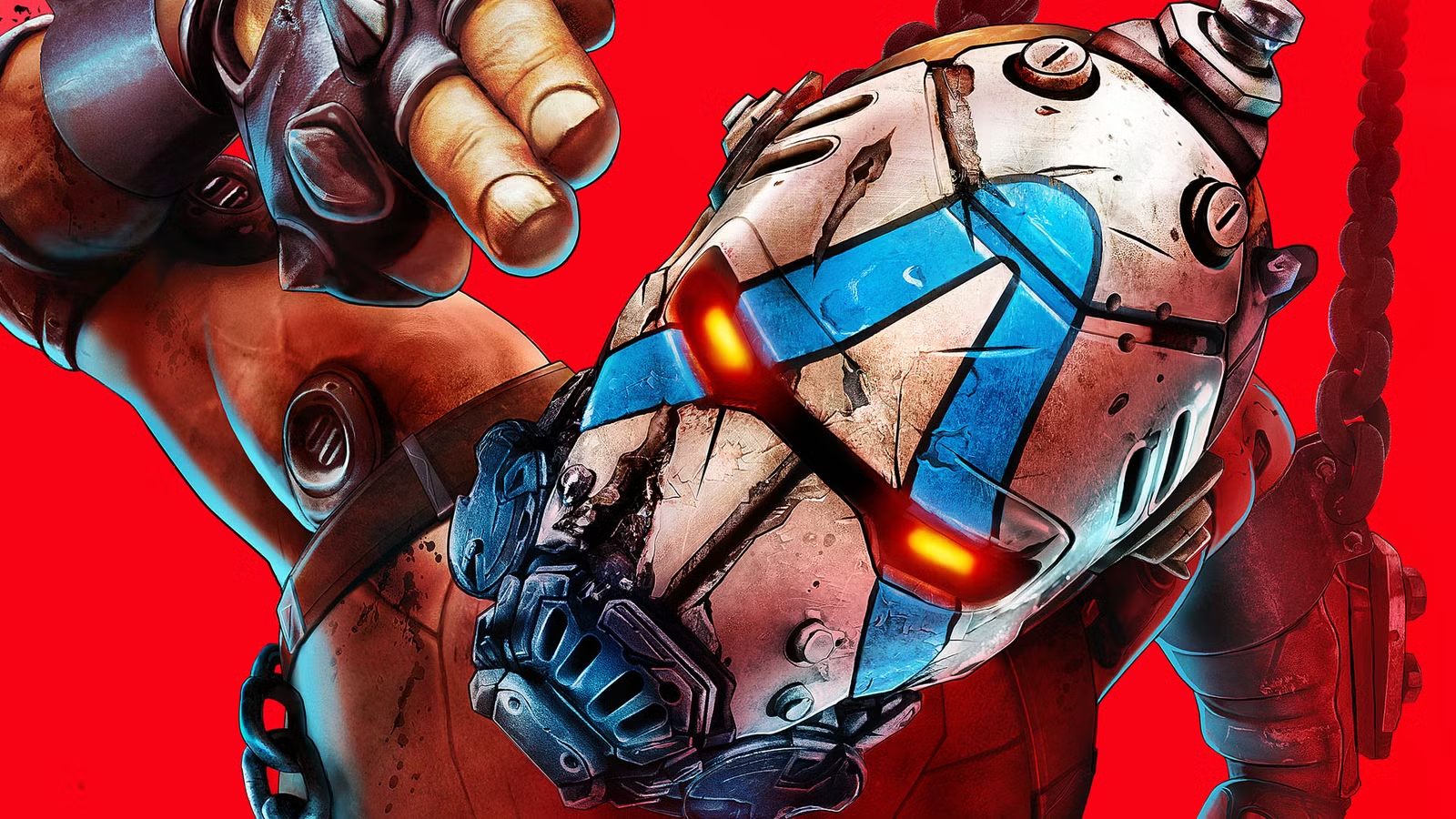
Gearbox trades familiar planets for fresh chaos—and mostly succeeds in reinventing their looter-shooter legacy
After years of diminishing returns, Borderlands needed to prove it could still surprise us. Borderlands 4 doesn’t just answer that question—it demolishes it with a rocket launcher that screams obscenities while firing tiny hamburgers. This is the boldest reinvention the series has attempted since the original game established the template, and despite some frustrating technical stumbles, it succeeds in ways that should make both newcomers and veteran Vault Hunters equally excited.
The secret? Gearbox finally had the courage to break their own rules.
Breaking Away from Pandora’s Shadow
For the first time since the series began, Borderlands 4 completely abandons Pandora and its increasingly stale cast of legacy characters. Instead, we’re dropped onto Kairos, a world dominated by the Timekeeper—a brainwashing dictator whose oppressive regime provides the backdrop for genuinely compelling storytelling.
This narrative reset works wonders. Gone are the tired callbacks and fanservice that bogged down Borderlands 3. In their place, we get characters like Levaine, whose charm and complicated romantic history with your fellow Vault Hunters adds layers of personality that the series has desperately needed. Yes, Claptrap still shows up to crack jokes, but he’s no longer carrying the entire comedic load on his tiny robot shoulders.
The story took me roughly 40 hours to complete, and for the first time in years, I actually cared about seeing it through to the end. Borderlands 4 remembers that this series works best when it balances juvenile humor with genuinely touching moments—something Borderlands 3 forgot entirely.
Welcome to the True Open World
Here’s the game-changer: Borderlands 4 is the first proper open-world entry in the franchise. No more loading screens between zones, no more artificial barriers dictating your path. Kairos sprawls across four distinct regions that you can explore however you want, whenever you want.
The movement overhaul makes this exploration a joy. Double jumping, gliding, grappling, dashing, and yes—swimming (water no longer kills you instantly, praise the Vault)—transform both traversal and combat into something far more dynamic than any previous Borderlands game. I spent the first few hours forgetting I had these tools, but once they clicked, I was soaring across battlefields like some kind of gun-wielding superhero.
The open-world structure also revolutionizes multiplayer. Your teammates can be miles away doing their own thing, and you can instantly warp to them if needed. This freedom eliminates the frustrating tethering that plagued previous entries, making cooperative play feel truly cooperative rather than restrictive.
Combat Gets a Much-Needed Shot in the Arm
Combat feels tighter and more responsive than ever, largely thanks to those movement improvements. Enemies are designed to push you to use every tool in your kit—you’ll find yourself grappling away from explosions, gliding over acid pools, and dashing between cover points in fluid sequences that feel choreographed but never scripted.
The enemy variety is impressive too. While the iconic psychos return (they somehow hitched a ride off Pandora), Kairos introduces mechanical spiders that deflect bullets when spinning, crystal-covered creatures that require tactical dismantling, and numerous other threats that forced me to adapt my playstyle on the fly.
Boss fights deserve special mention. Rather than bullet sponges, most major encounters now feature unique mechanics—throwing toxic bombs to strip armor, staying airborne during hazardous floor phases, or exploiting environmental weaknesses. They’re not Destiny raid-complex, but they’re a massive improvement over the “shoot until dead” encounters of previous games.
The New Vault Hunters Bring Fresh Energy
The four new Vault Hunters each offer distinct playstyles without feeling overpowered. Vex the Siren manipulates elemental damage with life-stealing abilities, Rafa summons DigiStructed weapons ranging from turrets to arm blades, Harlowe traps enemies in gravity bubbles, and Amon brings cybernetic melee mayhem to the party.
Each character’s three skill trees provide enough variety for different builds without overwhelming complexity. I started Vex as a summoner, then respecced into elemental DPS halfway through—both approaches felt viable and distinct. Multiple players can even choose the same character without overlap, thanks to diverse build paths.
The Rough Edges Cut Deep
Unfortunately, Borderlands 4’s ambitions often outpace its execution. The open world is plagued by invisible walls that kill exploration momentum—you’ll slam into barriers while gliding or find surfaces that look climbable but aren’t. For a game built around free exploration, these artificial limitations feel particularly jarring.
Technical issues are more concerning. Playing cooperatively—arguably the series’ greatest strength—is marred by lag, desynchronization, enemy invincibility bugs, and progress-blocking glitches. My group encountered vending machines with no items, quest progression that broke for non-hosts, and framerate hitches that made certain encounters nearly unplayable.
Solo play is smoother but not immune to problems. Equipment management bugs, inconsistent framerates, and quest-breaking glitches plague the experience. Two of my teammates got locked out of endgame content entirely due to broken progression triggers.
Weapons Stay Wonderfully Weird
The weapon variety remains Borderlands’ secret sauce. Assault rifles that call in airstrikes, sniper rifles that fire like gatling guns, grenades that scream while bouncing—the absurd creativity is intact and enhanced by cross-manufacturer pollination that creates even weirder combinations.
The loot chase remains as addictive as ever, enhanced by new systems like weapon enhancements, throwing knives, and healing items that add buildcrafting depth without overwhelming complexity.
Endgame Shows Promise
The endgame structure appears solid, featuring weekly challenges with meaningful modifier systems, repeatable boss encounters, and a wandering legendary vendor. While not revolutionary, it provides clear progression paths and should maintain player interest between content updates.
Gearbox’s post-launch roadmap promises substantial additions, and their track record suggests they’ll deliver. The foundation is strong enough to support long-term engagement, assuming technical issues get resolved.
The Verdict: Rough Around the Edges, Smooth Where It Matters
Borderlands 4 succeeds where it matters most: it makes the series feel exciting again. The open-world transition isn’t flawless, and the technical issues are genuinely frustrating, but the core experience recaptures what made us fall in love with Vault Hunting in the first place.
This is the evolutionary leap Borderlands needed, even if it stumbles during landing. The improved movement, engaging story, and genuine sense of discovery outweigh the rough edges—though those edges cut deeper than they should in 2025.
If you’ve been waiting for Borderlands to prove it still has something to say, this is your answer. Just maybe wait a patch or two if cooperative play is your priority.