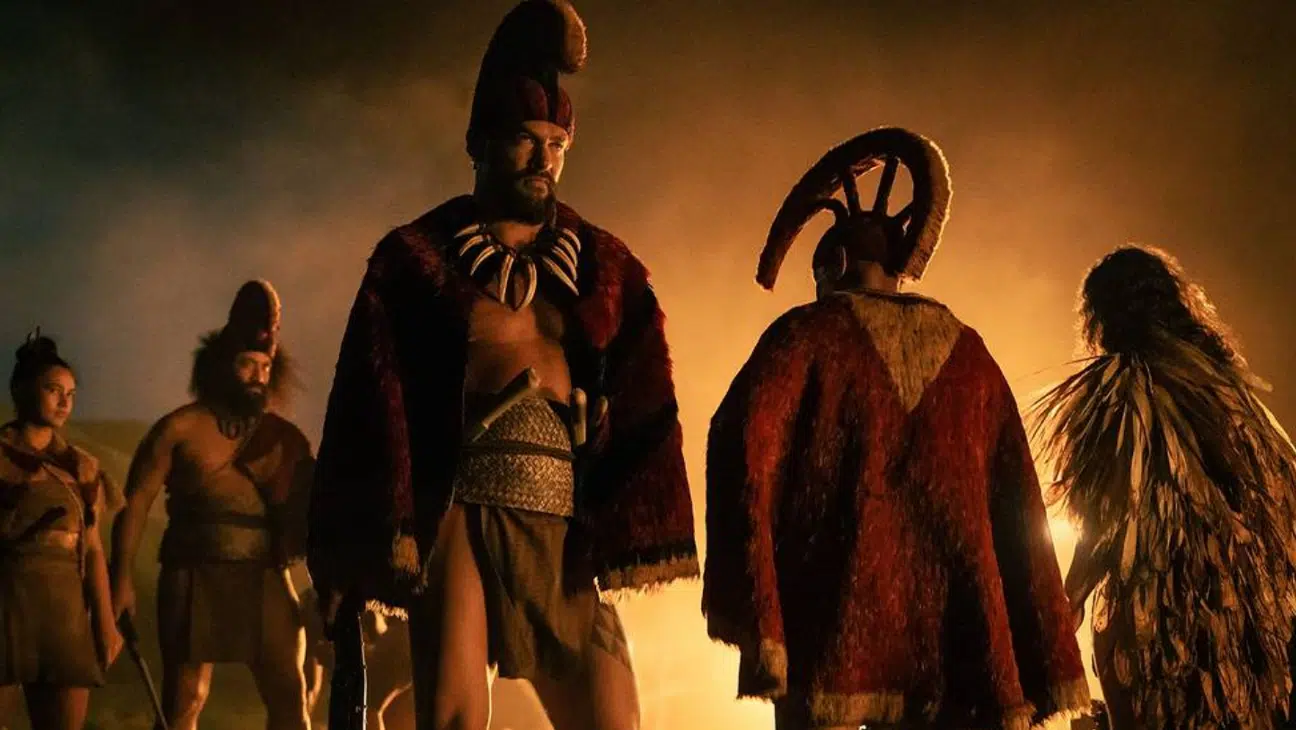
Jason Momoa’s passion project arrives with the weight of history on its shoulders—and unfortunately, that burden shows. “Chief of War,” Apple TV+’s lavish depiction of 18th-century Hawaiian unification, delivers spectacular visuals. It offers cultural authenticity but stumbles over its own ambitious scope.
The Good: Unmatched Production Values
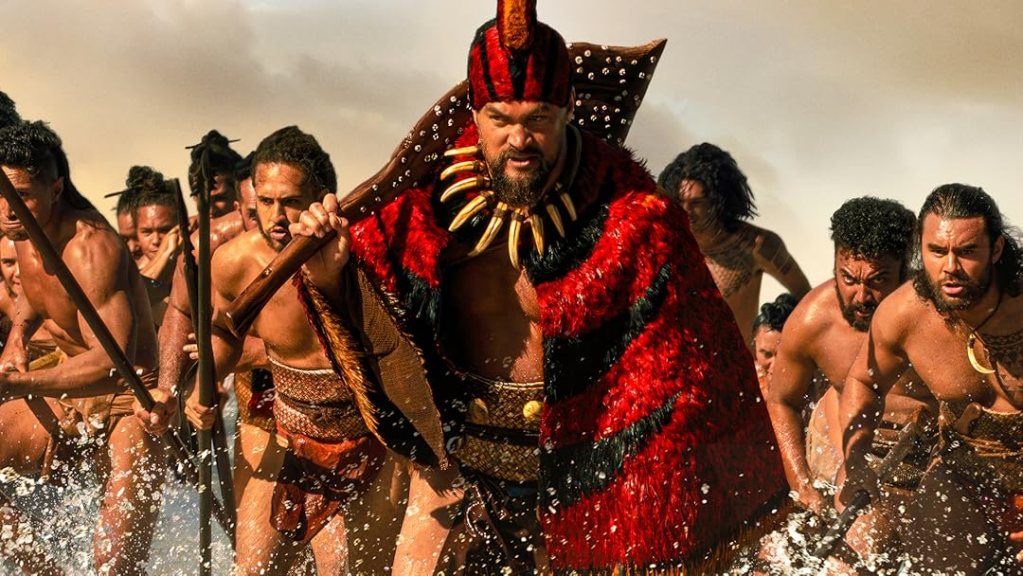
This series is a masterclass in period authenticity. Every feather costume feels regal, every traditionally-crafted canoe looks genuinely seaworthy. The production team is committed to hiring cultural experts for each department. This pays dividends by creating a lived-in world. It grounds the epic conflict in tangible reality. In an era of plastic Hollywood authenticity, “Chief of War” achieves something genuinely special.
The cast brings depth to roles that could easily fall into stereotype. Momoa’s Ka’iana—a Maui warrior chief torn between violence and peace—shows the actor’s range beyond his typical roles. The series smartly avoids “noble savage” tropes, presenting Native Hawaiians as complex individuals with varied responses to colonialism.
The Problem: Too Much, Too Fast
But “Chief of War” suffers from epic-sized ambitions crammed into a standard TV format. The series breathlessly jumps between storylines—Ka’iana’s internal conflict, Kamehameha’s rise, Ka’ahumanu’s forced marriage—without giving any single thread room to breathe.
Most frustratingly, the show repeatedly tells us about character motivations rather than showing them. Ka’iana’s famous journey abroad gets rushed treatment. This journey historically made him the first Hawaiian prince to travel internationally. The narrative then quickly pivots back to battle scenes.
Temura Morrison appears as the complex Chief Kahekili II. However, his character is reduced to cartoon villainy. This reduction wastes both the actor’s talent and the historical figure’s nuanced legacy.
Missing the Mark
FX’s “Shōgun” succeeded by focusing on cultural collision. It used this as its core narrative. In contrast, “Chief of War” feels self-conscious about its translator role. Fascinating elements of Hawaiian society—religion, relationships, social hierarchy—get flattened into predictable TV drama beats.
The series wants to be “bigger than Game of Thrones,” as Momoa claimed. However, it ends up closer to “The Gilded Age” with more blood. Personal conflicts stand in for larger historical forces. There is no connective tissue to make it meaningful.
The Verdict
“Chief of War” has all the ingredients for greatness: stunning production design, rich historical material, and committed performances. But it’s at war with itself, caught between respecting its subject matter and delivering modern television drama.
The season finale sets up future conflicts with clear potential for improvement. If the creators can slow down, trust their characters, and let the story breathe, they’ll have something truly special. For now, it’s a beautiful but frustrating near-miss.
★★½
The first two episodes of Chief of War are streaming on Apple TV+, with new episodes Fridays through September 19.