Christopher Nolan has a tradition of previewing his films with extended prologues before major holiday releases, and The Odyssey continues that legacy in spectacular fashion. The six-minute opening sequence, currently playing exclusively before IMAX screenings of Avatar: Fire and Ash, has given audiences their first substantial look at what the Oscar-winning director has planned for his adaptation of Homer’s legendary epic.
Despite being based on one of literature’s most famous works, Nolan has kept details about The Odyssey remarkably close to the vest. This prologue finally pulls back the curtain, revealing a film that looks unmistakably like a Christopher Nolan production while pushing the director into entirely new territory: mythic fantasy.
1. The Trojan Horse Opens the Film
The prologue depicts the climactic moment from The Iliad—the legendary Trojan Horse stratagem that ends the ten-year siege of Troy. Under cover of night, Greek soldiers emerge from the wooden horse that the Trojans have foolishly brought inside their walls, launching an attack from within the city’s defenses.
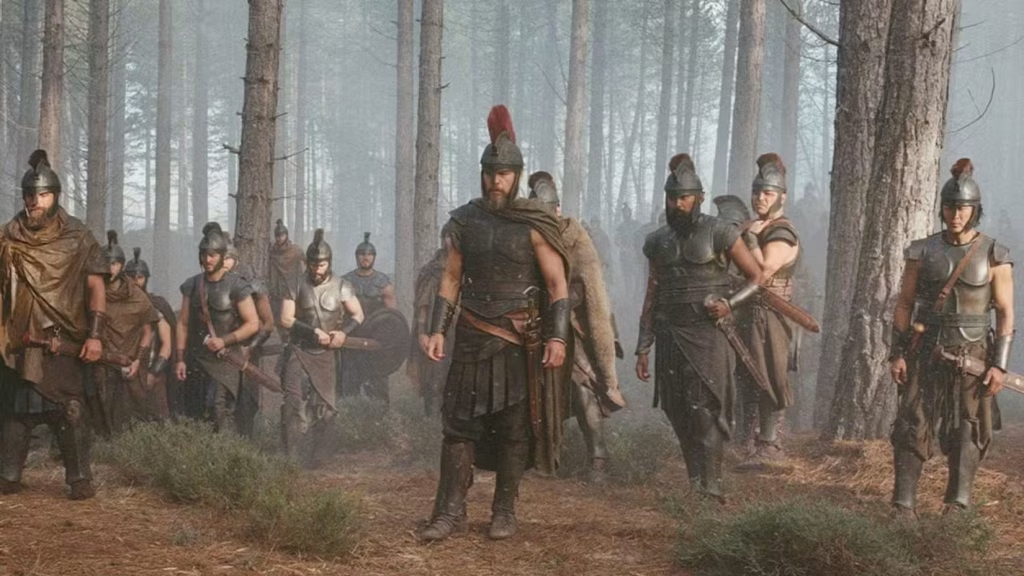
This represents a fascinating creative choice. The Odyssey, as a story, follows Odysseus’s journey home after Troy’s fall, so beginning with the horse’s infiltration provides essential context while creating immediate dramatic stakes. It’s essentially Nolan doing a prologue to Homer’s own story, setting up the events that will send Odysseus on his perilous voyage.
What makes this particularly intriguing is that Nolan was once attached to direct Troy, Wolfgang Petersen’s 2004 film about The Iliad. After Warner Bros. scrapped his planned Batman vs. Superman project, Petersen took on Troy while Nolan moved to Batman Begins. Now, decades later, Nolan finally gets to put his stamp on this material, using his signature grounded tactical approach.
The horse itself reflects this sensibility—modest in design and notably partially submerged in water, suggesting the Greeks beached it rather than simply leaving it at Troy’s gates. It’s practical, strategic, and feels tactically sound rather than purely symbolic.
2. Mythical Spectacle Over Historical Accuracy
One of the prologue’s standout moments comes when the Greeks breach Troy’s gates. As Trojan archers rain arrows down on the invaders, the gates finally open to reveal a massive Greek army flooding through. Leading them is an immediately recognizable figure: Agamemnon, King of Mycenae, clad in enormous, ornate armor.
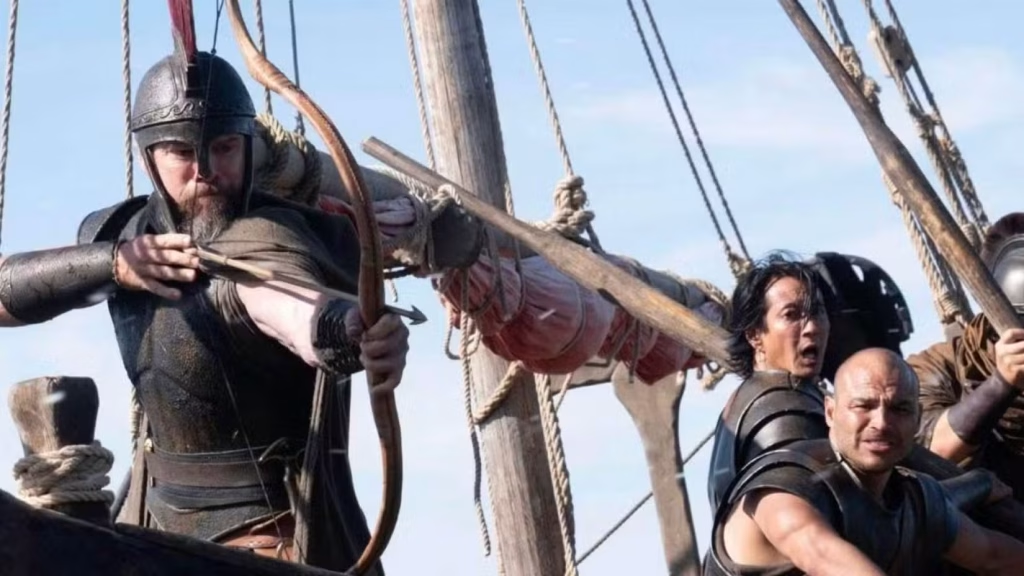
Benny Safdie plays Agamemnon, though he’s completely unidentifiable beneath the elaborate costume. That armor has sparked discussion among history buffs for its lack of historical accuracy, but that criticism misses the point entirely.
Nolan and costume designer Ellen Mirojnick aren’t striving for documentary realism—they’re embracing the mythical, larger-than-life quality appropriate to an ancient epic poem. The Odyssey isn’t a historical text; it’s mythology, and Agamemnon’s armor reflects that distinction. It’s meant to evoke the grandeur and spectacle of legend rather than the mundane reality of Bronze Age warfare.
This design choice signals something important about Nolan’s approach: while he’s bringing his characteristic groundedness to tactics and strategy, he’s also willing to embrace heightened visual storytelling that honors the source material’s epic scope.
3. Ludwig Göransson’s Score Sounds Phenomenal
Is it premature to start discussing Best Original Score for the 2026 Oscars? Based solely on six minutes of footage, composer Ludwig Göransson has already created something special for The Odyssey.
This marks Göransson’s third collaboration with Nolan, following Tenet and the Oscar-winning Oppenheimer. The Swedish composer has established himself as one of cinema’s most exciting musical voices, and his work on The Odyssey promises to continue that trajectory.
The score accompanying the Trojan Horse sequence is propulsive and intense, building suspense as the Greeks hide inside the horse and then exploding with urgency as they launch their surprise attack. It evokes the same thrilling reaction audiences had when they first heard segments of Hans Zimmer’s The Dark Knight score before that film’s release.
Early reactions suggest the music is both epic in scale and emotionally resonant, capturing the grandeur of ancient warfare while maintaining the human stakes at the story’s core. If these six minutes are representative of the full score, we’re in for something remarkable.
4. Nolan Embraces the Fantastical Elements
When Nolan’s involvement with The Odyssey was first announced, one question dominated discussion: how would a director known for grounded realism handle Greek gods, witches, and monsters?
Nolan famously took the fantastical world of Batman and rendered it plausible within our reality, reshaping superhero cinema in the process. Would he apply similar logic to The Odyssey, finding rational explanations for its supernatural elements? Or would he embrace the fantasy and, if so, how would that square with his preference for practical effects over CGI?

The prologue provides an answer: Nolan isn’t shying away from the mythological aspects. Brief clips following the main sequence showcase other segments of the film, including a Cyclops that appears to be created using impressive practical makeup and prosthetics rather than pure digital effects.
This suggests a fascinating structure for the film. The Trojan Horse sequence from The Iliad serves as a grounded, tactical prologue rooted in (relatively) realistic warfare. But as Odysseus begins his journey home, he’ll leave that familiar world behind and venture into a realm of gods and monsters. The shift from tactical realism to mythological fantasy might mirror Odysseus’s own journey from the known world into the supernatural unknown.
How Nolan will depict the Greek pantheon of gods or monstrous threats like Scylla and Charybdis remains to be seen, but the prologue suggests he’s committed to bringing them to life in tangible, visually impressive ways.
5. Early Reception Suggests Another Nolan Triumph
Perhaps the most telling reveal isn’t something shown in the prologue itself, but rather how audiences are reacting to it. Early word of mouth has been overwhelmingly positive, with many screenings breaking into spontaneous applause.
This enthusiasm is particularly notable when contrasted with reactions to the Avengers: Doomsday teaser, which is also playing before Avatar: Fire and Ash. While Marvel’s offering has reportedly been met with silence or disappointment from many crowds, The Odyssey is generating genuine excitement.
The difference highlights something fundamental about what draws audiences to theaters. Avengers: Doomsday, for all its star power and franchise history, represents the familiar—more of what audiences already know. The Odyssey, conversely, promises something genuinely different: a legendary filmmaker tackling one of civilization’s foundational stories with all the resources of modern blockbuster cinema.
Nolan has proven himself capable of turning seemingly uncommercial material into cultural events. He transformed a three-hour drama about the creation of the atomic bomb into one of the biggest hits of 2023 with Oppenheimer. If anyone can make a centuries-old epic poem into must-see cinema, it’s Christopher Nolan.
The Prologue Tradition Continues
Nolan’s love of releasing extended previews before major releases goes back to The Dark Knight’s opening bank heist, which played before I Am Legend in 2007. That sequence became legendary, generating massive buzz and setting impossibly high expectations that the film somehow exceeded.
The Dark Knight Rises’ airplane hijacking prologue played before Mission: Impossible – Ghost Protocol, while Tenet’s opening opera house siege screened before Star Wars: The Rise of Skywalker. Each time, Nolan uses these previews to establish tone, showcase ambition, and remind audiences why they should experience his films on the biggest screens possible.
The Odyssey prologue fits perfectly within this tradition. It’s a complete sequence with beginning, middle, and end that works as its own short film while teasing the larger story to come. It demonstrates technical mastery, introduces key characters and conflicts, and most importantly, leaves audiences hungry for more.
What This Means for The Odyssey
Based on this six-minute prologue, The Odyssey appears to be everything fans hoped for: unmistakably a Christopher Nolan film while also representing new creative territory for the director. It combines his trademark practical craftsmanship and tactical thinking with a willingness to embrace myth and spectacle.
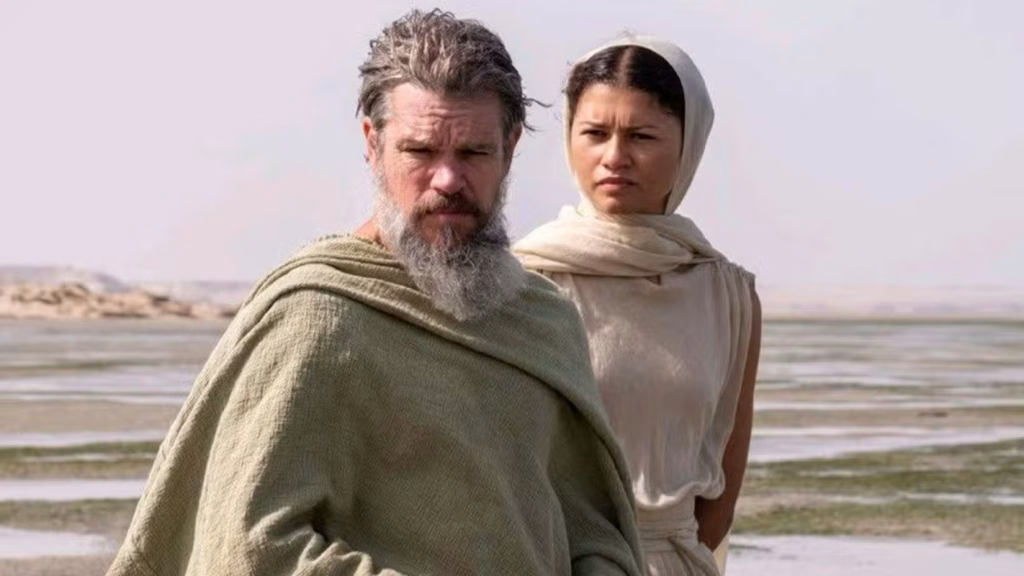
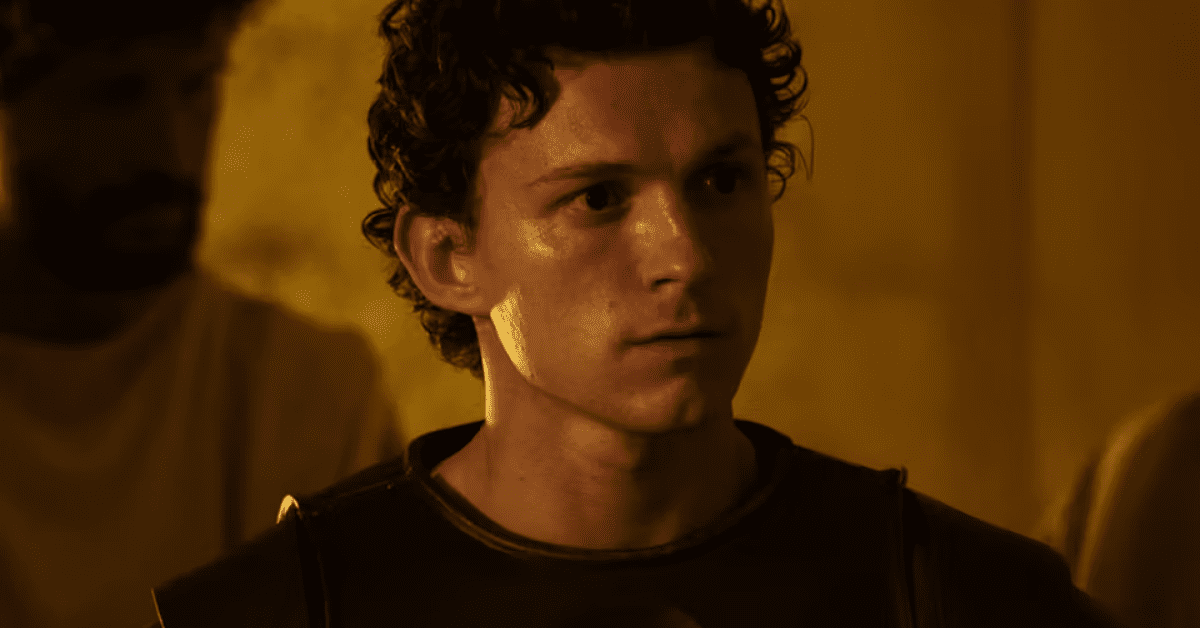
The film boasts an impressive ensemble cast including Tom Holland as Odysseus, Zendaya as Penelope, Matt Damon as Diomedes, Anne Hathaway as Athena, Lupita Nyong’o as Calypso, Robert Pattinson as Elpenor, and Charlize Theron as Circe. With talent like that and a story that has endured for millennia, Nolan has all the pieces in place for something special.
The Odyssey is scheduled for release in July 2026, giving audiences plenty of time to anticipate what looks like one of the most ambitious films of Nolan’s career. If this prologue is any indication, it will be worth the wait.
For now, those lucky enough to catch Avatar: Fire and Ash in IMAX get an exclusive preview of what promises to be a landmark achievement in blockbuster filmmaking—a reminder that sometimes the oldest stories can feel the most fresh when told by the right filmmaker.