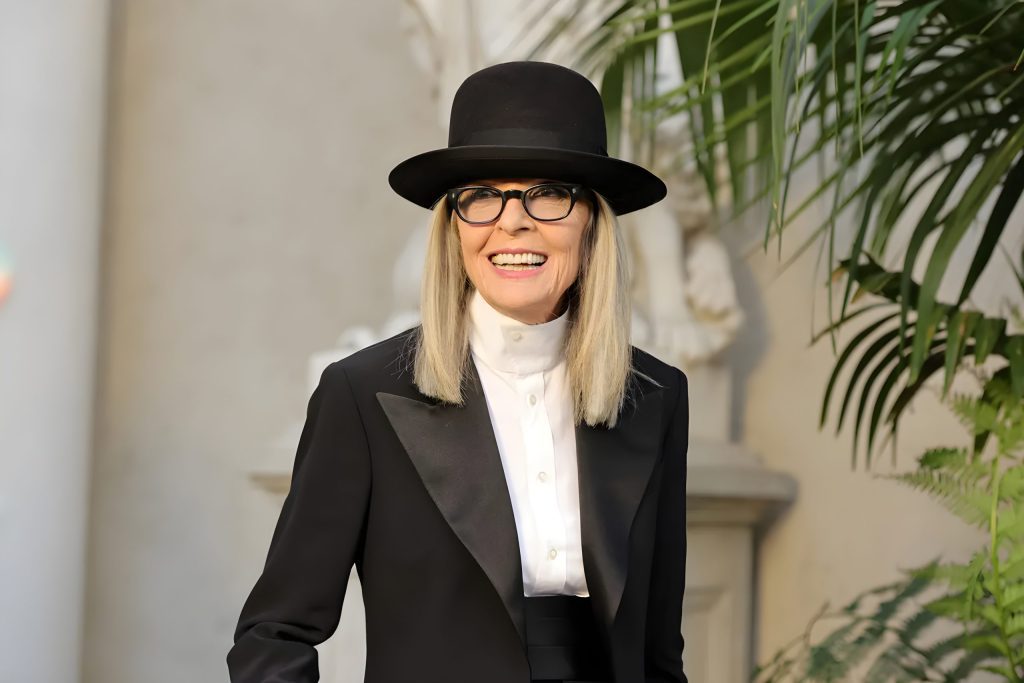
Diane Keaton, the Academy Award-winning actress whose singular style and luminous performances made her one of cinema’s most beloved and enduring talents, has died in California, according to People. She was 79.
Over a career spanning more than five decades, Keaton created an indelible gallery of characters that showcased her remarkable range—from the neurotic charm of Annie Hall to the steely dignity of Kay Adams Corleone, from romantic comedy heroines to complex dramatic roles that earned her four Oscar nominations and one unforgettable win.
The Role That Changed Everything
Born Diane Hall in Los Angeles on January 5, 1946, Keaton grew up in Santa Ana, California, where she discovered her passion for theater and music during high school. After briefly attending college, she moved to New York to pursue acting professionally, adopting her mother’s maiden name as her stage surname.
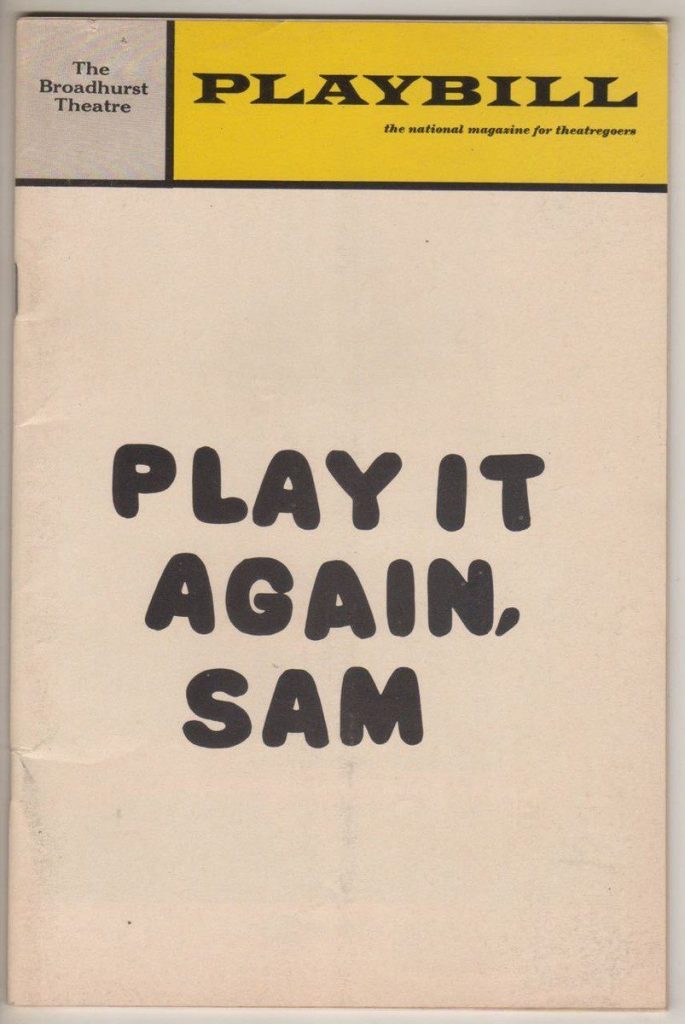
Her breakthrough came in 1969 when she landed the female lead opposite Woody Allen in his Broadway hit “Play It Again, Sam.” The professional partnership sparked a romantic relationship, and though their romance eventually ended, their creative collaboration would produce some of cinema’s most memorable moments.
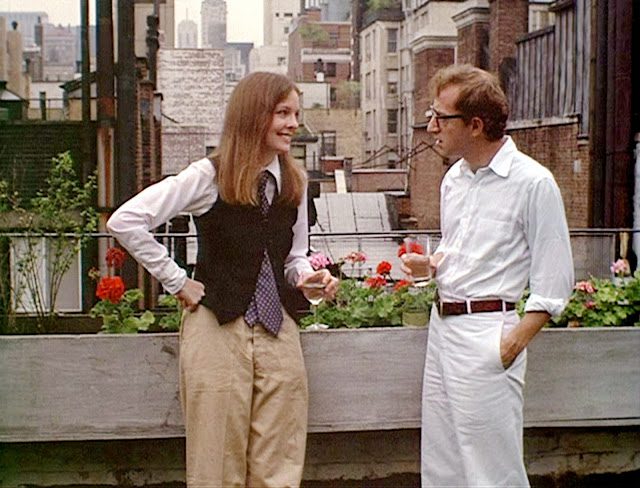
It was her performance as Annie Hall—the loopy, endearing girlfriend of Allen’s comic Alvy Singer in the 1977 romantic comedy—that transformed Keaton into a cultural phenomenon. The unconventionally structured film swept the Oscars, winning best picture, best director, and best original screenplay, while Keaton took home the statue for best actress. She had served as the model for her character, and her off-kilter fashion sense—wide-brimmed hats, men’s shirts, ties and vests, slacks—became instantly iconic, inspiring countless young women to emulate her distinctive style.
Writing in The New Yorker at the height of Keaton’s first wave of fame, Penelope Gilliatt observed, “She is not at all like the many actresses who have skimmed some mannerisms off her and done insultingly mild imitations by relying on ‘Well’s and dither.” Keaton herself was wary of being typecast: “I’ve noticed people saying ‘La-di-da’ like Annie Hall, and I don’t like it, you know? It’s not a good idea to be identifiable, though it’s reassuring. I’d like a life like Katharine Hepburn’s in terms of work. She matured. She made the changes.”
A Career of Remarkable Depth
True to her aspirations, Keaton refused to rest on the laurels of Annie Hall. She had already established her dramatic credentials as Kay Adams in Francis Ford Coppola’s “The Godfather” (1972) and “The Godfather Part II” (1974), playing the tormented girlfriend and later wife of Michael Corleone (Al Pacino, with whom she was intermittently involved from 1971 onward). She reprised the role in “The Godfather Part III” in 1990, bringing decades of lived experience to Kay’s weariness and disillusionment.
Following “Annie Hall,” Keaton deliberately sought challenging dramatic work, delivering a haunting performance as a promiscuous schoolteacher in Richard Brooks’ “Looking for Mr. Goodbar” (1977), and appearing in Allen’s Bergman-influenced drama “Interiors” (1978) and his bittersweet “Manhattan” (1979).
Her second Oscar nomination came for “Reds” (1981), Warren Beatty’s sprawling political epic in which she portrayed early 20th-century radical Louise Bryant opposite Beatty’s journalist John Reed. The film showcased Keaton’s ability to embody intelligence, passion, and complexity in equal measure.
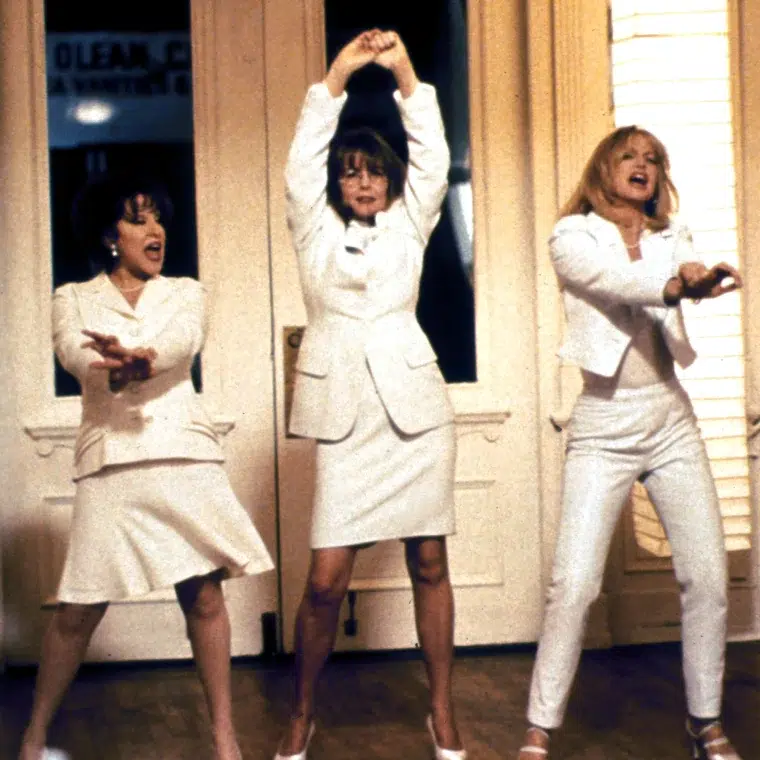
The late ’80s and ’90s saw Keaton master the art of sophisticated comedy. Her role as a harried career woman inheriting a baby in “Baby Boom” (1987) launched a fruitful collaboration with writer-director Nancy Meyers. She scored a massive hit opposite Steve Martin in Meyers’ “Father of the Bride” (1991) and its sequel, and reunited with Allen for the delightful “Manhattan Murder Mystery” (1993). Her scene-stealing turn alongside Bette Midler and Goldie Hawn in “The First Wives Club” (1996) proved she could hold her own in any ensemble.
Her third Oscar nomination came for “Marvin’s Room” (1996), in which she played a leukemia patient navigating family dynamics opposite Meryl Streep and Leonardo DiCaprio. Her fourth nomination—for Nancy Meyers’ “Something’s Gotta Give” (2003), in which she played a playwright falling for Jack Nicholson’s aging playboy—demonstrated that Keaton’s appeal only deepened with age.
Beyond Acting
Keaton’s creative ambitions extended well beyond performing. She directed music videos, including Belinda Carlisle’s iconic “Heaven is a Place on Earth” (1987), and helmed episodes of “China Beach” and “Twin Peaks.” Her feature directing credits included “Unstrung Heroes” (1995) and “Hanging Up” (2000), in which she also starred alongside Meg Ryan and Lisa Kudrow. As a producer, she championed Gus Van Sant’s Palme d’Or-winning “Elephant” (2003).
An accomplished photographer, Keaton published her work in “Reservations” and edited several photo collections. She was also passionate about historic preservation, working to save notable houses from demolition. Her three bestselling memoirs—”Then Again” (2011), “Let’s Just Say It Wasn’t Pretty” (2015), and “Brother and Sister” (2020)—revealed her wit, vulnerability, and keen observational skills.
In her later years, Keaton continued working steadily, appearing in “Book Club” (2018) and its sequel, “Poms” (2019), and most recently “Summer Camp” (2024) with Kathy Bates and Alfre Woodard.
A Lasting Legacy
In 2017, the American Film Institute honored Keaton with a Lifetime Achievement Award. Woody Allen, serving as presenter, affectionately teased her enduring fedora-wearing style, quipping, “She looks like the woman in ‘A Streetcar Named Desire’ who comes to take Blanche away”—a particularly apt joke given that Keaton had played Blanche Dubois in high school.
Rather than deliver a traditional acceptance speech, Keaton chose to perform “Seems Like Old Times,” the song she memorably sang in “Annie Hall”—a perfect encapsulation of her singular approach to her craft and her life.
Diane Keaton never married. She is survived by her adopted daughter, Dexter, and son, Duke.
Her influence on cinema, fashion, and culture remains immeasurable. In an industry often unkind to women as they age, Keaton proved that talent, intelligence, and authenticity never go out of style. Her work will continue to inspire and delight audiences for generations to come.
Our thoughts are with her friends and family during this difficult time.