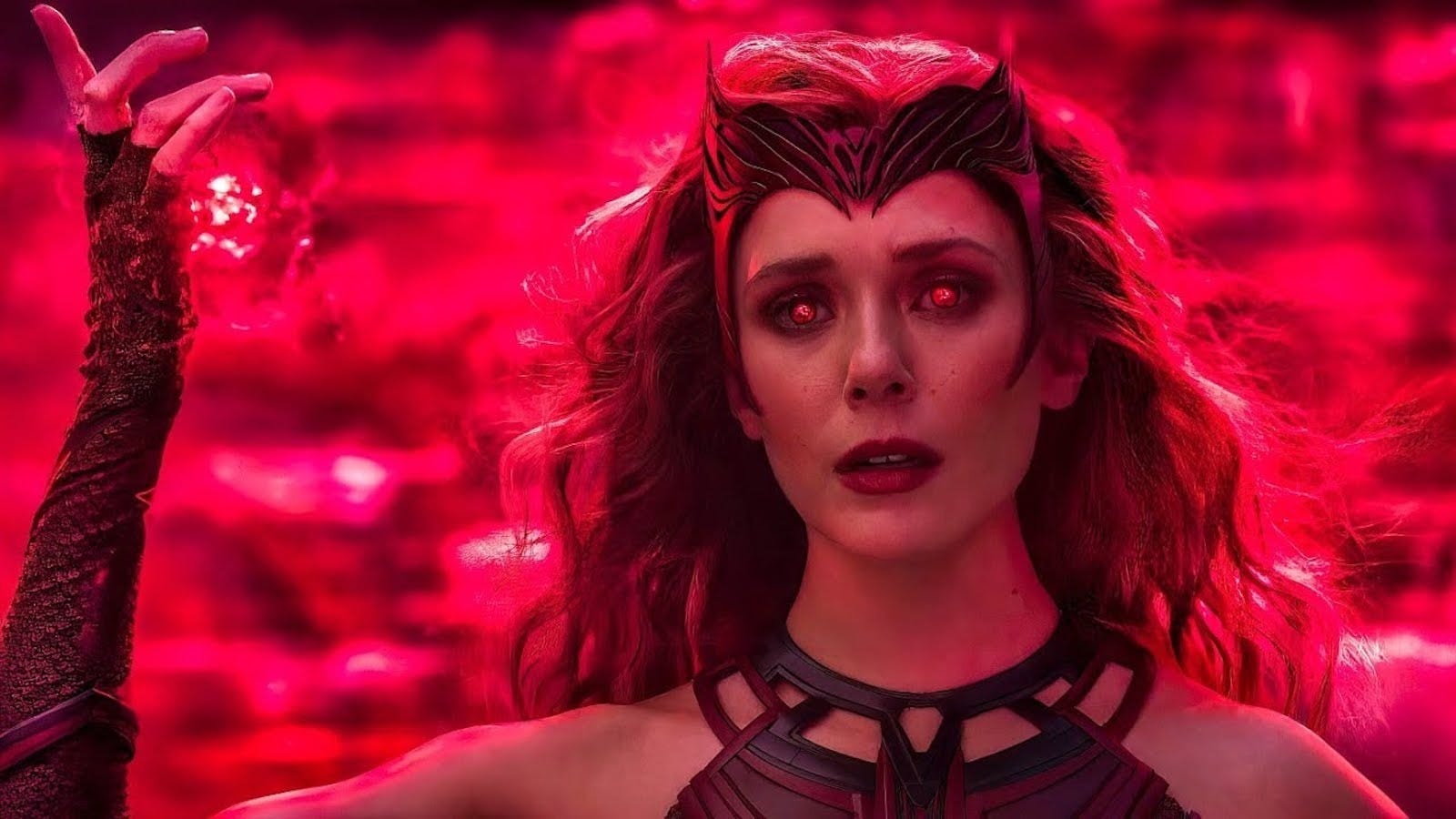
Elizabeth Olsen’s 11-year journey as Wanda Maximoff has been anything but straightforward. From her 2014 debut to her character’s apparent death in 2022’s “Doctor Strange in the Multiverse of Madness,” the actress has experienced an emotional rollercoaster that mirrors her character’s own tumultuous arc—oscillating between pride, frustration, and what now appears to be renewed enthusiasm for the Scarlet Witch.
From Avenger to Villain: A Controversial Turn
When “Doctor Strange in the Multiverse of Madness” transformed Wanda from a tragically selfless Avenger into an unhinged multiversal villain, many fans felt whiplash. Olsen herself expressed confusion over the sudden shift, though she initially defended the creative choice in a 2022 interview with Hollywood Life.
“I think somehow it needed to end where it ends at some point,” she said at the time, claiming satisfaction with her character’s fate—buried in rubble at Mount Wundagore with seemingly no path to return. The statement felt resigned, as if Olsen was making peace with an ending she didn’t entirely understand.
Yet even then, hints of ambivalence emerged. Discussing the absurdity and joy of MCU filmmaking, Olsen admitted: “It’s ridiculous. We’re grown people behaving like children on a playground. We’re flying. We’re shooting things out of our hands. And it’s a character that I’ve gotten to return to so many times over 10 years. It’s good to put her down and then I miss her and I want her back. I’d jump at the opportunity to be in her shoes again.”
The Indie Actress Trapped in Spandex
Olsen’s conflicted feelings about Marvel became more explicit in April 2025, when she appeared on NPR’s “Wild Card with Rachel Martin” podcast. In remarkably candid comments, the actress suggested her Marvel work didn’t align with her artistic sensibilities.
“Because I have spent so many years doing Marvel that I feel like all the other jobs I have to do have to really reflect my personal taste because as much as I love being a part of this world — and I’m proud of what I’ve been able to do with the character — it’s not really the art that I consume,” Olsen revealed.
The statement was striking in its honesty. Here was an actress who earned an Emmy nomination for “WandaVision”—one of the MCU’s most critically acclaimed projects—essentially dismissing her superhero work as artistically unfulfilling. For someone with roots in indie arthouse cinema, the tension between commercial success and creative satisfaction appeared to weigh heavily.
Olsen has previously criticized Marvel’s lengthy contracts and how they limited her ability to pursue independent films, making her feelings about the franchise’s constraints well-documented over the years.
A Strategic Softening?
Now, following a recent interview with InStyle, Olsen’s tone appears to have shifted considerably. The actress who months ago seemed eager to distance herself from superhero spectacle now sounds open—even eager—to return to the role that made her a household name.
The timing is notable. Marvel is mapping out ambitious plans beyond Phase 6, with the X-Men positioned to become central to the franchise’s future. Scarlet Witch, given her comic book history with mutantkind and her reality-warping abilities, could play a pivotal role in that expansion.
Is Olsen’s softened stance genuine evolution, or strategic damage control as she recognizes the potential for her character in Marvel’s next chapter? Perhaps it’s both. After all, actors—like their characters—contain multitudes and can hold contradictory feelings simultaneously.
The Art of the Blockbuster
Olsen’s struggle reflects a broader tension many actors face: the pull between prestige projects that feed the soul and blockbusters that feed the bank account (and reach massive audiences). The MCU has launched careers and provided financial security for countless performers, but it’s also typecast actors and consumed years of their professional lives.
What’s fascinating about Olsen’s journey is how publicly she’s processed this tension. Most actors diplomatically praise their franchise work regardless of private reservations. Olsen’s willingness to voice ambivalence—to say “this isn’t really the art that I consume” while also admitting “I’d jump at the opportunity to be in her shoes again”—feels refreshingly human.
What’s Next for Scarlet Witch?
Despite “Multiverse of Madness” appearing to close the book on Wanda Maximoff, comic book deaths are notoriously impermanent. Mount Wundagore collapsed, but no body was shown. In superhero storytelling, that’s practically an engraved invitation for resurrection.
With Marvel’s X-Men integration on the horizon and Olsen’s apparent warming toward reprising the role, the pieces may be aligning for Scarlet Witch’s return. The character’s comic book connection to Magneto and mutantkind provides natural story opportunities, while her reality-warping powers make explaining her survival relatively simple.
The Verdict
Elizabeth Olsen’s relationship with Marvel and Scarlet Witch is messy, complicated, and entirely understandable. She’s an indie actress who became a superhero icon, someone who values artistic credibility while working in the most commercially successful film franchise in history. She’s criticized Marvel’s constraints while acknowledging the unique opportunity to develop a character over a decade.
Perhaps that’s exactly what makes her perfect for Wanda Maximoff—a character defined by contradiction, someone capable of creating perfect suburban fantasies while unleashing chaos, a hero and villain, a woman trying to hold opposing realities in her hands.
If Olsen does return to the MCU, it will be with eyes wide open about what it means—the artistic compromises, the years-long commitments, the typecasting risks. But it will also come with the knowledge that she’s created something millions of fans love, that she’s been part of unprecedented cinematic storytelling, and that perhaps, after putting the character down, she genuinely misses her.
As Wanda herself might understand better than anyone: we contain multitudes, and sometimes the things we resist are the things we need most.