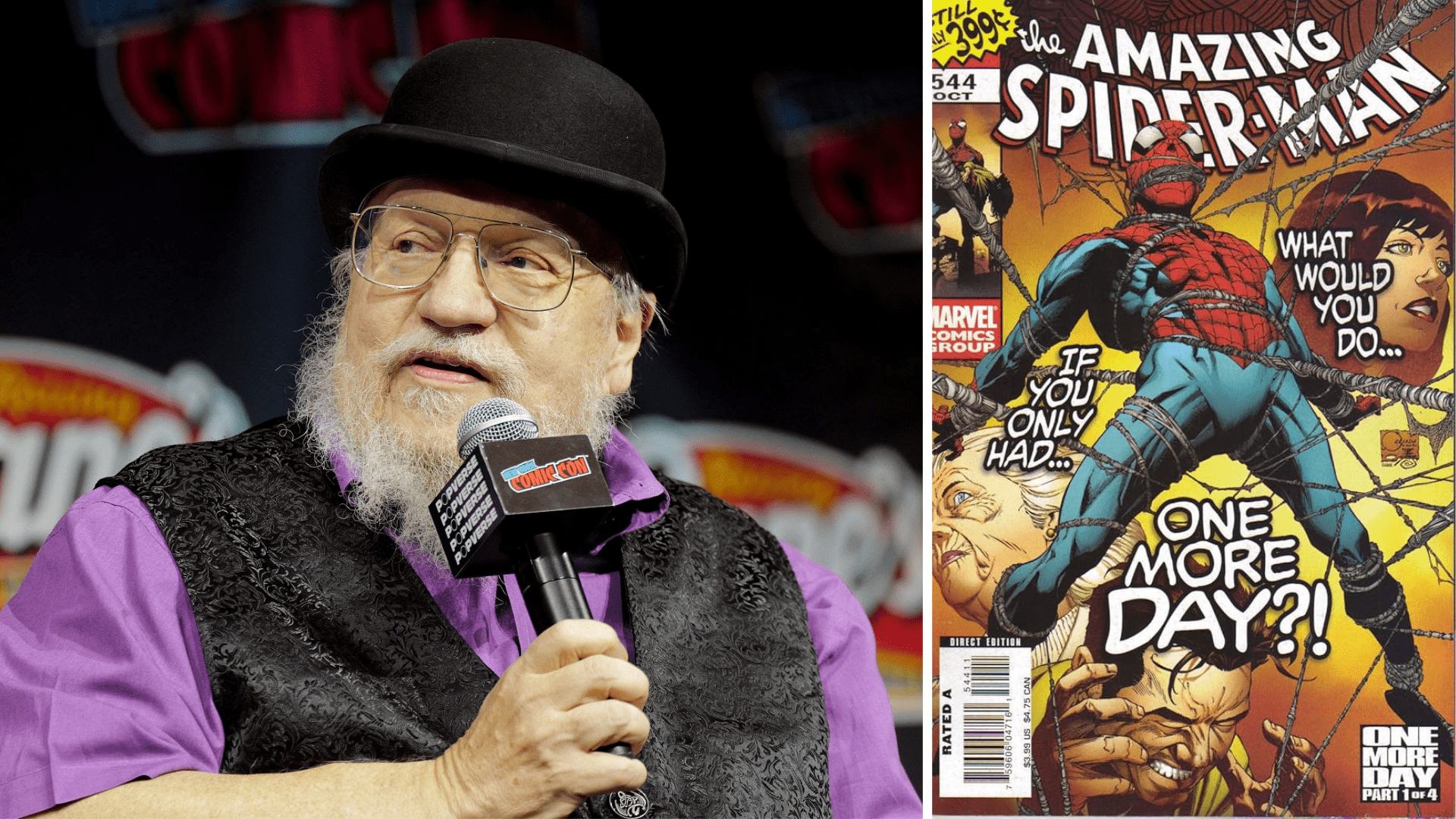
George R.R. Martin, the acclaimed author behind “Game of Thrones,” has joined the chorus of fans still fuming about one of Marvel Comics’ most controversial storylines nearly two decades after its publication. In a recent interview with Popverse, Martin didn’t hold back his frustration with “One More Day”—the 2007 Spider-Man story that erased Peter Parker’s marriage to Mary Jane Watson through a literal deal with the devil.
The Deal That Broke Fandom
“One More Day” remains one of the most divisive moments in Spider-Man’s publishing history. In the storyline, Aunt May lies dying from a gunshot wound intended for Peter. Desperate to save her, Peter makes a Faustian bargain with Mephisto, Marvel’s stand-in for Satan. The price? His marriage to Mary Jane would be erased from reality, as if it never happened. Marvel’s editorial team saw this as the solution to multiple problems they’d created for the character, but fans saw it as a betrayal of decades of character development.
Martin’s critique goes beyond this single story. “I do have frustrations with it, too, I have to admit,” he told Popverse. “I don’t like retcons. I don’t like reboots. You know, I’m watching, I’m following a character or a superhero or something for years, sometimes decades, and then they come and say, ‘Oh, no. None of that stuff happened. We’re just going to start the whole thing over again.’ That always annoys the hell out of me.”
When asked for a specific example, Martin didn’t hesitate: “Peter Parker married Mary Jane.”
Marvel’s Identity Crisis
“One More Day” emerged from Marvel’s desire to walk back a series of editorial decisions that had fundamentally altered Spider-Man’s character. The most immediate problem was that Spider-Man had publicly unmasked on live television during the “Civil War” crossover event, revealing to the entire world that Peter Parker was Spider-Man.
While the reveal created some compelling story beats—watching people who loved Peter but hated Spider-Man (or vice versa) grapple with the truth had dramatic potential—it ultimately undermined Spider-Man’s essential blue-collar everyman appeal. Part of what made Peter Parker relatable was the struggle to balance his superhero responsibilities with his ordinary life. Once everyone knew his secret, that tension evaporated.
The Long Road to ‘One More Day’
For Marvel’s editorial team at the time, the identity reveal was merely the latest in a series of missteps that had supposedly aged Peter Parker out of relatability. Originally created by Steve Ditko, Stan Lee, and Jack Kirby, Spider-Man was a gangly teenager juggling superheroics with high school, social life, family obligations, and work. That fundamental dynamic remained mostly intact as Peter graduated and attended college.
However, editorial believed Peter’s character had fundamentally changed for the worse as he matured—particularly when he married actress and model Mary Jane Watson and later had a child with her. The concern was that a married Peter Parker with adult responsibilities no longer resonated with younger readers who needed a character they could see themselves in.
Marvel had attempted various solutions before resorting to “One More Day.” The infamously convoluted “Clone Saga” of the 1990s revealed that Peter was actually a clone of the real Peter Parker (a decision later reversed). The company also introduced a teenage Peter in the Ultimate Universe, an alternate continuity where readers could experience a fresh take on Spider-Man’s origin without abandoning decades of mainline continuity.
But when these half-measures failed to satisfy, Marvel made the controversial decision to use literal magic to reset the character, erasing not only the marriage but also all public knowledge of his secret identity, effectively making him a single young adult in New York City again.
An Ironic Reversal
The status of Peter and Mary Jane’s relationship has fluctuated since “One More Day,” both in comics and in various adaptations. But in a twist that might please Martin—or further complicate his feelings about retcons—the new “Ultimate Spider-Man” series by Jonathan Hickman and Marco Checchetto depicts Peter and Mary Jane as happily married with two children.
This presents an amusing paradox. The new “Ultimate Spider-Man” is itself a reboot, one of those “dreaded rewritings of history” that Martin says he despises. Yet this particular reboot restores the marriage Martin defended. Will he allow this retcon to slide because it undoes a previous retcon he hated?
It’s a question someone should definitely ask the author… right after he finishes “The Winds of Winter,” the long-awaited next installment of his “A Song of Ice and Fire” series.
Looking Ahead to ‘Brand New Day’
Spider-Man fans have plenty to look forward to beyond comic book continuity debates. “Spider-Man: Brand New Day” arrives in theaters next year, featuring Tom Holland returning as the web-slinger in a brand new adventure. The film takes its title from the comic book storyline that followed “One More Day,” though it’s unclear how much the movie will draw from that controversial source material.
What remains clear nearly twenty years later is that “One More Day” still strikes a nerve with fans—including one of fantasy literature’s most celebrated authors. Martin’s criticism speaks to a broader frustration among longtime comic readers: the tension between honoring decades of character development and the commercial imperative to keep characters perpetually accessible to new audiences.
Whether you agree with Marvel’s decision or side with Martin and countless fans who saw it as a betrayal, “One More Day” serves as a reminder that in comics, as in life, some deals with the devil can never truly be undone—no matter how much magic you throw at the problem.