Gareth Edwards brings visual flair to a franchise that still can’t quite escape its own DNA
Twenty-five years after velociraptors first taught us that clever girls don’t always finish first, the Jurassic franchise returns with Jurassic World Rebirth—a film that promises evolution but delivers something closer to genetic replication. While it’s not the bold reimagining the title suggests, there’s still plenty for fans to sink their teeth into, especially when Scarlett Johansson and Mahershala Ali are commanding the screen.
The Good DNA
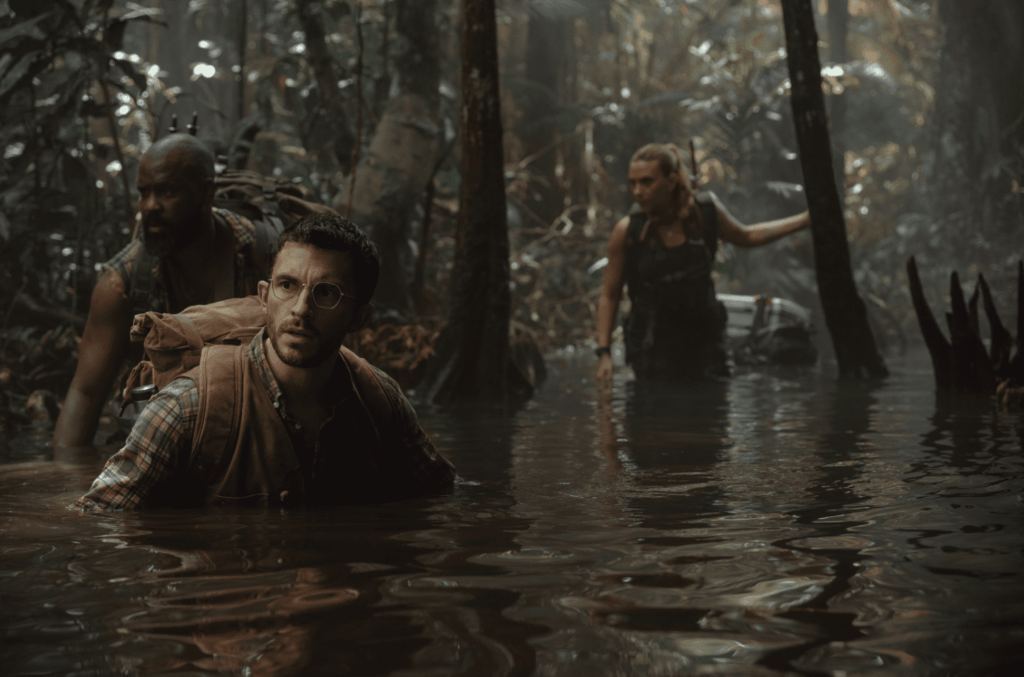
Let’s start with what works, because when Rebirth clicks, it really clicks. Johansson’s covert operations specialist Zora Bennett and Ali’s battle-hardened mercenary Duncan Kincaid are magnetic from their first scene together. These two could make reading assembly instructions feel like high stakes espionage, and their easy chemistry anchors the film’s stronger moments. Watching them navigate corporate intrigue and dinosaur-infested jungles with equal competence is genuinely thrilling.
Director Gareth Edwards, the visual mastermind behind Godzilla and Rogue One, initially seems like inspired casting for the franchise. His opening sequences crackle with B-movie energy that feels genuinely fresh for this series. When that iconic Jurassic Park logo appears, it’s accompanied not by John Williams’ sense of wonder, but by a deliciously creepy score that wouldn’t be out of place in a classic Universal monster movie. For those opening moments, Rebirth feels like it might actually live up to its ambitious subtitle.
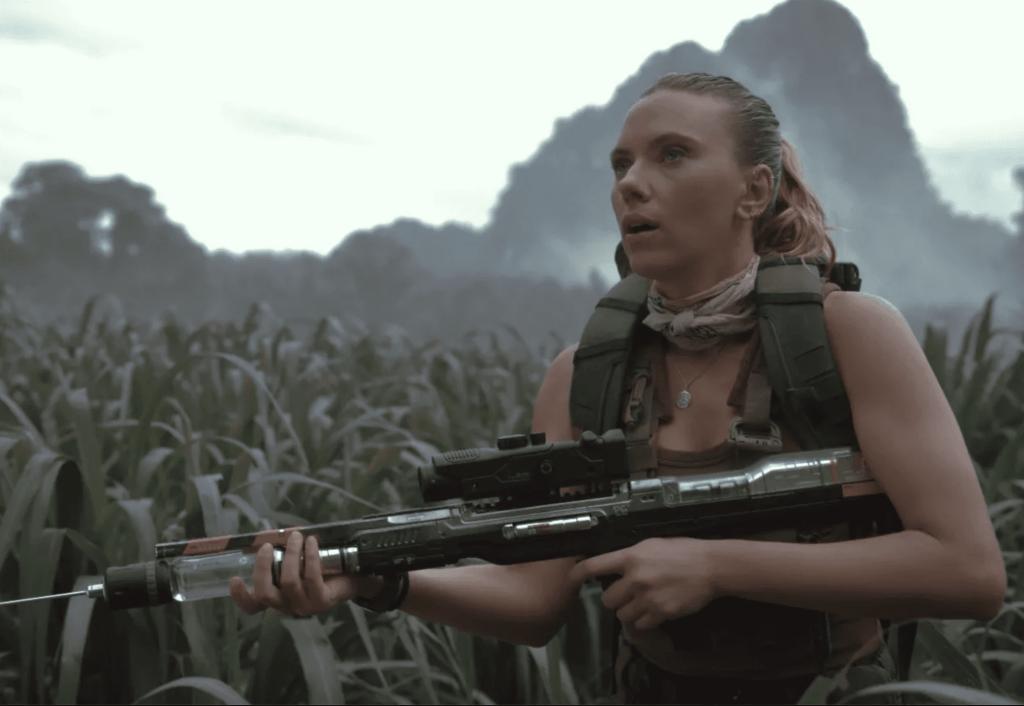
The film’s early storytelling efficiency is particularly impressive. An exposition scene between Rupert Friend’s corporate villain and Johansson’s operative unfolds against background action that elegantly establishes the post-Dominion world where humans and dinosaurs uneasily coexist. It’s the kind of smart, economical writing that makes you lean forward in anticipation.
The Familiar Territory
But here’s where Rebirth stumbles into well-worn footprints. Despite Edwards’ initial promise of something different, the film ultimately follows the Force Awakens playbook—a legacy sequel that remixes the original’s greatest hits rather than charting new territory. We get another mysterious island, another group of survivors, and another corporate conspiracy involving prehistoric DNA.
The problem isn’t that this formula can’t work—it’s that Jurassic Park was elegantly simple in a way that subsequent films have struggled to recapture. Spielberg’s original was about likable people trying not to get eaten while grappling with the ethics of playing God. Rebirth layers on corporate greed, family dynamics, scientific ethics, coexistence themes, and individual character arcs until the emotional core gets buried under plot mechanics.
Where Scale Meets Soul
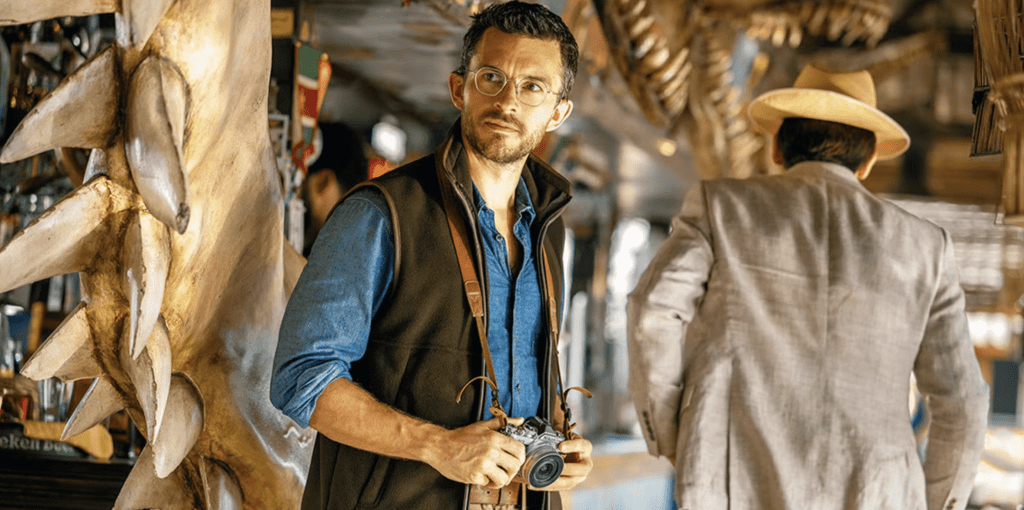
There’s a telling moment that crystallizes the film’s struggles—a scene where Zora and Jonathan Bailey’s Dr. Loomis encounter a herd of Titanosaurs in a lush valley. It’s clearly meant to evoke that breathtaking Brachiosaurus reveal from the original, complete with the same wide shot structure. But while Spielberg’s camera captured Dr. Grant’s perspective—putting us in his shoes as he experiences wonder—Edwards opts for a disconnected aerial view that belongs to no character. It’s visually impressive but emotionally hollow, prioritizing spectacle over the human experience that made the original moment magical.
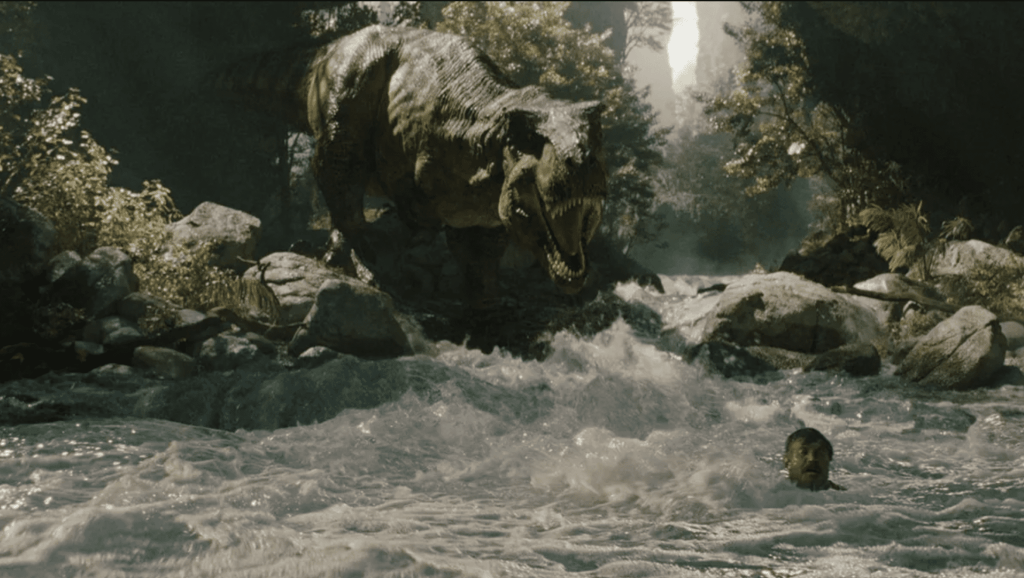
This disconnect extends to the film’s treatment of its monster. The genetically modified hybrid creature has genuine personality and delivers some genuinely cool moments, but it feels inconsistent in scale and presence. Sometimes it looms as a kaiju-sized threat, other times it shrinks to suit specific scenarios. For a director known for his mastery of scale, this feels like a missed opportunity.
The Delgado Dilemma
Manuel Garcia-Rulfo leads the film’s family subplot as a father crossing the Atlantic with his daughters, and the performances are genuinely strong. Garcia-Rulfo brings warmth and capability to his role, while Luna Blaise is compelling as his older daughter navigating typical family tensions with above-average charisma.
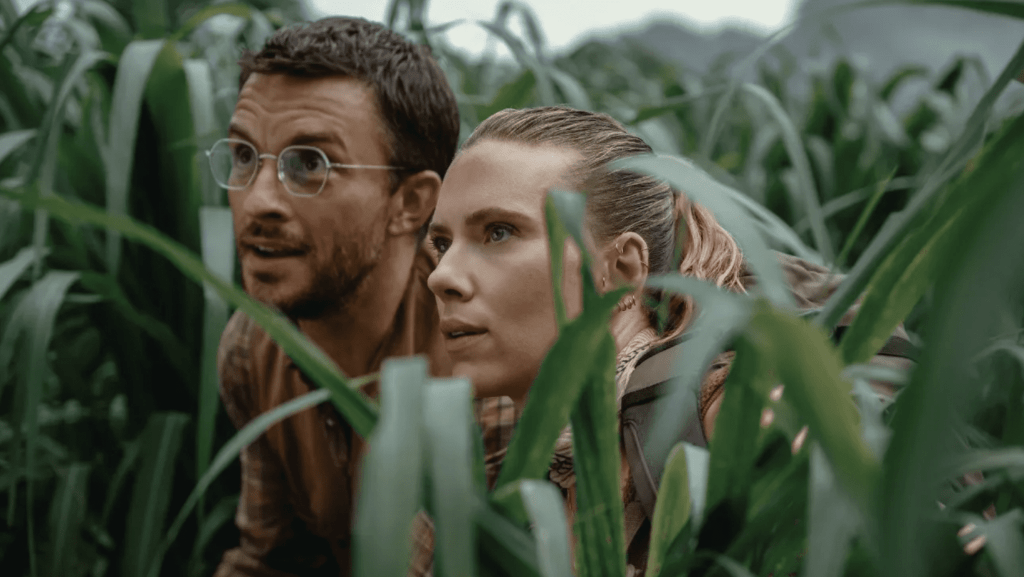
The issue isn’t the actors—it’s integration. The Delgados feel like they’re starring in a completely different movie, one that occasionally intersects with Johansson’s mercenary thriller. Their themes don’t meaningfully connect with the larger narrative, and their presence feels more obligatory than organic. The film might have been stronger focusing entirely on either the military operation or the family survival story, rather than trying to service both.
The Verdict: Evolution vs. Repetition
Jurassic World Rebirth ultimately becomes the very thing Jurassic World was mocking—a bigger, louder sequel asking “more teeth?” when the question should be “different teeth?” It’s a competently made film with strong performances and moments of genuine excitement, but it plays frustratingly safe for something promising a rebirth.

Edwards brings visual flair and horror movie sensibilities that occasionally elevate the material, while Johansson and Ali’s star power carries the film through its shakier moments. For franchise fans, there’s enough here to enjoy—the dinosaurs look fantastic, the action sequences deliver, and the opening act genuinely feels like something new.
But for a film called Rebirth, it spends too much time following the original’s blueprint without understanding what made that structure work. Instead of evolving the franchise’s DNA, it simply rearranges the same genetic material we’ve seen before.
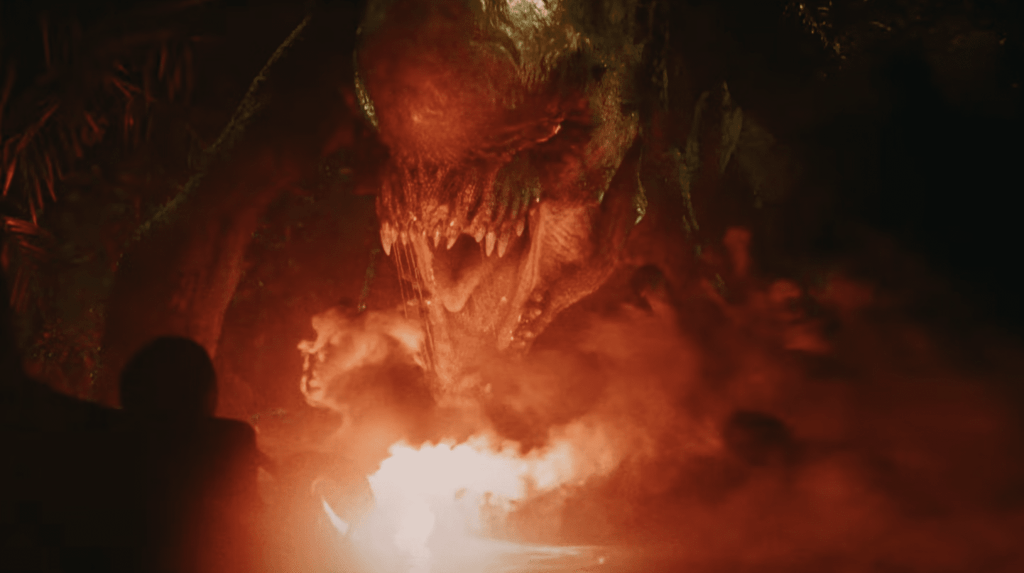
Jurassic World Rebirth isn’t a bad film—it’s a missed opportunity wrapped in impressive production values and elevated by committed performances. In a franchise that’s struggled to recapture its original magic, that might be enough for some fans. But for those hoping this would be the film to finally crack the code of what made the original special, the search continues.
Rating: 5.5/10
The dinosaurs still roar, the effects still dazzle, and the stars still shine—but the franchise’s most interesting evolution remains its first.