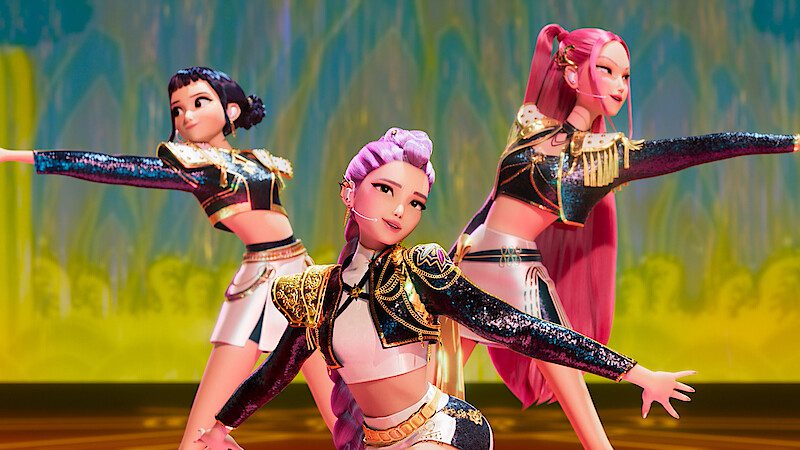
In a Hollywood animation landscape dominated by familiar narratives, Korean-American filmmaker Maggie Kang identified a glaring gap that would ultimately lead to one of Netflix’s most surprising global phenomena.
After more than a decade in the industry, Kang had never encountered a single Korean animated project — so she decided to create one herself.
The result was “Kpop Demon Hunters,” Netflix’s groundbreaking animated musical that became the first feature animation with all Korean characters, captivating audiences worldwide and exceeding even its creators’ wildest expectations.
The Genesis of a Cultural Revolution
Speaking at the Netflix Creative Asia conference during the Busan International Film Festival, Kang delivered a masterclass on how she transformed a simple concept into a global cultural bridge. Her motivation was deeply personal and professionally driven.
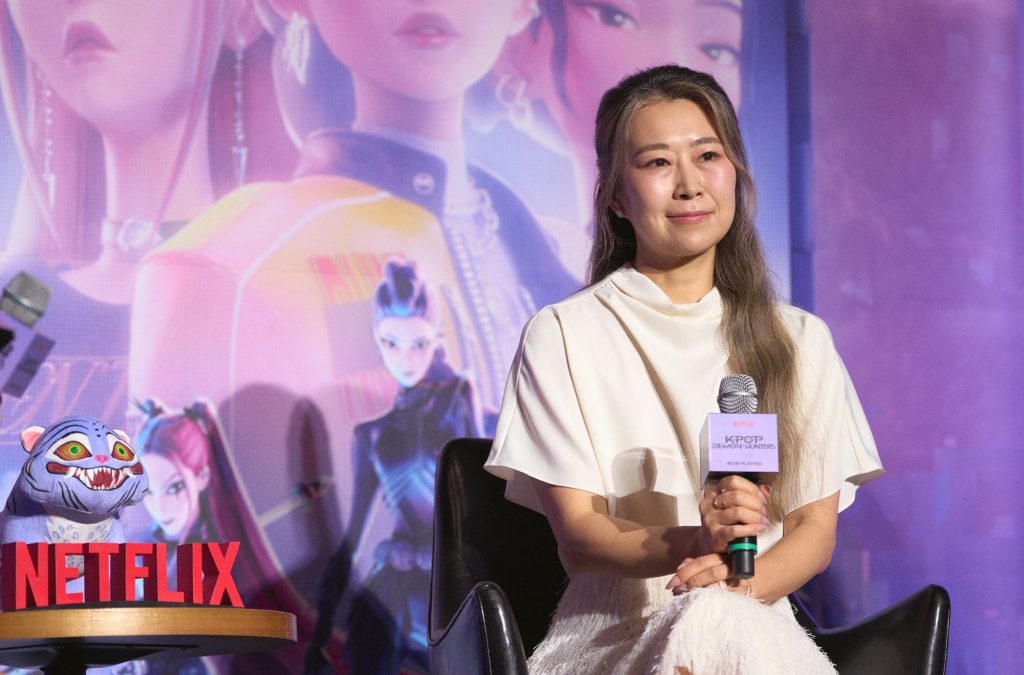
“I always wanted to see Korean represented on screen,” Kang told the audience Saturday. “I really wanted to work on a Korean project, but I really never came across one in the 12 or 13 years of working in the animation industry in Hollywood.”
This absence of Korean representation became the driving force behind what would become a meticulously crafted celebration of Korean culture, wrapped in supernatural adventure and musical spectacle.
From Ancient Mythology to Modern Music
The creative journey began with Kang’s childhood fascination with Korean mythology. Growing up with stories of dokkaebi, dalsin, and saja — traditional Korean supernatural creatures — she found the perfect foundation for her narrative.
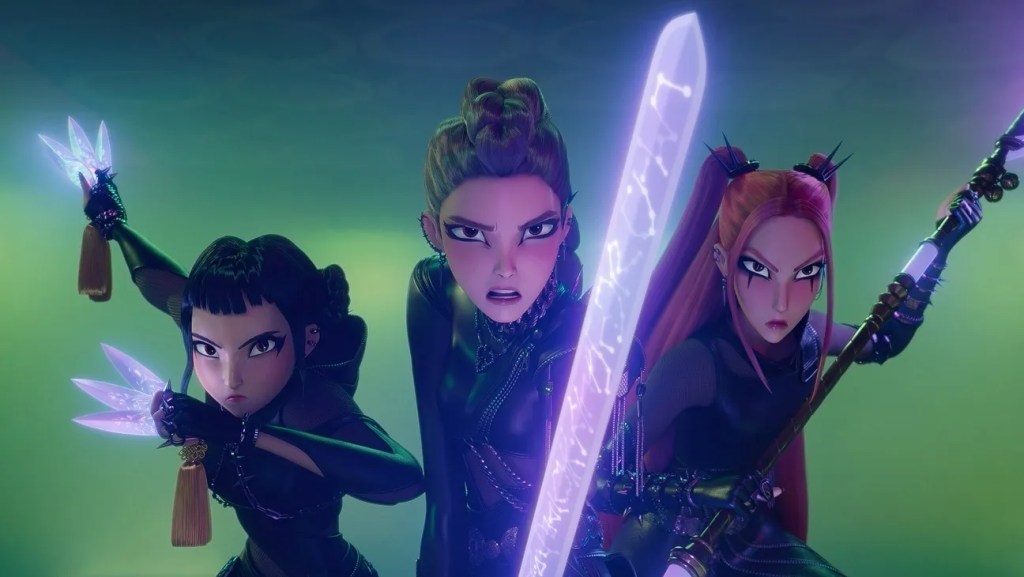
“The idea of demons naturally led to demon hunters, a group of really incredible women who fight demons,” she explained. However, Kang realized the concept needed an additional element to truly come alive. “But the idea needed something else. It just wasn’t enough.”
The missing piece was K-pop, a decision that transformed the entire scope of the project. “The movie instantly became larger in scale. It became a musical, and it just there was just more spectacle,” Kang said, recognizing K-pop’s unique ability to transcend cultural boundaries.
Rooting Fantasy in Authentic Tradition
Rather than simply grafting modern K-pop onto ancient mythology, Kang discovered a authentic cultural connection through Korean shamanic traditions. The breakthrough came through understanding mudang — Korean shamanism.
“We have this amazing tradition, which is the mudang. It’s Korean shamanism. So the idea of using music to, you know, and song to ward off demons. This is what the mudang did,” she explained.
This revelation gave birth to the film’s central concept: hunters who draw supernatural powers from song and dance, creating “sonic weapons to fight back demon hordes.” Kang drew specific inspiration from gut, traditional Korean folk dancers who performed protective rituals for their communities.
“In a way, they were really the first concerts in Korea,” she noted, elegantly connecting ancient tradition with contemporary K-pop culture.
Immersive Research and Cultural Authenticity
In 2022, Kang and her core creative team, including co-director Chris Appelhans, undertook an extensive research expedition to Korea. Their journey included visits to iconic locations: Gwangjang Market, Namsan Tower, Olympic Stadium, Myeongdong shopping district, and Seonsan Folk Village.
“You have to know Korea in order to show it just the way it is,” Kang emphasized. This philosophy shaped every visual detail, from Seoul’s meticulously modeled skyline to the authentic touches in restaurant scenes.
Bukchon Hanok Village proved particularly significant, chosen as the setting for the first meeting between protagonists Rumi and Jinyu. “The Hanok is like, is Ji-noo and the modern skyline we thought was Romi, modern and old, like put together,” Kang explained, describing how the juxtaposition of traditional and contemporary architecture perfectly reflected the characters’ own dualities.
The Devil in the Details
The production’s commitment to authenticity extended to microscopic cultural elements. Korean artists throughout the production consistently flagged important details, including one colleague’s suggestion to add napkins under place settings in a restaurant scene — “the kind of details that really speak to a Korean audience.”
The team incorporated quintessentially Korean elements like taekwondo, visiting both the Kukkiwon and the renowned K-Tigers demonstration team. “Their demonstrations really proved to us that dance and fighting could be seamlessly incorporated,” Kang observed.

Even the animal characters honored Korean heritage: Derpy the tiger drew inspiration from Korea’s national animal and chokdo art, while Sassy the three-eyed magpie completed the traditional Korean artistic pairing.
Crafting Authentic Korean Female Heroes
Creating compelling Korean female protagonists held special significance for Kang, who strived to make them “both appealing and aspirational and unique, but most importantly, Korean.” Among her creations, Mira holds a special place in her heart.
“I just think Mira is so cool, like, I just think she’s so beautiful in a totally different way that I look, and so I wish I was Mira,” Kang shared, revealing the personal connection she felt to her characters.
Musical Authenticity Through Industry Collaboration
The film’s musical foundation required genuine K-pop credentials. Kang collaborated with prominent K-pop producers, including teams from The Black Label led by industry heavyweight Teddy Park.
“We went to bonafide K-pop hit makers, from producers to songwriters to lyricists to make sure that the DNA of the K-pop music was the primary concern,” Kang explained.
The strategy paid off spectacularly. The soundtrack’s breakout hit “Golden” reached number one on the Billboard chart, while members of the internationally acclaimed group Twice covered the film’s “Takedown” track.
“Their excitement about the film really validated what we were trying to achieve and accomplish in the K-pop space,” Kang noted, highlighting how industry recognition validated their authentic approach.
The Power of Creative Partnership
Kang praised her collaborative relationship with co-director Chris Appelhans, describing their partnership as essential to maintaining the film’s artistic vision. “Story is king. If you don’t have story, nothing matters,” she emphasized, explaining their seamless process of trading scenes and providing mutual creative input.
“By the middle of it, we were so in sync that we almost shared a brain,” Kang said. Appelhans brought valuable cultural sensitivity to the project, having previously lived in China for two years while directing “Wish Dragon,” and being married to a Korean woman.
Global Success Beyond Expectations
The worldwide reception of “Kpop Demon Hunters” has astonished even its creators. “When you make a movie, you don’t think about you, don’t you just make it and hope that people connect to it,” Kang reflected. “This is, we didn’t expect any of this. It’s blown our minds.”
While eager fans frequently inquire about potential sequels, Kang maintains there’s “no official word” on future installments, though she and the team remain “excited for the possibilities of more stories.”
A Cultural Victory with Lasting Impact
The success of “Kpop Demon Hunters” represents more than entertainment achievement — it’s a breakthrough for Korean representation in global animation. Kang recognizes the broader cultural significance of the project’s reach.
“Every time they click the play button on Netflix, they are not just watching your movie, but they’re going back to Korean culture, which is truly incredible,” she concluded.
In an industry where authentic representation often takes a backseat to commercial considerations, Maggie Kang’s “Kpop Demon Hunters” proves that cultural authenticity and global appeal aren’t mutually exclusive — they’re actually the perfect harmony.