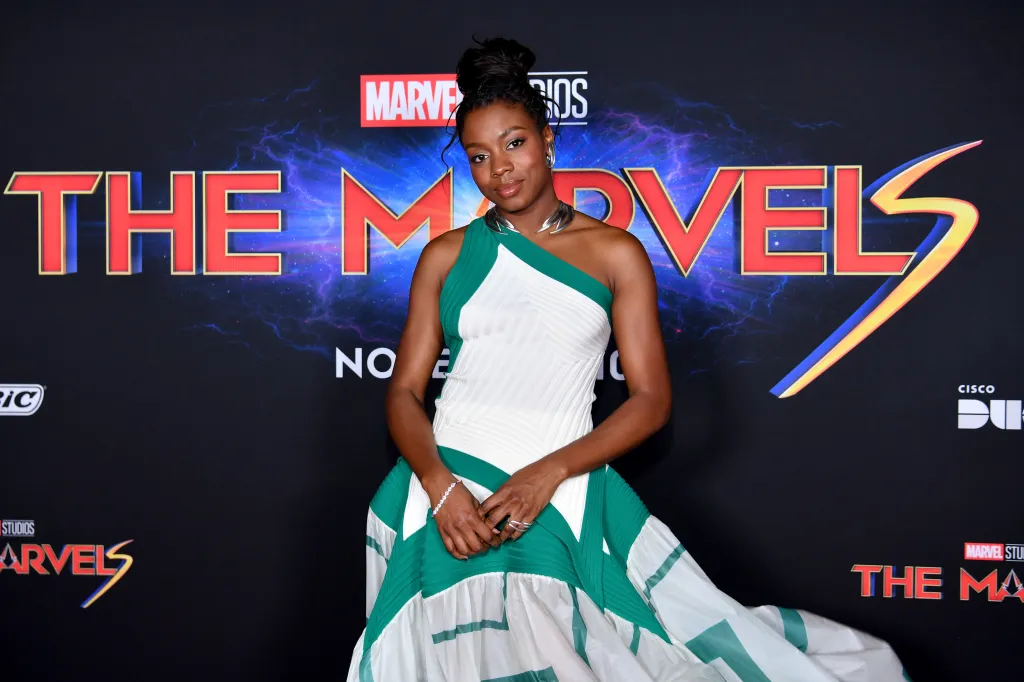
Two years after The Marvels became the MCU’s lowest-grossing film ever, director Nia DaCosta is pulling back the curtain on what went wrong—and her assessment is brutally honest.
In a candid interview with The Hollywood Reporter, DaCosta didn’t mince words about the fundamental problem that plagued her $374 million superhero sequel: “One of the issues I had with Candyman and Marvels was the lack of a really solid script, which is always gonna just wreak havoc on the whole process.”
A Tale of Two Productions
DaCosta’s revelation comes as she promotes her upcoming film “28 Years Later: The Bone Temple,” which she describes as “one of the best filmmaking experiences I’ve had.” The stark contrast couldn’t be clearer—while The Marvels suffered from script instability, her zombie sequel benefited from what she calls Alex Garland’s “amazing” screenplay.
“Alex Garland hands you a script, and you’re like, ‘This is amazing,'” DaCosta explained. “You don’t really have to change it, although I did, I basically asked for more infected. That was, like, my big contribution.”
The Numbers Don’t Lie
The script issues DaCosta describes help explain The Marvels’ catastrophic performance. Despite following the billion-dollar success of 2019’s Captain Marvel, the sequel managed only $206.1 million worldwide—making it the MCU’s first genuine box office disaster.
At just 105 minutes, The Marvels also stands as one of the shortest MCU films, with fans pointing to extensive post-production cuts as evidence of last-minute story changes. Entire sequences, including a musical planet subplot that was heavily trimmed, suggest a production struggling to find its identity.
Creative Vision vs. Studio Demands
DaCosta’s original concepts for the film painted a very different picture. Her initial pitch included time travel elements and the introduction of Adam Warlock, a popular comics character. However, Marvel Studios nixed both ideas—time travel was already being explored in the Disney+ series Loki, while Adam Warlock was reserved for Guardians of the Galaxy Vol. 3.
The final screenplay credits reflect this collaborative chaos, listing DaCosta alongside Megan McDonnell, Elissa Karasik, and Zeb Wells—a patchwork of writers from various Marvel projects trying to stitch together a coherent narrative.
Marvel’s “Plus-ing” Problem
DaCosta’s comments arrive as Marvel boss Kevin Feige continues defending the studio’s controversial “plus-ing” approach—constantly rewriting scripts during production. “There’s plus-ing happening every day on the Avengers: Doomsday set right now,” Feige recently told THR, seemingly oblivious to how this very practice contributed to The Marvels’ failure.
This philosophy stands in stark contrast to James Gunn’s approach at DC, where he’s insisted that films will shoot with finalized scripts already in place—a lesson learned from Marvel’s recent struggles.
What’s Next for Captain Marvel?
The fallout from The Marvels continues to reverberate through the MCU. While Brie Larson’s Captain Marvel is expected to appear in Avengers: Doomsday, Marvel hasn’t officially confirmed her involvement, and plans for a third Captain Marvel film appear nonexistent.
Meanwhile, DaCosta has moved on to what sounds like a far more satisfying creative experience with “28 Years Later: The Bone Temple,” launching January 16, 2026.
Her honest assessment of The Marvels serves as a sobering reminder that even with unlimited budgets and established characters, there’s no substitute for a well-crafted screenplay—something Marvel Studios might want to remember as they attempt to rebuild audience trust.