Sustaining a romantic comedy across multiple seasons is one of television’s trickiest high-wire acts. The genre’s reliable formula—meet-cute, obstacles, confession, happy ending—can quickly become repetitive when stretched across hours of runtime. Yet shows like You’re The Worst, Starstruck, and Colin From Accounts have proven it’s possible to evolve rom-com protagonists and relationships without sacrificing what made audiences fall in love in the first place.
Netflix’s Nobody Wants This earned its place in this pantheon with its charming 2024 debut. Now, Season 2 ventures into even more dangerous rom-com territory: exploring what happens after the grand gesture while keeping the swooning factor intact. Remarkably, it succeeds.
After the Chase Comes Reality
Season 1 ended with Noah (Adam Brody) literally running after Joanne (Kristen Bell) to declare his commitment, choosing her over the expectations of his work as a rabbi and the demands of his traditional Jewish family. It was swoon-worthy, cinematic, the kind of moment rom-coms are built for.
Season 2, created by Erin Foster and loosely inspired by her own life, asks the harder question: What now? The 10 new episodes follow Noah and Joanne as they navigate the aftermath of that romantic declaration, confronting the real sacrifices required to pursue their happily ever after.
The premiere immediately resurfaces the season’s central tension: Joanne’s potential conversion to Judaism. Noah still assumes it’s happening; Joanne believes they can continue as an interfaith couple. While this issue simmers throughout the season, threatening to boil over at any moment, Nobody Wants This believably deepens their bond through the mundane intimacies that follow grand gestures—merging friend groups, hosting parties together, attending each other’s family events.
The Radical Power of Healthy Communication
What makes Season 2 genuinely refreshing is its emphasis on mature, honest communication. These are adults trying to learn from their mistakes, working on themselves as individuals, not just as partners. They talk about their feelings. They apologize when they’re wrong. They try to understand each other’s perspectives.
This might sound boring on paper—where’s the drama, the misunderstandings, the will-they-won’t-they tension? But the show understands that watching two people actively choose each other while navigating real obstacles is far more compelling than manufactured conflict. The payoff in character development, particularly for Joanne, feels thoroughly earned.
Bell discovers newer, softer layers to the sarcastic Joanne without sacrificing what made the character compelling initially. She’s still sharp-tongued and skeptical, but we watch her genuinely grapple with what compromise means, what she’s willing to change and what she isn’t. It’s a nuanced performance that grounds the show’s sun-drenched fantasy in emotional reality.
Chemistry That Still Combusts
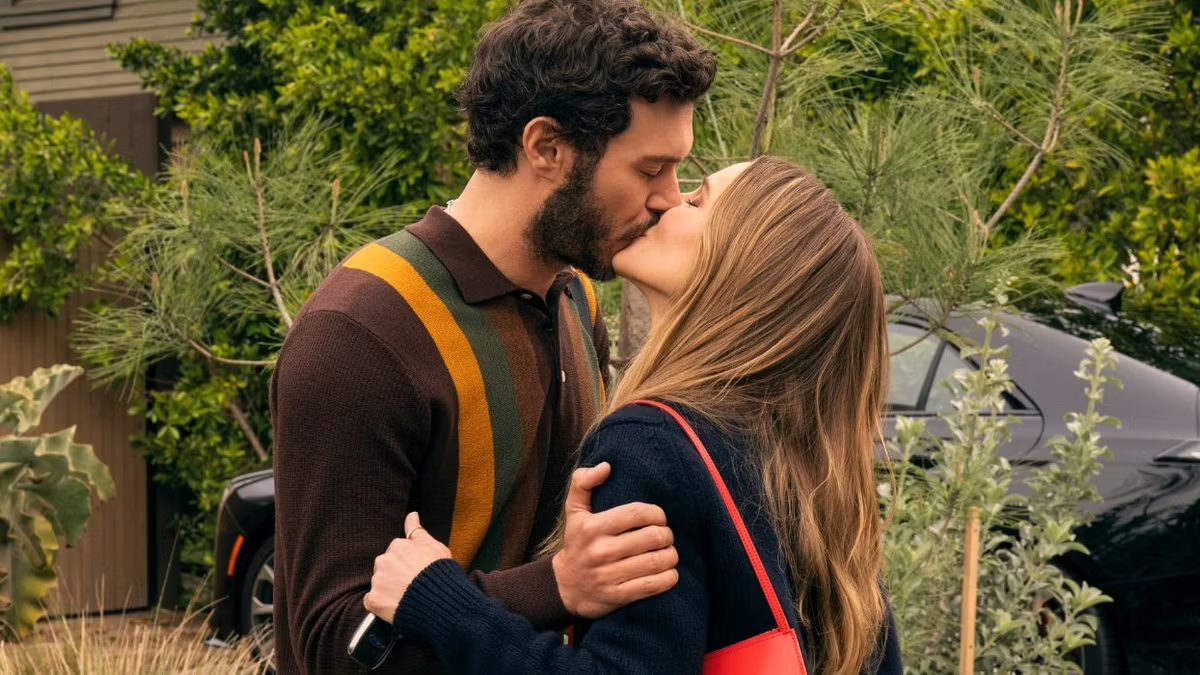
The central romance remains Nobody Wants This‘ greatest asset, and the two leads’ chemistry continues burning off the charts. That excellent first kiss from Season 1? Just a teaser. Brody nails the charismatic lover-boy persona—he’s sexy, sincere, and makes Noah’s devotion feel specific rather than generic. The man could read a grocery list and make it sound like poetry.
Their sincere performances ground a show that otherwise exists in an improbably gorgeous version of Los Angeles where the sun always shines, flowers perpetually bloom, characters are impeccably styled, and everyone lives in chic Nora Ephron-esque homes that real people definitely couldn’t afford. (Seriously, how does Joanne finance that big Spanish-style apartment on a podcasting salary?)
The production design, costuming, and contemporary needle drops from Chappell Roan and Sabrina Carpenter add to the breezy escapism. This is fantasy Los Angeles, and the show knows it. But Brody and Bell’s work ensures the emotional stakes feel real even when the setting doesn’t.
Supporting Players and Missed Opportunities
Jackie Tohn emerges as Season 2’s sneaky MVP as Esther, Noah’s uptight sister-in-law. Her character’s unexpected friendship with Joanne—born from Esther’s marital struggles and midlife crisis—becomes a genuine highlight. Watching these two women who should theoretically clash instead find connection and support feels organic and touching.
Mercifully, there’s far less of the family drama that dominated Season 1. Noah’s strict mother (Tovah Feldshuh) appears in fewer than half the new episodes, and Jewish stereotypes are considerably toned down in the portrayal of Noah’s parents. This shift allows more breathing room for the central relationship to develop.
The show stumbles with Joanne’s sister Morgan (Justine Lupe), who finds an unorthodox boyfriend (fellow Succession vet Arian Moayed) in what feels like a rushed, contrived subplot designed to create sister conflict. It’s not that Lupe isn’t hilarious—she’s actually the ensemble’s funniest performer—but this arc feels manufactured rather than earned.
Season 2 also suffers from introducing several promising faces—guest stars including Seth Rogen, Kate Berlant, Miles Fowler, and Girls‘ Alex Karpovsky—without giving them substantial material or following through beyond an episode or two. Returning star D’Arcy Carden faces similar treatment. At least Leighton Meester (Brody’s real-life wife) makes a memorable impression as Joanne’s middle-school nemesis in what feels like inspired stunt casting.
When Rom-Coms Grow Up
The dilemmas Noah and Joanne face feel relatable and serious—questions about religious identity, family expectations, personal compromise, and what we’re willing to sacrifice for love—yet the show packages and delivers them in a lighthearted, captivating manner. This tonal balance is difficult to achieve and even harder to maintain.
Nobody Wants This understands that rom-coms don’t have to be frivolous to be fun, and they don’t have to avoid real issues to remain escapist. The show respects both its genre conventions and its audience’s intelligence, trusting that we can handle complexity while still enjoying the swoon.
The Verdict
Season 2 of Nobody Wants This successfully navigates the treacherous post-grand-gesture territory where many rom-coms flounder. By emphasizing healthy communication, character growth, and the messy reality of merging lives while maintaining the central chemistry that made Season 1 sparkle, the show proves that falling in love can be just as compelling as staying in love.
Some subplots feel underdeveloped, and several promising guest stars are underutilized, but the true draw was and always will be the palpable central romance between Noah and Joanne. Their relationship feels lived-in and aspirational simultaneously—we believe these people, and we want to be them.
As far as TV rom-coms go, it’s so easy to fall for this one. In a television landscape often dominated by dark dramas and gritty antiheroes, Nobody Wants This offers something increasingly rare: a genuinely romantic show about fundamentally good people trying to build something together. That might sound simple, but in execution, it’s extraordinary.