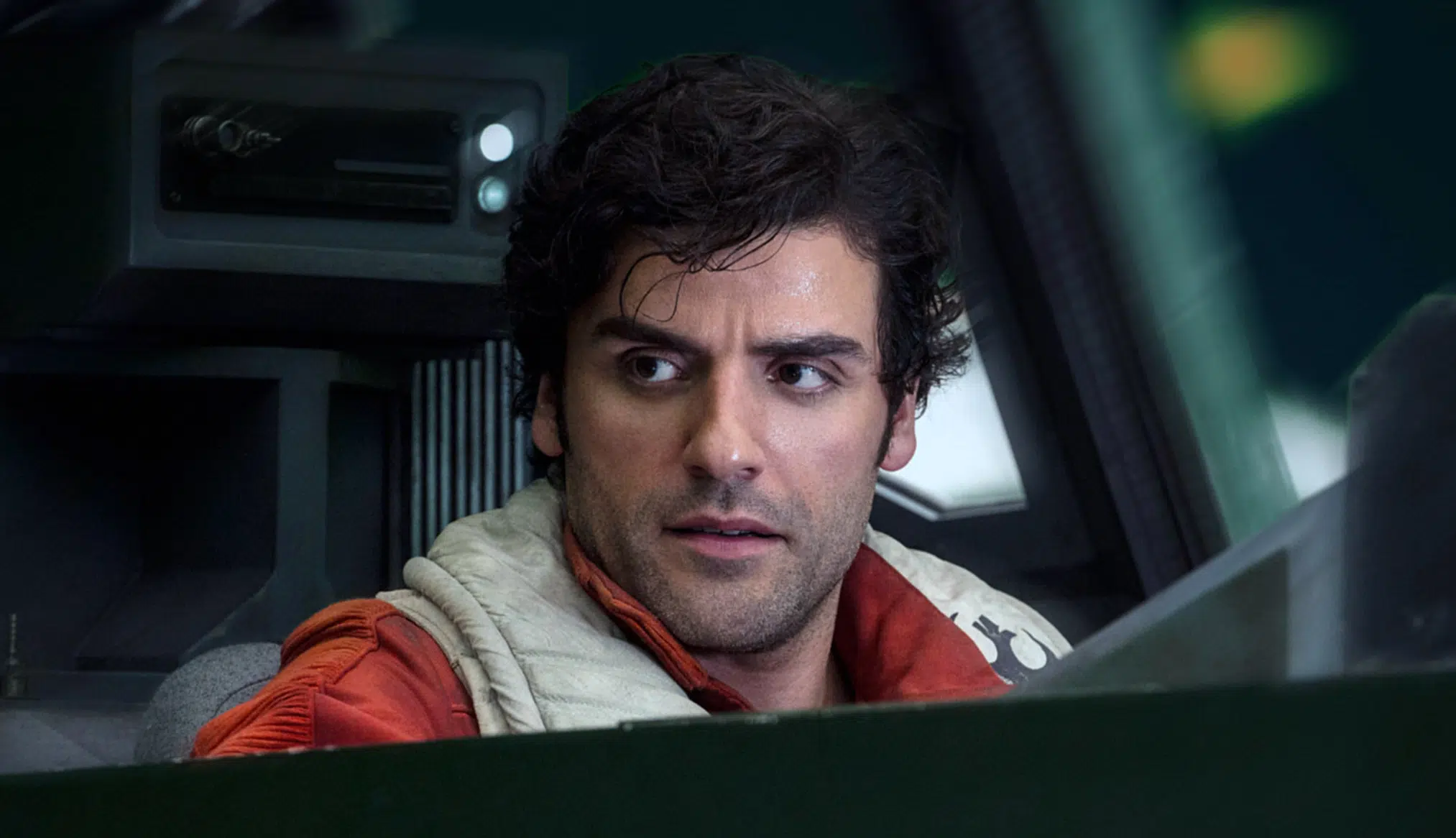
Oscar Isaac’s journey with Star Wars has been nothing if not complicated. The actor played the charismatic X-wing fighter pilot Poe Dameron across three films from 2015 to 2019, becoming a fan favorite despite the sequel trilogy’s divisive reception. In late August, speaking to Variety before the world premiere of “Frankenstein” at the Venice Film Festival, Isaac expressed openness to returning to the galaxy far, far away.
Then Disney pulled Jimmy Kimmel off the air.
Now, Isaac’s enthusiasm for a Star Wars return comes with a significant caveat—one that puts Disney squarely in his crosshairs over the company’s handling of political speech.
The New Condition
In a new interview with GQ magazine, Isaac was asked about potentially reprising his role as Poe Dameron. His answer was markedly different from his late-August comments.
“Yeah. I mean, I’d be open to it, although right now I’m not so open to working with Disney,” Isaac explained. “But if they can kinda figure it out and, you know, not succumb to fascism, that would be great… if that happens, then yeah, I’d be open to having a conversation about a galaxy far away. Or any number of other things.”
The timing matters. According to GQ, the interview took place just two days after ABC and Disney suspended production on “Jimmy Kimmel Live!” in response to Kimmel’s comments about the shooting death of Charlie Kirk. Kimmel returned to air four days after Isaac’s interview.
What Kimmel Said—And Why Disney Reacted
The controversy erupted following Kimmel’s September 15 monologue, delivered shortly after the arrest of Kirk’s suspected killer. The late-night host quipped: “We hit some new lows over the weekend with the MAGA gang trying to characterize this kid who killed Charlie Kirk as anything other than one of them.”
The comment got Kimmel suspended from his own show—a decision that reverberated through Hollywood and raised questions about Disney’s willingness to protect creative voices from political pressure.
When Kimmel returned to air on September 23, he addressed the controversy emotionally, stating it was never his intention “to make light of the murder of a young man.” The suspension, brief though it was, sent a clear message about Disney’s sensitivity to political backlash—a message that Isaac apparently received loud and clear.
From “Not Really What I Set Out to Do” to Conditional Return
Isaac’s relationship with Star Wars has evolved significantly over the years. Speaking on a Deadline panel in 2020, just months after “The Rise of Skywalker” premiered, the actor was notably ambivalent about his franchise experience.
“What I set out to do was to make handmade movies, and to work with people that inspire me,” Isaac said, adding that Star Wars films were “not really what I set out to do” as an actor.
He noted that he would “probably” not return to Star Wars, then delivered a line that became notorious among fans: “[Maybe] if I need another house or something.”
The comment suggested Isaac viewed his Star Wars tenure as more mercenary than artistic—a well-paying gig that diverged from his true creative aspirations rather than a passion project. It wasn’t the kind of quote that endears an actor to a passionate fanbase.
“A Slightly Dickish Thing”
To his credit, Isaac now acknowledges that going public with those sentiments wasn’t his finest moment.
“Yeah. That was a real likable quote. Jesus Christ,” Isaac told GQ. “Y’know, people ask you things, you say stuff, you don’t really think about it that much. I said a slightly dickish thing.”
The self-awareness is refreshing. Isaac’s original comments reflected genuine feelings—he’s an actor who came up through indie films and prestige projects, and the massive machinery of blockbuster franchises doesn’t necessarily align with his artistic sensibilities. But saying the quiet part loud, especially in a way that suggested he only valued Star Wars for the paycheck, understandably rankled fans who hold the franchise dear.
His evolution from that dismissive stance to being “more than open” to returning (as he told Variety in August) suggested a softening perspective. Perhaps distance from the intense production schedules and fan scrutiny allowed Isaac to appreciate aspects of the experience he’d overlooked while in the thick of it.
The Disney Problem
Now, however, there’s a new obstacle—one that has nothing to do with Isaac’s artistic ambitions and everything to do with Disney’s corporate decision-making.
By explicitly citing Disney’s handling of the Kimmel situation and using language like “not succumb to fascism,” Isaac is making a political statement about corporate courage and the protection of creative voices. He’s essentially saying: I’m open to returning to your franchise, but only if you demonstrate you won’t cave to political pressure when artists say things that provoke backlash.
It’s a bold stance, particularly because Disney is notoriously protective of its family-friendly brand and has historically been skittish about controversy. The company’s track record includes pulling episodes of shows over political content, firing directors over old tweets, and generally prioritizing risk management over defending artistic expression.
For Isaac to publicly condition his Star Wars return on Disney’s willingness to “not succumb to fascism” puts the company in an uncomfortable position. If they want him back as Poe Dameron—and given the character’s popularity, they might—they now have to consider whether they’re willing to meet his implicit demand for more spine when it comes to political pressure.
What This Means for Star Wars
Lucasfilm has multiple Star Wars projects in various stages of development, including films from directors like Sharmeen Obaid-Chinoy, James Mangold, and Dave Filoni. Whether any of these would feature Poe Dameron remained an open question even before Isaac’s latest comments.
Now, that question has additional layers. Would Isaac’s involvement be worth the potential controversy his presence might generate, given his public criticism of Disney? Would Disney be willing to meet whatever unspoken conditions Isaac might have beyond just “not succumbing to fascism”? And does Isaac’s stance resonate with other Star Wars actors who might share his concerns but haven’t spoken publicly?
The sequel trilogy remains divisive among fans, and Poe Dameron—while popular—isn’t so essential to future stories that Disney couldn’t simply move on without him. The company has shown willingness to recast iconic roles (see: Harrison Ford’s digital de-aging in various projects, or the multiple actors who’ve played younger versions of established characters).
The Larger Industry Context
Isaac’s comments arrive during a period of heightened tension between creative talent and studios over political speech and corporate values. Actors, writers, and directors are increasingly vocal about the working conditions, corporate policies, and political stances of the companies they work for.
Disney, as one of entertainment’s largest conglomerates, faces particular scrutiny. The company’s handling of Florida’s “Don’t Say Gay” law, its responses to various political controversies, and its general approach to balancing corporate interests with creative expression have all drawn criticism from talent and advocacy groups alike.
Isaac joining that conversation—and doing so specifically in the context of his Star Wars future—adds Hollywood star power to debates about corporate responsibility and the protection of creative voices.
The Bottom Line
Oscar Isaac went from playing one of Star Wars’ most beloved new characters to dismissing the franchise as something he’d only return to if he needed money, to being open to returning, to now conditioning that return on Disney’s political courage.
It’s been quite a journey—and one that perfectly encapsulates the complicated relationship many artists have with massive corporate franchises. These properties offer unprecedented reach and financial rewards, but they also come with creative constraints and association with corporate entities whose values and decision-making don’t always align with artists’ principles.
Whether Isaac will actually return as Poe Dameron now depends less on Lucasfilm’s creative plans and more on Disney’s willingness to meet his conditions—or at least to avoid future controversies that would make working with them unpalatable.
For now, Poe Dameron’s future in Star Wars remains uncertain, caught between Isaac’s evolving relationship with the franchise, his principles about who he works for, and Disney’s ongoing calculations about risk, reward, and what price they’re willing to pay for star power.
One thing is certain: if Isaac does return, it won’t be just for another house. It’ll be because Disney convinced him they’re worth working with again. And that might be the hardest negotiation of all.