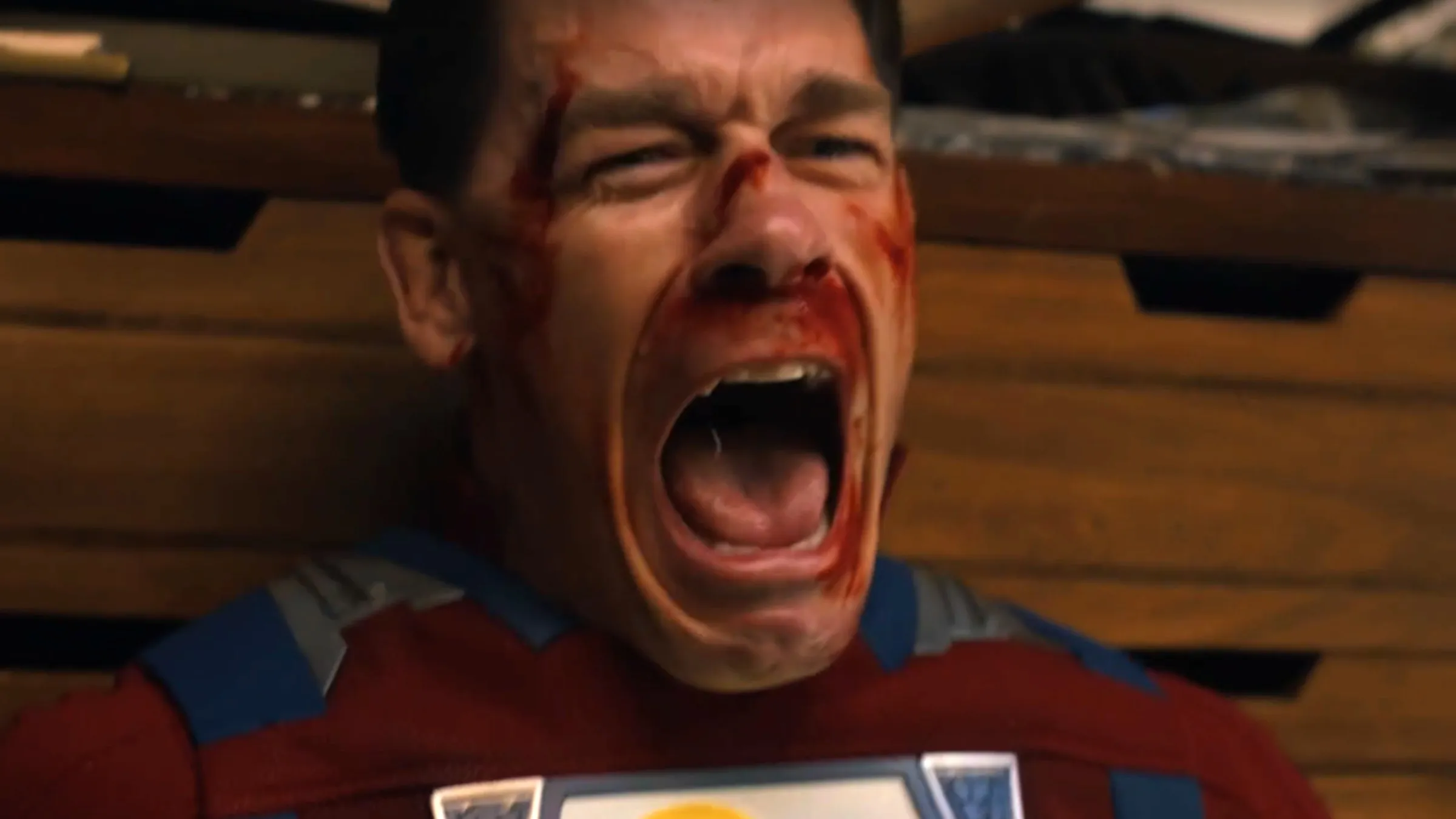
Warning: This article contains full spoilers for Peacemaker Season 2’s final episode!
The eight-episode journey of Peacemaker Season 2 has concluded on HBO Max, delivering a seismic shift in John Cena’s Christopher Smith’s life trajectory. Creator James Gunn promised the finale would establish crucial groundwork for 2027’s Man of Tomorrow, and he’s delivered—perhaps too well. The episode strongly suggests which character will serve as the unlikely common enemy forcing Nicholas Hoult’s Lex Luthor and David Corenswet’s Superman into an uneasy alliance. The problem? This revelation creates some troubling inconsistencies within the broader DCU narrative.
Let’s examine why the Peacemaker Season 2 finale raises eyebrows, while also exploring the significant introductions of Checkmate and the planet Salvation. Here’s your comprehensive breakdown of how Season 2 concludes and what it means for the future.
Chris Smith’s Triumph Turns to Tragedy
Everything appears to align perfectly for Chris in “Full Nelson’s” closing scenes. He finally achieves an emotional breakthrough with Jennifer Holland’s Emilia Harcourt. The team liberates a substantial cash reserve and channels it into establishing their own peacekeeping organization: Checkmate. Chris and Emilia even attend a Foxy Shazam concert, giving Gunn one final opportunity to feature Season 2’s infectious theme song.
But Christopher Smith’s happiness proves tragically fleeting. Just as victory seems complete, Frank Grillo’s Rick Flag and his ARGUS operatives tear it away. The episode concludes with Chris being abducted and transported to an ARGUS black site facility, where he’s unceremoniously deposited onto a world Flag has designated as his metahuman prison planet—confirmed by Gunn as Salvation. Flag exiles Chris as retribution for the death of his son, Joel Kinnaman’s Rick “Ricky” Flag Jr., abandoning Peacemaker defenseless in a hostile environment teeming with predatory creatures. The implication is clear: Chris is merely the first of many planned inmates.
The Post-Credits Scenes
Peacemaker Season 2 delivers not one but two post-credits sequences. The first shows Flag and his team meeting with Secretary of Defense Mori (James Hiroyuki Liao, reprising his Superman role). Mori awkwardly pitches his vision for a mosquito net-inspired containment field on Salvation, met with Flag’s thinly veiled impatience. The second offers an extended glimpse of Steve Agee’s John Economos spinning an elaborate, meandering story to distract ARGUS agents.
Both scenes inject levity after Chris’s grim exile, providing a slightly more humorous conclusion to the season.
The Rick Flag Problem
Before diving into Checkmate and Salvation’s comic origins, we need to address the most glaring issue: What happened to Rick Flag? Why has this character experienced such an abrupt, dramatic villainous turn in Peacemaker Season 2?
Throughout his DCU appearances, Grillo’s Flag has never been portrayed with genuine villainy. From the beginning, he represented the more rational, regulation-following counterpoint to Viola Davis’s Amanda Waller. While calling him an outright hero might overreach, Flag consistently occupied the morally righteous side of conflicts in 2024’s Creature Commandos. His brief Superman appearance similarly positioned him as appropriately distrustful of Luthor.
Even early in Peacemaker Season 2, Flag functioned less as a villain and more as a grieving father. His use of authority to pursue personal vengeance was understandable, even sympathetic—you could empathize with his pain. That empathy has largely evaporated by season’s end. Flag has transformed from someone who distrusts Luthor into someone who mirrors him. What meaningful distinction exists between Luthor constructing an interdimensional prison and Flag exploiting the Quantum Unfolding Chamber to dump prisoners on an alien world?
Flag’s treatment of his agents in Episode 8 feels particularly out of character. We watch him dispatch ARGUS troops into the QUC as expendable cannon fodder, joking and flirting while his personnel suffer horrific deaths. Again, while “hero” might be too generous, Flag previously demonstrated fundamental humanity throughout the DCU—a quality suddenly absent in Peacemaker Season 2’s conclusion.
Is Rick Flag the Man of Tomorrow Antagonist?
This jarring characterization pivot becomes especially concerning because all evidence points toward Flag assuming a larger role in Gunn’s Superman sequel, Man of Tomorrow. Despite widespread speculation about Brainiac serving as the primary threat menacing Luthor and Superman, Rick Flag Sr. increasingly appears to be the actual antagonist of Gunn’s next film.
Flag clearly harbors disdain for metahumans (despite previously commanding a team of them). He perceives them as generating more problems than solutions—disposable trash suitable only for exile to a remote, isolated planet. In Man of Tomorrow, Flag may determine that Luthor belongs among that group, forcing Luthor to align with his most despised adversary. Superman never refuses someone requiring assistance, particularly when he understands firsthand how dehumanizing abduction and imprisonment without due process truly is.
Flag may become the catalyst forcing Superman and Luthor to suspend their antagonism and pursue a shared objective. We might witness both characters banished to Salvation in Man of Tomorrow, setting up Cena’s Peacemaker for an inevitable return appearance. Absolute power seems to be corrupting Flag identically to how it corrupted Waller before him.
This sudden characterization reversal remains difficult to accept. Part of Flag’s appeal stemmed from him not being Amanda Waller. Why sideline Waller initially if we’re simply receiving another person with identical temperament running ARGUS? Hopefully, Gunn has additional plans for Flag that restore him to a more morally ambiguous DCU player rather than an unambiguous villain.
That said, Gunn would argue Flag was never the noble figure he appeared in Creature Commandos and Superman. At a recent press event, Gunn noted Flag is a profoundly flawed character whose greatest failing is overestimating his intelligence.
“We saw a guy in Creature Commandos, which, when you’re first watching that season, he seems like he’s the good guy, but he’s absolutely not,” Gunn explained. “He screws up everything again because he thinks he’s smarter than Waller, which he isn’t. He falls for this woman and is kind of played by her from the beginning. The fun thing about Rick Flag is he’s totally imperfect.”
Checkmate Makes Its DCU Debut
Late in Episode 8, Chris and his team establish their own peacekeeping organization: Checkmate. This organization possesses deep comic book roots, though this version significantly deviates from source material. The primary common thread involves Sol Rodríguez’s Sasha Bordeaux and Freddie Stroma’s Vigilante.
Created by Paul Kupperberg and Steve Erwin, Checkmate originally debuted in 1988’s Action Comics #598, with Waller forming it as a Task Force X splinter agency. Vigilante’s nemesis Harry Stein leads the organization, modeling its structure around chess pieces (characters serve as kings, queens, bishops, knights, etc.).
Checkmate played crucial roles in the 1989 crossover “The Janus Directive,” but the monthly series was canceled with 1991’s Checkmate #33. After fading into the DCU background, Checkmate resurged following 2005’s Infinite Crisis. Writer Greg Rucka spearheaded a modernized Checkmate series afterward, featuring his creation Sasha Bordeaux as a major character.
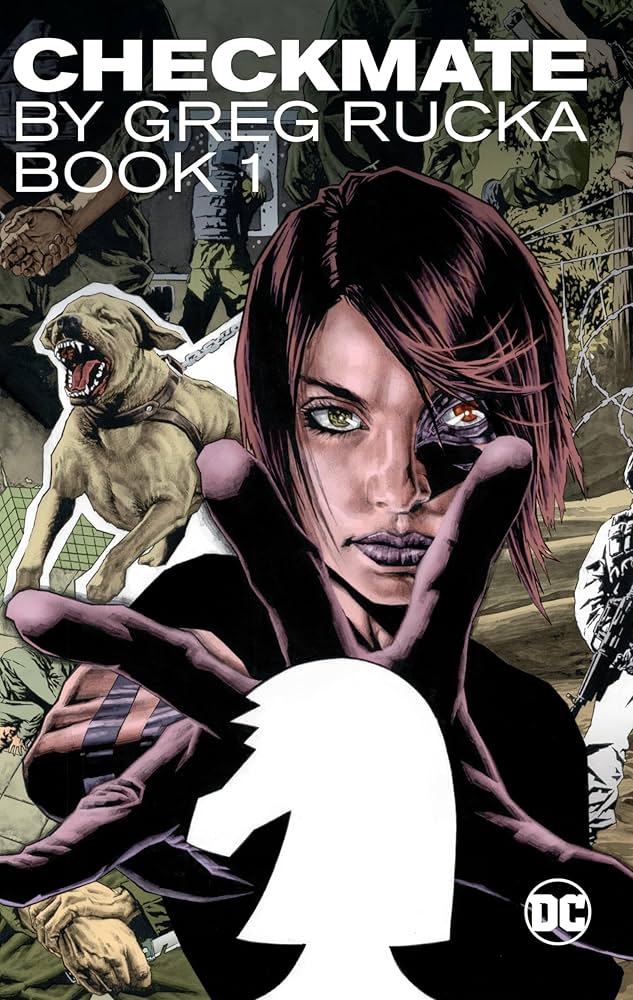
Gunn confirmed heavy inspiration from Rucka’s run at the press event: “I’ve always liked Checkmate. Those Greg Rucka stories of Checkmate are comics I really love. I always wanted to build Checkmate into it somehow. The idea of allowing Ade to really fulfill what is her destiny and be the one who founds Checkmate in this universe was important to me.”
Gunn revealed this provides the 11th Street Kids an opportunity for larger-scale heroism.
“When Auggie gives his speech at the end of Episode 7, some people judged it harshly. Some people think he’s a hero,” Gunn said. “I don’t know if he’s either of those things. I think he’s a good man trying to fight in small ways, but doesn’t think he can win anything bigger than that.”
Gunn continued: “Harcourt and Economos, they’re worker bees. They’ve worked for intelligence organizations their whole lives. Aug is speaking directly to Harcourt’s soul at that moment, and that leads into this desire to create an organization using all of the blood money that is truly for the good, separate from other DCU institutions—the government, corporations, and the Justice Gang. It’s the real culmination of the 11th Street Kids and their desire to be good.”
The DCU Adapts Salvation Run
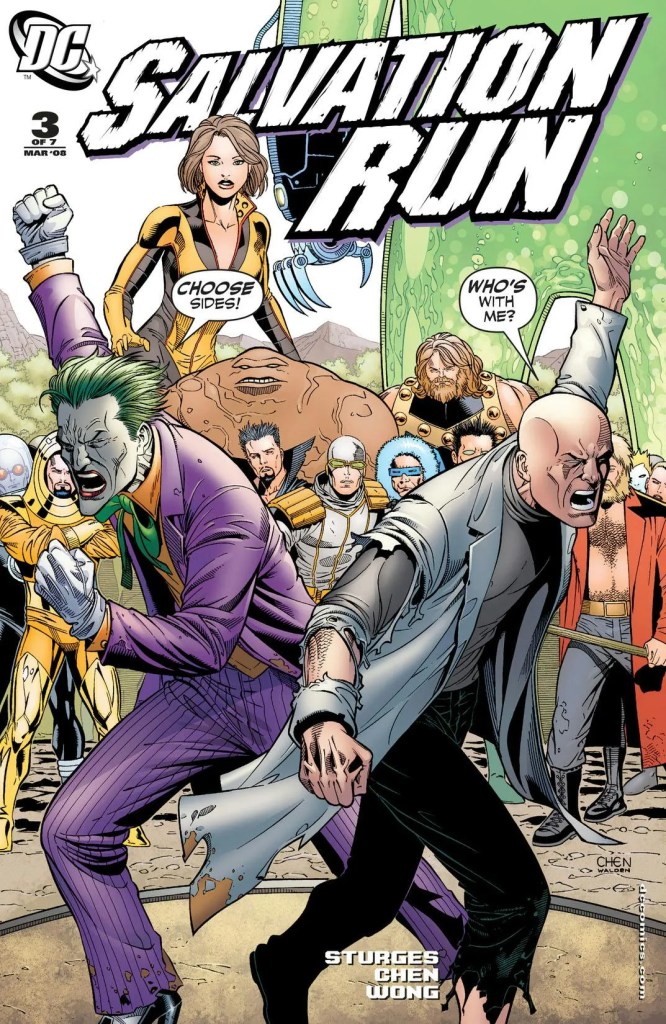
The planet Salvation also draws from early 2000s DC comics. This world was introduced in 2007’s Salvation Run, based on a story pitch from Game of Thrones author George R.R. Martin (though Bill Willingham and Lilah Sturges wrote the comic itself).
A precursor to 2008’s Final Crisis, Salvation Run addresses the fallout of DC villains like Joker, Lex Luthor, and the Flash Rogues being marooned on a distant planet dubbed Salvation. Similar to Peacemaker, the concept involves eliminating Earth’s metahuman problem. However, Waller and Task Force X don’t anticipate that Salvation is actually a secret Parademon training ground for Darkseid, giving Luthor and others access to Boom Tube technology.
“I liked the concept of creating this prison that was absolutely inescapable, but was also a little rash because they think it’s not dangerous from their initial tests,” Gunn explained. “I like the idea of creating this other environment where people considered bad metahumans are going to have to figure out a new way to create a society.”
DC fans shouldn’t expect complete 1:1 source material adaptation. While Gunn’s DCU draws comic inspiration, he’s never favored direct adaptations.
“It really is about the concept,” Gunn said. “There’s a very distinct storyline with Joker versus Lex Luthor and all that, but it’s not that. The part that really spoke to me was the beginning, where Rick Flag Jr. and Amanda Waller were like, ‘Metahumans are a pain. They keep escaping. Let’s just get rid of them permanently.’ And there are repercussions about sending bad guys to another dimension, and in this case, the sole person there right now is a good guy who has to survive on his own.”
As with the comics, where Salvation Run concluded with villains escaping and returning to Earth seeking vengeance, the real importance of Salvation in the DCU may involve what happens when these characters inevitably return. How do heroes like Superman and the Justice Gang react to Flag’s actions? Is there a threshold where ARGUS’s pursuit of peace and order becomes excessive?
Will There Be a Peacemaker Season 3?
One major question following Peacemaker Season 2’s conclusion: when and where will we see Cena’s Chris Smith next? Is Season 3 happening? Perhaps, but Gunn doesn’t appear focused on that immediately. The Salvation situation seems oriented toward establishing other projects like Man of Tomorrow and Creature Commandos Season 2 (which Gunn confirmed is currently being written).
“This is about the wider DCU and other stories in which this will play out right now,” Gunn stated. “That doesn’t mean there won’t be—I don’t want to never say never—but right now, no, this is about the future of the DCU.”
We’re expecting Cena to return in Man of Tomorrow, possibly in a more substantial capacity than his brief Superman cameo. Where that sequel leaves Chris may determine when and how Gunn tackles potential Peacemaker Season 3. Gunn does have plans for the alternate universe version of Chris’s brother Keith (David Denman) introduced in Season 2.
“I have plans for Keith,” Gunn said. “I just haven’t figured out exactly how it’s all going to work out. It’s hard with the interdimensional hopping stuff to make these things come together the way I’d like. I have what I would like to happen with Keith, but I’m not sure. I’ve got to make sure it’ll work.”
There’s also a clear path forward for the remaining cast without Chris. He may be marooned on Salvation, but Checkmate exists. Gunn could be planning a Checkmate spinoff series rather than Peacemaker Season 3, watching this fledgling organization grow into something larger. Whatever comes next, Gunn confirmed Checkmate will continue playing a key role.
“You’ll definitely see Checkmate carrying through,” Gunn said. “They’re a thing now, so they’re a part of what’s going to happen, and I think they’re going to be really good at what they do. When we see them next, their circumstances will be a little different than the startup they’re at now.”
The question remains: do you want Peacemaker Season 3 or a Checkmate spinoff? What are your thoughts on Flag’s heel turn? The DCU’s future hinges on how these narrative threads resolve.