MAJOR SPOILERS AHEAD FOR PREDATOR: BADLANDS
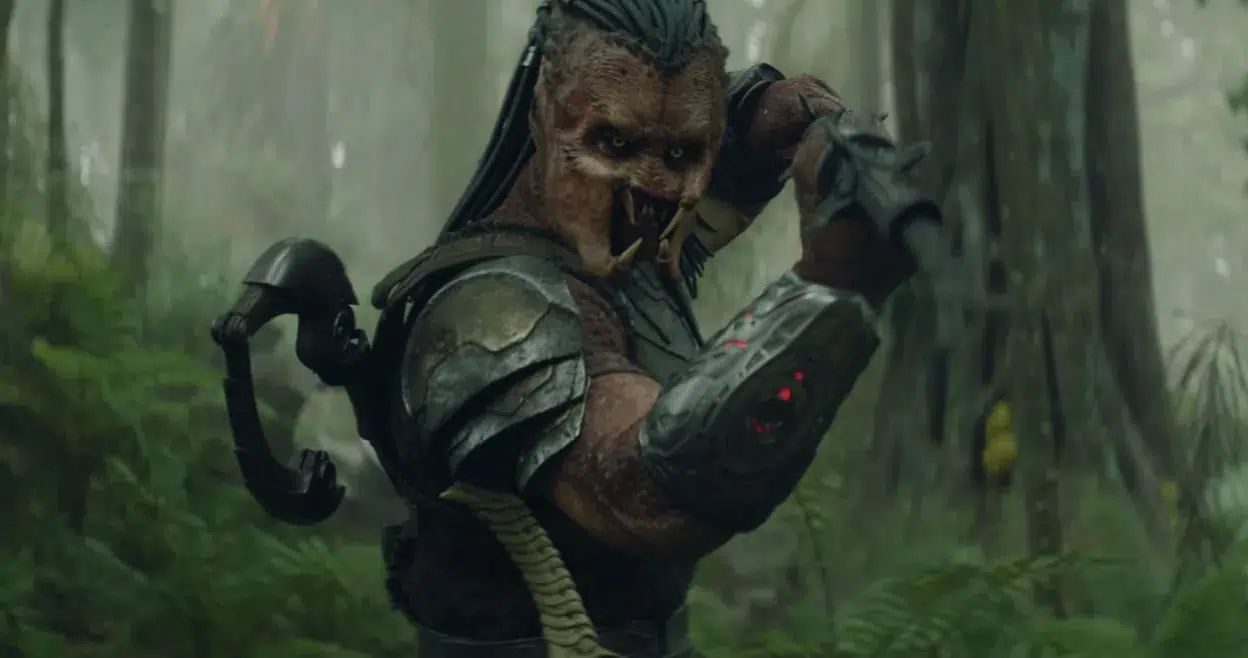
Dan Trachtenberg has done it again. After revitalizing the Predator franchise with “Prey” and continuing its momentum with the animated “Predator: Killer of Killers,” the director returns with “Predator: Badlands”—a film that does something no previous entry has dared: making a Predator the protagonist.
Now in theaters with strong reviews, including an 8/10 from IGN, “Badlands” represents a bold creative gamble that pays off. Starring Elle Fanning as Weyland-Yutani synthetic Thia and newcomer Dimitrius Schuster-Koloamatangi as lead Predator Dek, the film delivers both the visceral action the franchise is known for and surprising emotional depth. So how does this unlikely buddy adventure conclude, and what does it mean for the future? Let’s break it down.
The Setup: A Predator’s Quest for Validation
“Badlands” opens on Yautja Prime, the Predator homeworld, where we meet Dek engaged in trial by combat with his brother Kwei. Despite being spry and crafty, Dek is considered weak by his father, Njohrr—a prejudice rooted in toxic Yautja culture that values raw strength and kill counts above all else.
When Kwei tries to protect Dek from execution, Njohrr kills his own son, setting Dek on a quest for vengeance and validation. His target: the Kalisk, an unkillable beast on the planet Genna (known as the “Death Planet”), so fearsome that even Njohrr reportedly fears it.
The Unlikely Partnership: Predator Meets Synthetic
After crash-landing on Genna, Dek’s solo mission takes an unexpected turn when he encounters Thia, a Weyland-Yutani synthetic who lost her legs in a confrontation with the Kalisk. In a darkly comedic twist reminiscent of C-3PO strapped to Chewbacca’s back, Thia literally rides along on Dek’s journey, her torso attached to his frame.
Their cross-planet trek introduces Bud, a small creature that Thia befriends, and gradually reveals the film’s thematic core: the value of connection over conquest. Thia’s story about Earth’s wolves—where the “Alpha” is the one who best protects the pack rather than the most dominant killer—plants seeds that fundamentally change Dek’s worldview.
The Antagonist: When Synthetic Turns Against Synthetic
The film’s villain emerges in Tessa, Thia’s companion synthetic (also played by Fanning), who becomes separated from Thia during their initial Kalisk encounter. Recovered and repaired by Weyland-Yutani, Tessa leads the company’s bioweapons division in hunting the Kalisk, commanding an army of synthetic soldiers.
Notably, “Badlands” features no human characters—an interesting creative choice that keeps the focus squarely on Dek and Thia’s developing bond while positioning Weyland-Yutani as an institutional antagonist rather than individual human villains.
The growing rift between Thia and Tessa mirrors Dek’s disillusionment with his own culture, creating thematic symmetry that elevates the film beyond mere action spectacle.
The Climax: Rejecting Toxic Culture
In the film’s final act, Dek makes a choice that would have been unthinkable at the story’s beginning: he abandons his mission to kill the Kalisk in order to rescue Thia from Tessa’s clutches.
Using an arsenal of weapons and tools gathered during his quest, Dek infiltrates the Weyland-Yutani compound and systematically destroys Tessa’s synthetic soldiers. The action culminates in several revelations:
Bud is a baby Kalisk. The creature Thia befriended is actually the offspring of the “unkillable” monster Dek was hunting, reframing the entire mission.
Dek frees the adult Kalisk, reuniting mother and child—a direct rejection of the hunt-focused mentality he was raised with.
Tessa’s final battle features a construction mech that feels like a supersized version of Ripley’s exosuit from “Aliens,” paying homage to the broader sci-fi legacy both franchises share.
The adult Kalisk devours Tessa, but the villainous android detonates a freeze grenade from inside the creature’s stomach, killing it in a pyrrhic victory. Tessa is ultimately destroyed, Thia’s body is repaired and reunited with her legs, and Dek returns to Yautja Prime fundamentally changed.
The Confrontation: Father vs. Son
Dek’s homecoming doesn’t bring reconciliation—it brings reckoning. He challenges and kills Njohrr in front of the entire clan, finally proving his strength on his father’s terms. But then Dek does something revolutionary: he refuses to rejoin the clan.
Instead, he stands alongside Thia and a now much-larger Bud (apparently Kalisks grow fast), proclaiming them as his true clan. It’s a complete rejection of the toxic, violence-obsessed culture that defined his upbringing, replacing it with chosen family built on protection and care rather than domination.
The Cliffhanger: “My Mother”
Just as Dek establishes his new clan, another Predator ship appears on the horizon. When Thia asks who’s coming, Dek responds with two loaded words: “my mother.”
The film ends there, introducing a massive question mark for potential sequels. Who is Dek’s mother? What role did she play in his upbringing within a patriarchal warrior culture? Will she approve of his rejection of tradition, or become the next antagonist?
It’s a tantalizing setup that leaves audiences wanting more while still providing narrative closure for Dek’s immediate journey.
What This Means for the Predator Franchise
With three Predator films now under his belt—”Prey,” “Killer of Killers,” and “Badlands”—Dan Trachtenberg has effectively become the franchise’s creative custodian. His approach demonstrates a clear vision: honoring classic sci-fi conventions while finding new ways to express them, pairing creative action with emotional stakes, and trusting audiences to connect with non-human protagonists.
“Badlands” exemplifies what Trachtenberg does best. Making a science fiction film with zero human characters and a lead as alien-looking as a Predator work dramatically—not just as action spectacle—is a monumental achievement. The fact that the film manages this while earning a PG-13 rating (despite considerable carnage involving multi-colored alien blood) shows just how arbitrary MPAA standards can be.
Future Installments: What’s Next?
While the mother’s arrival provides a clear sequel hook, no official follow-up has been announced. If Disney pursues “Badlands 2,” Dek and Thia will presumably return to continue their story. The film otherwise works as a fairly self-contained adventure with all major plot threads resolved.
Trachtenberg has openly discussed his Marvel Cinematic Universe-inspired approach to building this Predator universe. “Killer of Killers” teased Amber Midthunder’s Naru from “Prey,” and with “Alien: Romulus” receiving a sequel continuing Cailee Spaeny and David Jonsson’s characters, the pieces are positioning for potential crossover events.
Don’t expect direct connections between “Badlands” and other entries yet—there are no cameos of characters frozen in ice from “Killer of Killers,” and beyond Weyland-Yutani’s presence, no Alien franchise crossover elements. But Trachtenberg has acknowledged the possibility of a future AVP film, and with multiple protagonist threads now established across the expanding universe, it feels like a matter of when, not if, these storylines intersect.
Is There a Post-Credits Scene?
Not exactly. A title card appears at the end of the movie, followed immediately by the final scene where Dek, Thia, and Bud see the approaching ship. After that moment concludes, the credits roll without additional scenes.
The Bottom Line
“Predator: Badlands” succeeds as both a thrilling sci-fi adventure and a surprisingly thoughtful exploration of toxic masculinity, chosen family, and cultural evolution. By centering a Predator protagonist and forcing audiences to empathize with a creature typically positioned as monster, Trachtenberg expands what the franchise can accomplish.
Dek’s rejection of his father’s worldview—choosing protection over domination, connection over conquest—gives the film emotional weight that elevates it beyond the hunt-and-kill formula that defined earlier entries. That it manages this while delivering the visceral action and creative creature design fans expect demonstrates why Trachtenberg has become indispensable to the franchise’s future.
The mother’s arrival promises that Dek’s journey isn’t over. Whether we see that story continue in a direct sequel, as part of a larger crossover event, or through other media remains to be seen. But after three consecutive wins, Trachtenberg has earned the benefit of the doubt.
For now, “Predator: Badlands” stands as proof that even a franchise pushing forty years old can find new stories worth telling—as long as you’re willing to question the assumptions that defined the original. Sometimes the most revolutionary act isn’t hunting the most dangerous prey; it’s choosing not to hunt at all.