Warning: Spoilers ahead for the Project Hail Mary movie and novel.
Let’s get something straight right out of the gate: the Project Hail Mary movie Rocky-led adaptation is not a particularly faithful translation of its source material when it comes to the technicalities. Apologies to my fellow sci-fi nerds who were looking to watch a man look through a microscope and crack jokes about Xenon for several hours—the film only has a few scenes of the former.
Nevertheless, what Lord and Miller’s film lacks in laboratory precision, it more than makes up for in emotional resonance. By centering the narrative on the relationship between Ryland Grace and his alien counterpart, the film ensures that the story soars where it counts.
The Science of Omission
In Andy Weir’s novel, pages are devoted to the discovery of “Astrophage,” the microorganism threatening our sun. We get deep dives into the particulars of interstellar fuel, the logistics of a suicide mission to save humanity, and the meticulous problem-solving that makes Weir’s writing so addictive.
The film, however, breezes past the whiteboards. Instead, it leans into its greatest strength: the bond between Ryland Grace (Ryan Gosling) and Rocky.
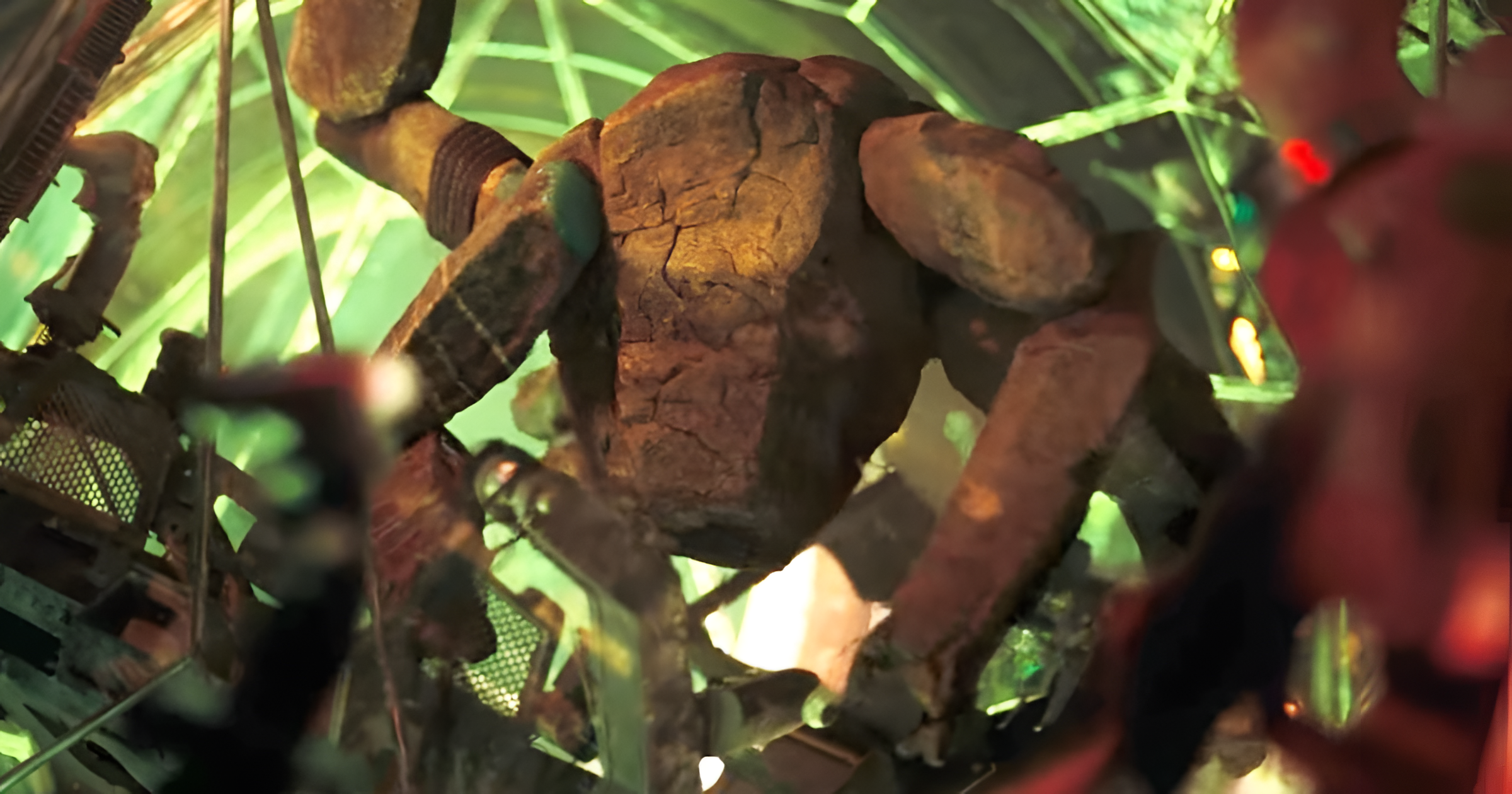
Rocky—a spidery, smart, yet sillily rock-covered being from a distant system—is the (pardon the pun) rock-solid foundation of the movie. While the “how” of the science is often hand-waved, the “why” is felt through every interaction between these two lost souls. Exactly like he is in the book, Rocky is thoughtful, funny, compassionate, and mournful. Though his heart is encased in literal stone, he brings a warmth to the cold reaches of space that makes the high-budget spectacle feel meaningful.
Ryan Gosling and the Ultimate Co-Star
While Gosling delivers his signature blend of comedic timing and soulful “everyman” energy, the film is at its absolute best when he’s playing off of Rocky. It’s a testament to the talented craftspeople and VFX artists that the least human character in the film provides its greatest humanity.
Rocky isn’t “cute” in the conventional sense. This isn’t a “Baby Yoda” situation where a character is given cloyingly big eyes and infant-like mannerisms to sell plushies. Rocky doesn’t even have a face we can discern. Instead, we come to love him because he feels like a fully-formed creature that evolved entirely independent of us. He is a master mechanic, capable of fixing anything with his many limbs—including some of the bumpy story beats and omissions from the source material.
The Magic of James Ortiz and Puppetry
A massive amount of credit belongs to James Ortiz, who serves as both the puppeteer and the voice of Rocky. Lord and Miller’s decision to blend practical effects with digital polish creates a sense of verisimilitude that CGI alone often lacks.
From the opening moments where we only see Rocky pantomiming his needs through a divider, you are as fully invested in this connection as you were when Elliott first met E.T. There is a refreshing restraint in how the film keeps Rocky largely hidden at first, building a sense of wonder that pays off once we see him in full. Whether he’s rolling around in his “hamster ball” protective shielding or “speaking” through musical chords, Rocky feels alive.
Bridging the Interstellar Gap
Rather than being just another film about a human surviving in space alone, the Project Hail Mary movie Rocky focus allows the story to tap into a universal truth: bridging barriers and forming bonds is what existence is all about.
In many ways, we feel the losses and setbacks of the mission through Rocky even more than we do through Grace. When the climax arrives and daring maneuvers are attempted to save their respective worlds, it is Rocky’s potential sacrifice that sears itself into your brain. The film might have what feels like three different endings, losing some narrative momentum as a result, but it never loses the impact of this character.
The Final Verdict: A Mission Worth Taking
The truth is, even if the physics are a bit “lite,” the emotional gravity is heavy. By the time the credits roll, you realize that if you were trapped millions of miles from home attempting to save the world, there is no other being in the universe you’d want by your side than that goofy little rock guy.
Lord and Miller have proven that while you can lose the science in an adaptation, you can’t lose the soul. And Rocky has enough soul to power a dozen ships to Tau Ceti and back.
What did you think of the transition from page to screen? Did the film’s version of Rocky live up to the one in your head, or did you miss the “hard science” of the novel? Let’s talk about that ending in the comments!