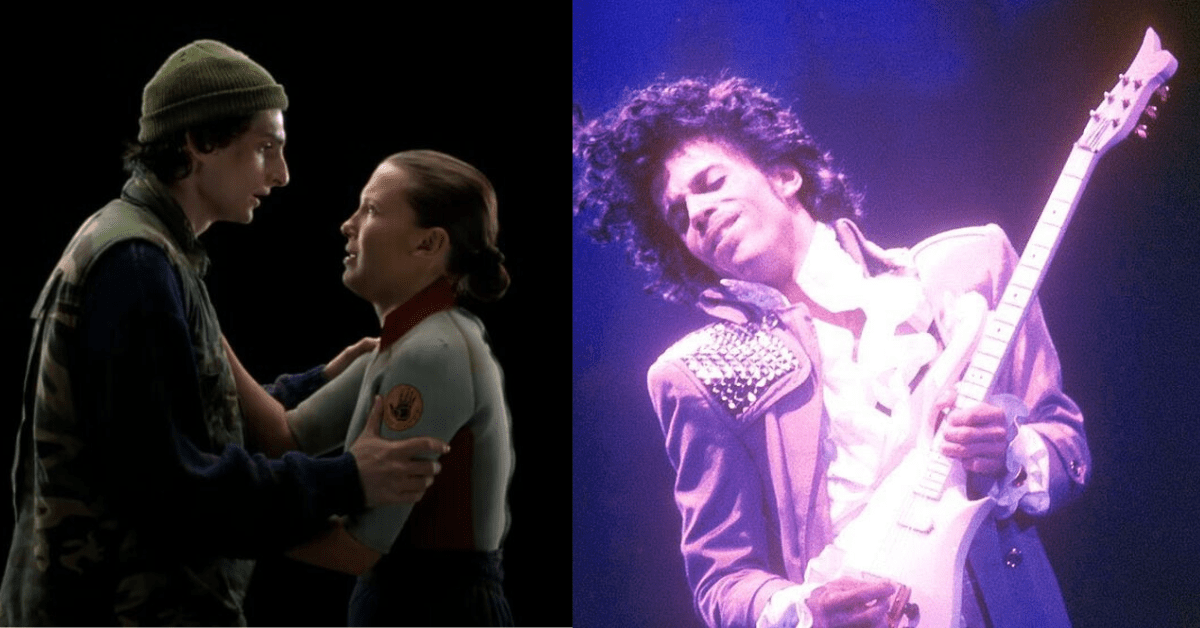
The show’s emotional, era-defining needle drops didn’t just score scenes—they launched a new generation of ’80s music fans, proving the series’ cultural power extends far beyond the screen.
In its final, devastating moments, Stranger Things did what it has always done best: it paired iconic ’80s music with profound emotional beats, creating moments that resonate deeply enough to transcend the show itself. The result? A seismic shift on streaming platforms, as millions of viewers turned from viewers into listeners, chasing the feeling the finale left behind.
According to Spotify data, global streams of Prince’s “Purple Rain” surged by a staggering 243% in the 48 hours following the finale’s release on New Year’s Eve. The impact was even more pronounced with Gen Z listeners, whose streams of the epic power ballad skyrocketed by 577%. The reason is etched into every fan’s memory: the song scored the heart-wrenching farewell between Eleven and Mike, as she seemingly sacrificed herself to seal the Upside Down forever.
But “Purple Rain” wasn’t alone. Prince’s “When Doves Cry,” which played as the crew made the fateful decision to destroy the interdimensional bridge, saw a 200% global increase. The ripple effect lifted Prince’s entire catalog by 190%, introducing his genius to a cohort of listeners who weren’t born when Purple Rain the album was released.
More Than a Soundtrack: A Spiritual Connection
The choice of “Purple Rain” was more than just a period-appropriate needle drop; it was a thematic masterstroke. Prince himself described the song as representing “the end of the world,” a fusion of red (blood) and blue (sorrow) where one finds love and lets faith be a guide. It’s about purification, a new beginning, and a spiritual journey through pain.
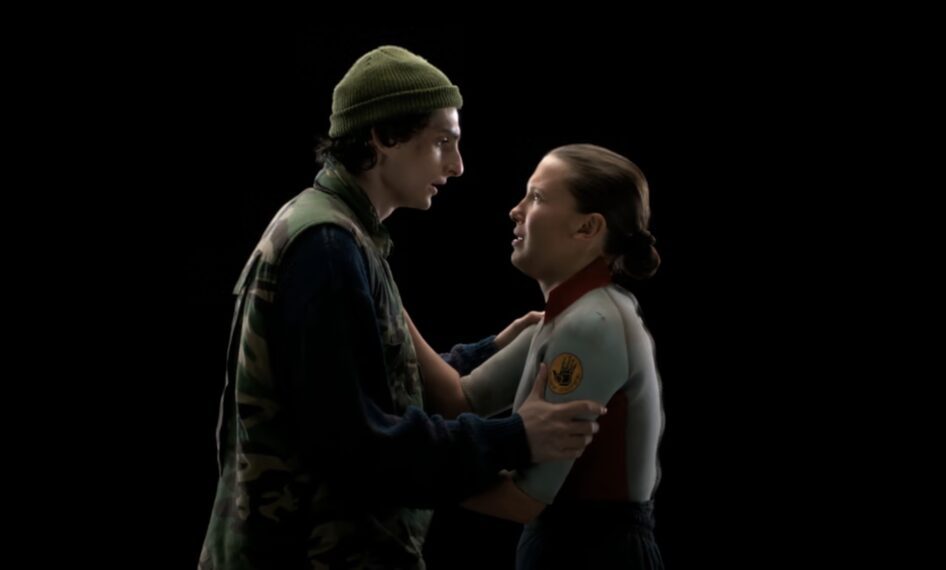
This definition mirrors Eleven’s arc perfectly. Her sacrifice—whether literal or a clever illusion, as Mike chooses to believe—is about creating a purified, safe world for those she loves. Her goodbye is the “end of the world” for her relationship with Mike, but it’s driven by a faith in his future. The song’s themes of liberation and hope for “something new” directly parallel Mike’s final monologue, where he imagines Eleven alive and free in a faraway land with “three waterfalls.”
A Season of Resurrections
This finale phenomenon continues a trend established by Stranger Things Season 5. Volume 1 sparked similar revivals:
Diana Ross’s “Upside Down”: Saw a 1,250% increase in Gen Z streams (a delightfully on-the-nose choice for the show).
Tiffany’s “I Think We’re Alone Now”: Jumped 880% with Gen Z.
Even older classics like The Chordettes’ “Mr. Sandman” (1954) and ABBA’s “Fernando” (1976) saw massive Gen Z boosts of 740% and 645%, respectively.
The Lasting Legacy: Passing the Torch
The data tells a clear story: Stranger Things has functioned as one of the most influential curators of classic pop music for a new generation. The show’s true finale wasn’t just the closing of the gate to the Upside Down; it was the opening of a digital gate to Prince’s discography for millions of young listeners.
In the end, the show’s most powerful magic trick might not be telekinesis or gate-closing, but its ability to make the past vibrantly, emotionally present. As Mike chooses to believe in Eleven’s freedom, a new generation is choosing to discover the purple majesty of a rock legend, ensuring that these anthems of love, pain, and hope continue to cascade forward—like a waterfall that never runs dry.