The mastermind behind the post-apocalyptic phenomenon returns to gaming as HBO’s flagship series enters uncharted territory
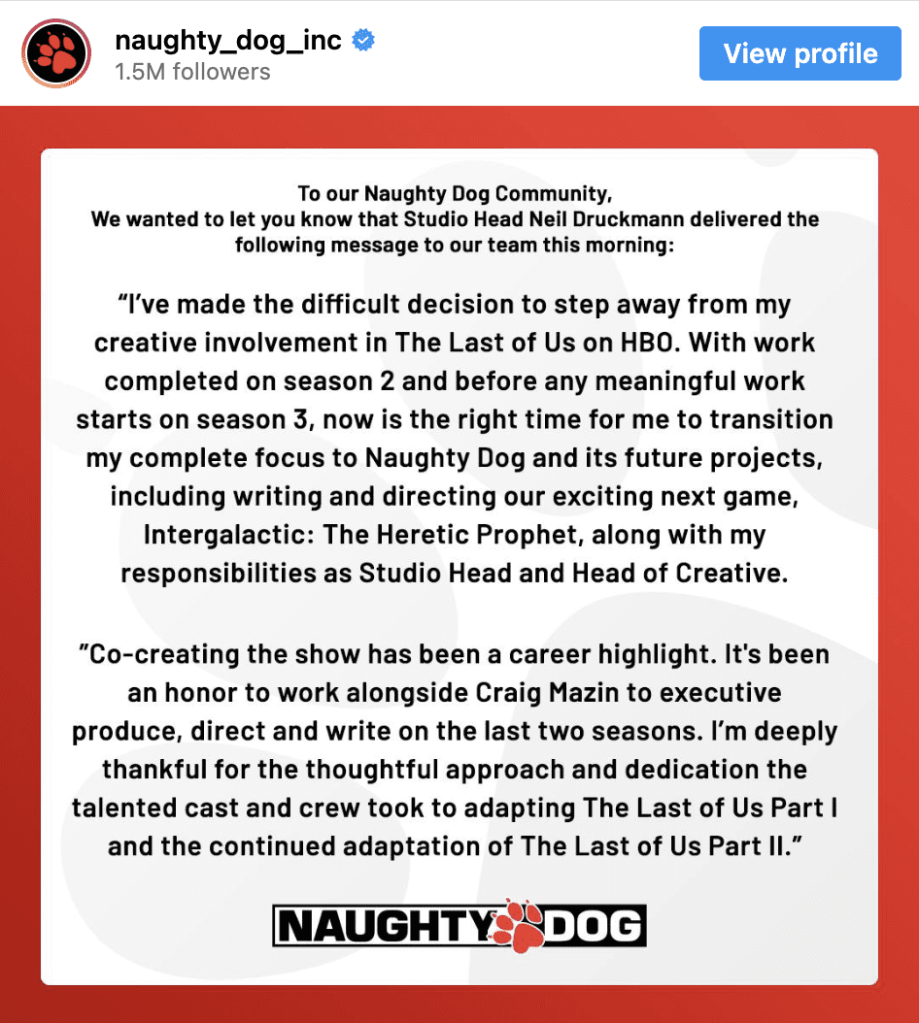
In a move that has sent shockwaves through the entertainment industry, Neil Druckmann—the creative force behind both “The Last of Us” video game franchise and HBO’s critically acclaimed adaptation—has announced his departure from the television series ahead of Season 3.
The timing is particularly striking: just as HBO renewed the show for a third season following the success of Season 2, Druckmann is stepping away to focus entirely on his role as Studio Head at Naughty Dog and his ambitious new project, “Intergalactic: The Heretic Prophet.”
The End of an Era
“I’ve made the difficult decision to step away from my creative involvement in The Last of Us on HBO,” Druckmann revealed in a statement posted to Naughty Dog’s official Instagram. The word “difficult” carries weight here—this isn’t just any TV show for Druckmann. “The Last of Us” represents his life’s work, a post-apocalyptic masterpiece that began as a video game concept and evolved into one of television’s most celebrated dramas.

The departure comes at a strategic inflection point. With Season 2 wrapped and Season 3 still in early development, Druckmann is making what he calls a “transition” back to his roots in gaming. “Now is the right time for me to transition my complete focus to Naughty Dog and its future projects,” he explained, citing his responsibilities as both Studio Head and Head of Creative.
A Creative Partnership Dissolved
Druckmann won’t be making this journey alone—or rather, he will be. Halley Gross, who co-wrote “The Last of Us Part II” and served as an executive producer and writer on the HBO series, is also stepping back. Her departure adds another layer of uncertainty to the show’s future creative direction.
“With great care and consideration, I’ve decided to take a step back from my day-to-day work on HBO’s The Last of Us to make space for what comes next,” Gross shared in her own Instagram statement. She hinted at “truly rad projects ahead,” suggesting this isn’t a retreat from the industry but rather a strategic pivot.
What This Means for HBO
For HBO, this represents both a challenge and an opportunity. “The Last of Us” has been nothing short of a phenomenon—Season 1 became one of the highest-rated drama series in HBO history and earned 24 Primetime Emmy nominations. The show proved that video game adaptations could transcend their source material when handled with care and respect.
Now, the series must continue without its original architect. Craig Mazin, Druckmann’s co-creator and the mastermind behind HBO’s “Chernobyl,” will shoulder the creative load going forward. His response strikes a gracious but determined tone: “It’s been a creative dream to work with Neil and bring an adaptation of his brilliant work to life on HBO. I couldn’t have asked for a more generous creative partner.”
The Gaming Pull
Druckmann’s decision reflects a broader trend in entertainment: the growing prestige and ambition of video game development. “Intergalactic: The Heretic Prophet,” his next gaming project, promises to be a massive undertaking. The game will star Tati Gabrielle with a score by Trent Reznor and Atticus Ross—a combination that signals serious artistic ambition.
For someone who has spent decades building interactive worlds, the allure of returning to gaming’s cutting edge is understandable. Video games offer creative possibilities that television simply cannot match: player agency, branching narratives, and the kind of immersive world-building that has become Druckmann’s signature.
The Legacy Question
The big question now is whether “The Last of Us” television series can maintain its emotional resonance and narrative sophistication without its creator’s direct involvement. Druckmann will remain credited as an executive producer, providing some continuity, but day-to-day creative decisions will fall to others.

This transition comes at a crucial moment for the series. Season 2 has been adapting “The Last of Us Part II,” a game that took significant narrative risks and divided some fans. Season 3 will venture into even more uncharted territory, as the show begins to outpace its source material.
A New Chapter Begins
In many ways, this departure feels inevitable. Druckmann has always been a gaming visionary first, and his brief but impactful tenure in television feels like a successful experiment rather than a permanent career change. He’s proven that video game creators can successfully translate their vision to other media—and now he’s returning to the medium where he can push boundaries in ways that only interactive entertainment allows.
For fans of “The Last of Us,” this news is bittersweet. The show will continue, but without the guiding hand of its original creator. Whether that represents an ending or a beginning depends entirely on what Craig Mazin and the remaining creative team do with the remarkable foundation Druckmann has built.
One thing is certain: in an industry where creative vision often gets diluted by committee, Druckmann’s departure represents a bold bet on the future of gaming as an artistic medium. The last of us may be leaving television, but the first of a new era in interactive entertainment is just beginning.