Just when you thought Hollywood had exhausted every possible property to reboot, remake, or revive, television has found a new vein to mine: turn-of-the-millennium nostalgia. And this time, it’s millennials driving the bus—whether they realize it or not.
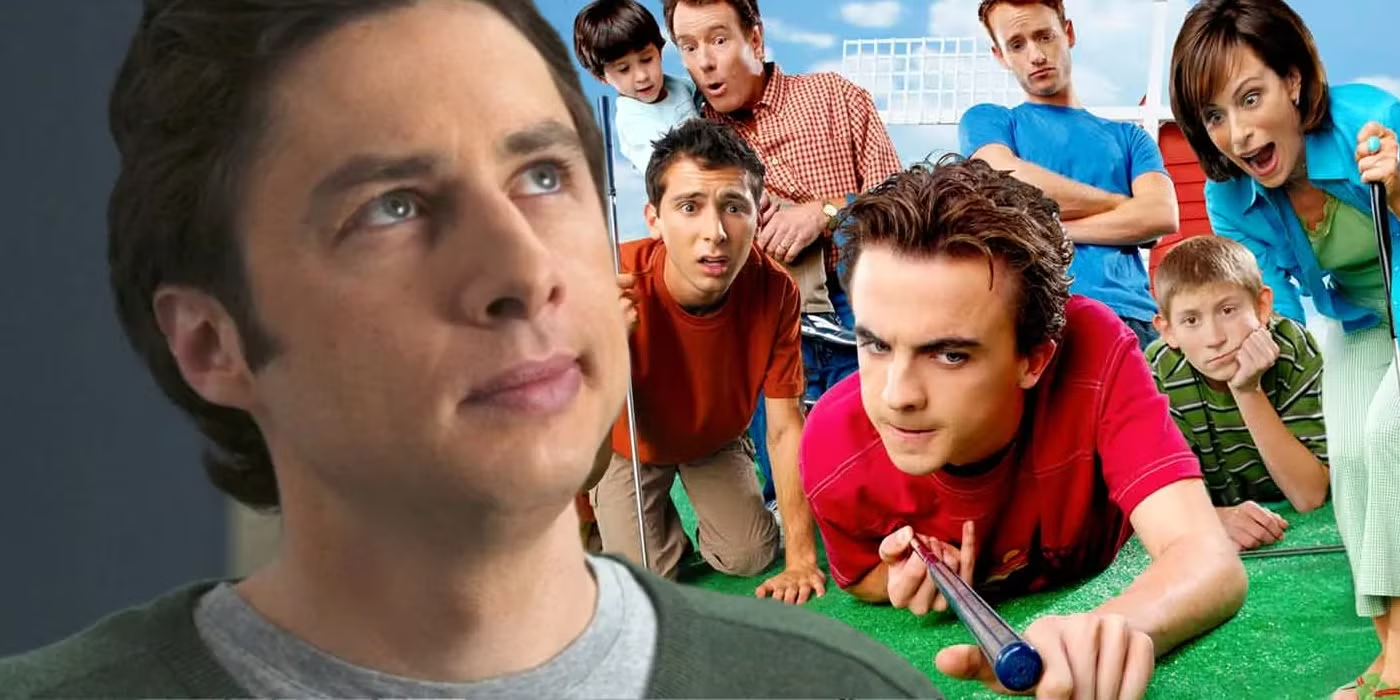
“Scrubs” is relaunching on ABC February 25 with new and returning cast members. Sarah Michelle Gellar returns for a “Buffy the Vampire Slayer” sequel series from Chloé Zhao, expected on Hulu in 2026. Disney+ is reuniting the “Malcolm in the Middle” cast for a limited series this spring. Hulu just ordered a new “Prison Break.” Kerry Washington is developing “Wisteria Lane,” a “Desperate Housewives” reboot for Onyx Collective. “White Collar,” “Royal Pains,” and “Community” are all attempting comebacks.
The list goes on. And on. And on.
As millennials hit middle age—yes, we’re there now—nostalgia for the shows that defined their adolescence and young adulthood has become a powerful commercial force. Combined with Gen Z discovering these series through streaming binges, the business case for Y2K revivals seems ironclad. But should it be?
The Demographic Equation: Size Meets Sentiment
“Millennials are reaching that age where they’re watching things because they want to pass a lot of them to their kids, and they have a lot more force as a consumer group because of their size, as well as just having nostalgia for these things,” explains Jordan Levin, former president of The WB, who literally programmed for this demographic when they were teenagers.
It’s a compelling argument. Millennials represent the largest generation in the workforce, with significant purchasing power and cultural influence. They grew up during television’s last golden age of appointment viewing, before streaming fractured audiences into infinite niches. Shows like “Buffy,” “Scrubs,” and “Malcolm in the Middle” weren’t just entertainment—they were communal experiences, discussed around office water coolers and college dorm rooms.
Their Gen Z children, meanwhile, discovered these shows on streaming platforms, creating an intergenerational appeal that makes network executives salivate. The math seems simple: built-in awareness plus cross-generational appeal equals marketing gold.
But here’s the uncomfortable truth the industry keeps learning and then promptly forgetting: nostalgia is a terrible foundation for creativity.
The Revival Track Record Is Dismal
Let’s review the evidence. Streaming platforms practically launched on the backs of revivals—”Arrested Development,” “Fuller House,” “Gilmore Girls: A Year in the Life” for Netflix; “Veronica Mars” and “Animaniacs” for Hulu; “Punky Brewster,” “Saved by the Bell,” and “Bel-Air” for Peacock; “The Real World” reunions and new “Rugrats” for Paramount+.
How many of these became enduring hits? How many lasted more than a season or two?
“Will & Grace” returned in 2017 with enormous fanfare and quickly fizzled. “Murphy Brown” and “Mad About You” couldn’t recapture their magic. “Punky Brewster” and “Saved by the Bell” disappeared almost as quickly as they arrived. More recently, “Frasier,” “That ’90s Show,” and “Night Court” failed to go the distance, with CBS Studios unable to find a new home for “Frasier” after Paramount+ canceled it.
As one anonymous TV showrunner told Variety: “They’re never as good, and you can’t help but compare it to the original.”
That’s not cynicism—it’s pattern recognition.
The Rare Exceptions That Prove the Rule
Yes, there are exceptions. “Roseanne” successfully continued as “The Conners” for seven seasons, even after the departure of its namesake star (a testament to the strength of the ensemble and the writing). In animation, “King of the Hill” returned to rave reviews and just earned a two-season renewal. “Futurama” and “Phineas and Ferb” have made successful comebacks.
But notice what these successes have in common: they’re either animated (where voice actors aging isn’t an issue and production can pause and resume more easily) or they had clear creative reasons for existing beyond “people remember this fondly.”
Greg Daniels’ “King of the Hill” revival, created with Mike Judge, works because it has something to say about contemporary America through the Hank Hill lens. “The Conners” succeeded because it pivoted from being about one person to being about a working-class family navigating economic anxiety—a story that resonates even more now than during the original run.
These aren’t revivals trading on nostalgia alone. They’re using familiar frameworks to explore new territory.
What We’re Really Craving
Perhaps the most revealing aspect of this revival wave is what it says about current television. If audiences are this eager to revisit shows from 20-25 years ago, what does that say about what’s being created now?
The turn-of-the-millennium era these revivals draw from was characterized by creative risk-taking, distinctive voices, and shows that felt genuinely novel. “Buffy” revolutionized how television told serialized stories with genre elements. “Scrubs” pioneered the dramedy single-camera format that influenced everything from “30 Rock” to “Atlanta.” “Malcolm in the Middle” brought a anarchic energy to family sitcoms that felt genuinely subversive.
Today’s television landscape, for all its volume and budget, often feels safer. Peak TV has paradoxically led to more homogenization as platforms chase proven formulas. The very success of these Y2K shows created templates that have been copied to death, draining them of their original spark.
We don’t need “Scrubs” back—we need new shows willing to take the creative risks “Scrubs” took in 2001. We don’t need another “Buffy”—we need creators given the freedom to be as audacious as Joss Whedon was when he pitched a vampire slayer as a metaphor for high school trauma.
The Reunion Alternative
Some stars and showrunners recognize this. Rather than attempting full revivals, they’re opting for reunion specials. “Friends” did one on HBO Max in 2021. CBS just taped a 30th anniversary “Everybody Loves Raymond” event airing November 24. The “Married… With Children” cast is reuniting onstage in Los Angeles for a non-televised event in January. And countless former cast members now host rewatch podcasts, offering commentary and behind-the-scenes stories.
These alternatives acknowledge what revivals often don’t: sometimes the most valuable thing about beloved shows is the memories they created, not their potential as ongoing properties. Reunions let audiences catch up with actors they care about without risking the disappointment of a subpar revival tarnishing their fond memories.
The Question No One Wants to Ask
Jordan Levin frames it perfectly: “It fundamentally comes down to, is there a reason for it to be that is artistic? Is there a purpose? Is there a catalyst for it that goes beyond simply economics and marketing and awareness?”
That’s the question every revival should answer before moving forward. Not “will people remember this?” but “why does this need to exist now?”
Most of the current wave of Y2K revivals can’t answer that question beyond “millennials have money and fond memories.” That’s not enough—or rather, it shouldn’t be, though it apparently is for risk-averse networks and streamers looking for built-in audiences.
The irony is that the shows being revived were themselves risk-takers. “Buffy” was a movie flop that became a TV phenomenon because Whedon had a creative vision that justified its existence. “Scrubs” succeeded because Bill Lawrence crafted something that felt fresh. “Malcolm in the Middle” worked because Linwood Boomer and the writers weren’t trying to be “The Cosby Show” or “Family Ties”—they were trying to be themselves.
A Modest Proposal
Here’s a radical idea: instead of reviving shows from 20 years ago, take the budgets earmarked for those revivals and invest them in new creators with distinctive voices. Give them the same creative freedom that produced the original versions of these shows.
Millennials and Gen Z don’t really want “Scrubs” back—they want to feel the way “Scrubs” made them feel when it was new. They want originality, risk-taking, and shows that speak to their current moment the way those Y2K series spoke to theirs.
The audience craving something with the energy of early-2000s television won’t find it in revivals trying to recapture lightning in a bottle. They’ll find it in new shows created by people who loved those originals and learned their lessons about creative courage.
The Bottom Line
The Y2K revival wave is understandable. Millennials wield significant cultural and economic power, and nostalgia is a powerful emotion. Gen Z’s streaming-fueled discovery of these shows creates cross-generational appeal. The business case writes itself.
But understanding why something happens doesn’t mean endorsing it. Television history is littered with failed revivals that tarnished beloved properties while contributing nothing new to the cultural conversation. For every “King of the Hill” success story, there are five “Murphy Browns” and “Frasiers” that limped to early cancellations.
When “Scrubs” returns February 25, when “Buffy” resurfaces in 2026, when “Malcolm in the Middle” reunites this spring, audiences will watch with hope and trepidation. Some might succeed. Most probably won’t. And the cycle will continue, with networks and streamers learning the wrong lesson from both the successes and failures.
The real lesson—that audiences crave originality and creative risk-taking, not just familiar titles—will likely go unheeded. Because that lesson is harder to sell in a conference room than “Remember how much people loved this show? Let’s bring it back.”
As someone who loved these shows the first time around, I’d rather remember them fondly than watch them struggle to justify their return. But I’m apparently in the minority.
So here we go again, chasing ghosts from 2001, hoping they’ll feel as vital in 2025 as they did when millennials were young and television was in the midst of its last great creative revolution.
Spoiler alert: they probably won’t. But we’ll keep trying anyway, because nostalgia sells—at least until it doesn’t.