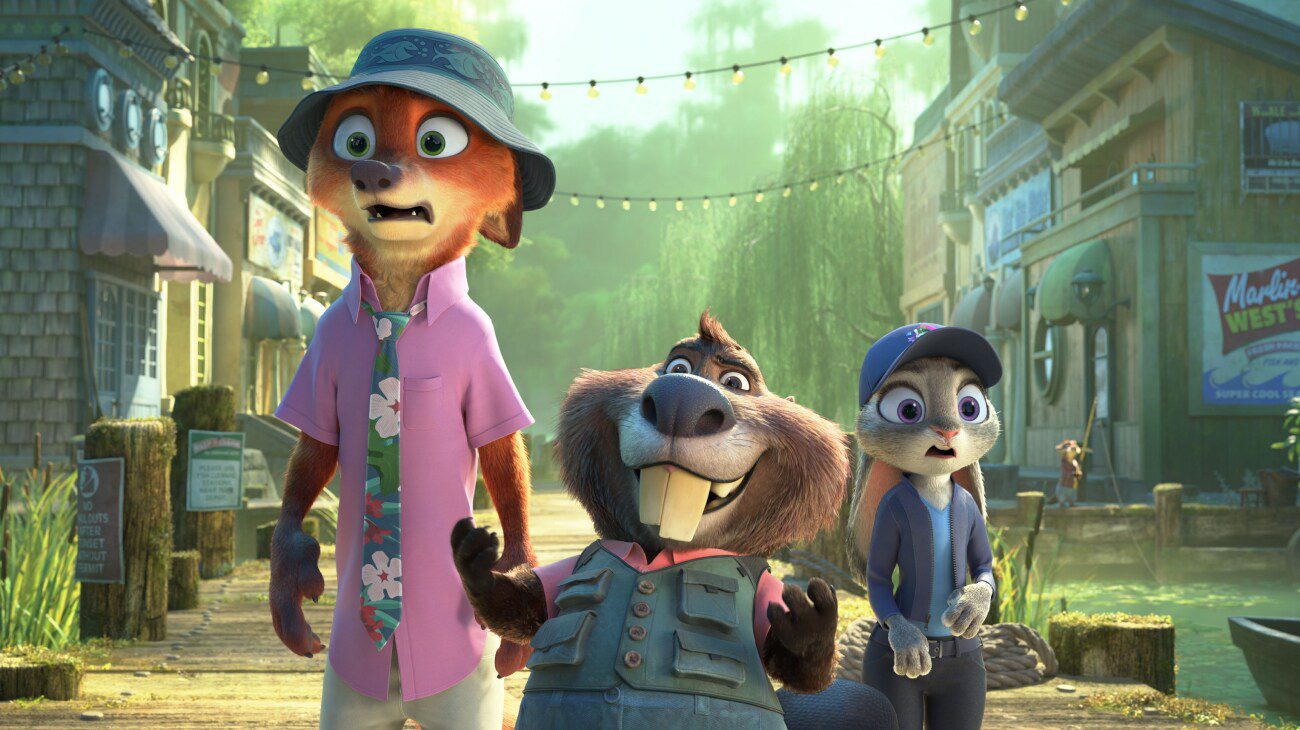
The first-ever bunny-fox partnership in ZPD history returns for Zootopia 2, once again attempting to tackle systemic injustice, greed, corruption, and the challenge of confronting one’s own personal shortcomings.
So naturally, I brought my children along to see what they thought.
Zootopia 2 picks up essentially where the 2016 original concluded, with ambitious small-town bunny Judy Hopps (Ginnifer Goodwin) and street-smart con-artist-turned-cop Nick Wilde (Jason Bateman) basking in the success of cracking their first major case and searching for their next assignment. When they discover the presence of the first snake in Zootopia in decades, the duo crosses paths with returning favorites and a host of new mammals as they—and you’ll never believe this—uncover far more than they bargained for.
The Challenge of Reviewing Animation for All Ages
Reviewing what are ostensibly children’s movies presents a unique challenge. On one hand, I’ve got my film critic hat and I genuinely enjoy wearing it. On the other hand, it’s tempting to dismiss concerns with “It’s just a kids movie.” On the surface, Zootopia 2 is animated animals solving crimes, making jokes, and learning to appreciate each other. But lurking beneath that playful exterior is a seedy underbelly of social criticism that deserves serious consideration. That’s precisely why I was determined to bring my kids to the press screening—so they could weigh in whenever my film critic perspective became too narrow.
For instance, I would note that the film’s visual presentation is stunning. The animation style maintains the same vibrant color palette as the first Zootopia, but new environments and more ambitious lighting gave the animators opportunities to showcase a decade’s worth of technological advancement.
Meanwhile, my 11-year-old daughter observed, “My favorite part was when they snuck into the gala. It was funny because they were in the tundra but Judy was wearing a sleeveless dress and somehow not cold, and I’m pretty sure parts of that house were ice.” So bonus points for the gala sequence’s production design, and keep your eyes open for sections of the house constructed from ice.
Where the Film Truly Shines
The sequence my daughter references is a genuinely thrilling microcosm of what works best about the Zootopia universe. There’s charming interplay between our mismatched protagonists. There’s also genuine understanding from the filmmakers about building suspense in detective storytelling. The action is impeccably executed, with each beat of the sequence being established and paid off visually, while throwaway jokes on the way into the scene become punchlines during the escape. The entire sequence—sneaking into a snowy château as part of an unauthorized investigation, then escaping via an action sequence that’s equally spectacular and hilarious—gives James Cameron and True Lies vibes, which absolutely speaks to my sensibilities. Plus, despite the fact that Judy wasn’t too cold in that dress, it resonated strongly with my 11-year-old as well.
That caliber of craftsmanship in the filmmaking fundamentals was present in 2016’s Zootopia too, but the other element both films excel at is exceptional animal wordplay. Every square inch of this movie is saturated with clever animal-based humor, like the pair of ram detectives named after goat cheeses or the catering company called “A-Moose Bouche.” It’s difficult not to be charmed by this level of attention to detail when it’s as pervasive as it is in Zootopia 2, and I’m confident there are countless background jokes I missed entirely.
Every square inch of this movie is covered in clever little animal jokes that are hard not to love.
On this subject, my daughter said, “I liked the puns, too,” which I suspect had more to do with my non-stop commentary about them, so interpret that with considerably more eye-rolling energy. But my 6-year-old son contributed, “My second favorite part of the movie was when the fox said ‘Ahh! A Viper!'” That doesn’t seem like wordplay now, but there’s a punchline I don’t want to spoil. Also worth noting: my son couldn’t determine his absolute favorite moment, but apparently this one secured second place.
Pacing Problems and Exposition Overload
Zootopia 2 moves along at an excellent clip, with both the plotting and action sequences maintaining great momentum—except for one spot where the film grinds to a halt for exposition dumping. There’s a scene as the film approaches its home stretch where the MacGuffin is over-explained and, in a moment that had me checking my watch, the steps of the plan that will save the day are methodically outlined amid gauzy flashbacks sketching out what needs to happen in the final 20 or 30 minutes. The plan that Judy, Nick, and their new allies devise is perfectly clear; it already made sense before they hammered it into place with this sequence. But the determination with which they explained everything made me question whether I’d missed something. It’s a script element that frankly didn’t need to exist because, in retrospect, the film’s final act is perfectly comprehensible. Though admittedly, that’s some extreme fur-splitting on my part.
New Faces and Familiar Themes
Like the first film, Zootopia 2 plunges headlong into substantial issues. Racism and prejudice remain at the forefront, this time with the added dimension of generational theft. The sequel introduces an obviously villainous family of lynxes who have maintained a corrupt grip on the city for decades, an exiled snake attempting to restore his reputation, and a former-movie-star-horse-turned-mayor voiced by Patrick Warburton’s always-welcome baritone. These new characters and the voice actors portraying them—Ke Huy Quan, David Strathairn, and Andy Samberg in particular—are delightful, though the film didn’t leave much space for returning supporting characters, like my wife’s favorite: the irrepressibly dim-witted, donut-loving cheetah Clawhauser (Nate Torrance).
While these new characters are well-developed and integrate seamlessly with the natural, empathetic performances of the returning cast, they don’t necessarily illuminate the themes the writers are exploring in novel ways.
With a veritable buffet of social issues—corruption, systemic prejudice, cultural erasure, old lies becoming accepted truth, and even the unfair pressure on trailblazers to be flawless lest they damage opportunities for those following in their footsteps—Zootopia 2 might be attempting to wrangle too many important topics into its menagerie. There’s so much happening that certain moments feel like the film is merely pointing at these issues rather than engaging with any single one thoroughly.
The Heart of the Story
The sequel, like its predecessor, doubles down on Judy’s determination to enact change. Hopps wants, more than anything, to make a difference, and understands the hard truth that nothing will change unless somebody stands up and tries to change it. This conviction is the defining contrast between her and her fox partner—and also the emotional core of this story. It’s a relentlessly hopeful outlook that borders on naïve. Depending on my mood, it’s not a message I always embrace, particularly in a film featuring cops following corrupt orders and raiding a marginalized neighborhood—a scene that plays considerably more dramatically than perhaps intended given current events. Strangely enough, this represents another parallel between Zootopia 2 and the original: it can be a surprisingly dark film at times.
Through My Kids’ Eyes
The positive aspect is that I got to discuss with my children what they felt watching these events unfold on screen. Which parts of the story frightened them, when they felt happy, when they felt sad, how they both teared up during multiple moments. I asked them which specific moments made them cry, and my daughter replied, “Just all the emotional ones.” I followed up with, “Which emotions?” and she answered, “All of them, I guess.”
The final cry-tally, incidentally: my daughter cried two and a half times—once from sadness, once from happiness, and the half-time was a scary moment. My son only cried once, but it was happy crying. Having the entire ride home to discuss why was genuinely meaningful.
The Verdict
Perhaps Zootopia 2 doesn’t plumb the complete depths of the societal issues it raises, and perhaps it oversimplifies solutions in service of wrapping the story in a tidy, kid-friendly boa constrictor. But it poses important questions worth discussing. Based on the kids’ reactions and our post-film conversations, all the right feelings resonated. Empathy, compassion, and fairness are never misguided values, and Zootopia 2 found a way to make “all of them, I guess” connect with my children.
Zootopia 2 delivers all the same animated detective action and clever animal humor as the 2016 original, with a welcome new ensemble of allies and villains for our mismatched heroes Judy Hopps and Nick Wilde. The sequel’s visual design builds beautifully off the vibrant world established previously, and while thematically the film may bite off more than it can chew, Zootopia 2, like its bunny-cop protagonist, radiates contagious hope that change is always possible. Also, even though I’m growing weary of characters watching YouTube videos as a narrative information delivery mechanism, they call it “Ewe Tube,” which is genuinely solid wordplay.