Despite proven talent, women directors remain vastly underrepresented in global cinema
The creative vision of women continues to be systematically excluded from the world’s movie screens, according to groundbreaking new research from the USC Annenberg Inclusion Initiative. In a report done by Angelique Jackson at Variety, we learned the staggering revelation: women direct just 11.6% of global top-grossing films. A figure that represents not only a creative injustice but a massive untapped reservoir of perspective and talent.
Dr. Stacy L. Smith unveiled these alarming statistics during the University of Oxford Cultural Programme’s Women in Film event, where she was joined by trailblazing actresses Simon Ashley (“Bridgerton”) and Gugu Mbatha-Raw (“Surface”). The comprehensive study examined women’s representation across four crucial industry sectors: global film direction, festival presence, award recognition, and executive leadership.
The Global Directorial Divide
The research analyzed 4,532 feature-length narrative films with $1 million+ box office earnings across 11 countries, evaluating the gender of 4,991 directors. The findings reveal a systemic problem that transcends national borders:
- Leading countries in women’s directorial representation: Germany (18.7%), United Kingdom (18.5%), and Australia (18.3%)
- Most exclusionary countries: India (4.9%), Japan (4.7%), and South Korea (9.1%)
- United States: A mediocre 11.3%, demonstrating that Hollywood’s self-congratulatory rhetoric on gender equality rarely translates to actual hiring practices
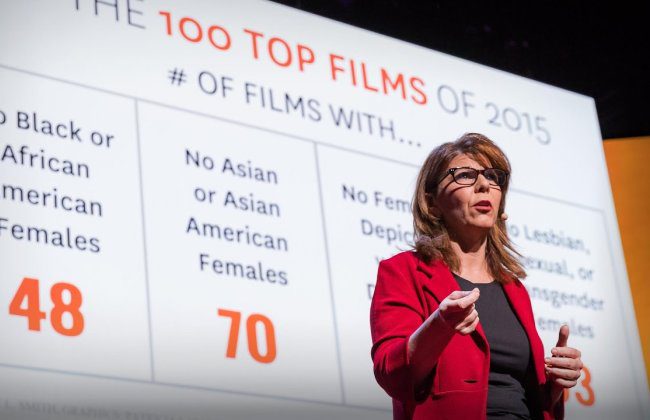
While women of color directors have doubled their presence in the past decade (from 2.5% in 2015 to 5.7% in 2024), this minuscule single-digit figure represents a clear failure of the industry to embrace diverse female talent.
“For several years, we have examined the prevalence of women directors of top-grossing movies,” notes Dr. Smith. “The results demonstrate that there is still a steeper climb to the top leadership position in film for women no matter what country they work in.”
Signs of Progress Worth Celebrating
The United Kingdom emerges as a beacon of progress, showing that change is possible when an industry commits to transformation. In 2024, women directed 32.3% of UK films—a remarkable 24% increase from 2015, when women helmed just 8.3% of British productions.
This upward trend proves that the scarcity of women directors isn’t due to lack of talent or interest, but rather systemic barriers that can—and must—be dismantled.
Film Festivals: Gatekeepers Maintaining Gender Disparity
The research expands on earlier findings presented by Dr. Smith and Katherine Pieper that examined top film festivals—vital launching pads for directors’ careers. Over the past decade, these prestigious platforms have maintained their role as gatekeepers of the status quo:
- Only 27.8% of narrative films at major festivals were directed by women
- Most inclusive festival: Sundance (34.7%)
- Least inclusive festivals: Venice (20.5%) and Cannes (21.6%)
These statistics are particularly revealing given that Cannes and Venice represent the most prestigious festival platforms, illustrating how recognition continues to be withheld from women at the highest levels of cinematic achievement.
Awards: The Recognition Gap
The analysis of eleven years of nominations (2015-2025) across the Academy Awards, BAFTAs, and César Awards reveals a persistent pattern of overlooking women’s artistic contributions:
- Women were nominated for Best Director just 14.8% of the time—with men receiving 5.8 nominations for every woman recognized
- Even in screenwriting categories, women received only about a quarter of nominations (24.1% for original screenplay, 22.5% for adapted screenplay)
These figures expose how women’s creative work continues to be systemically undervalued, even when they overcome the barriers to making films in the first place.
Executive Power: Where Women Are Gaining Ground
The study offers its most promising findings in the analysis of 1,367 film executives across the U.S., UK, and France, where women comprise 44% of leadership positions:
- France leads with true gender parity: 50% of executives are women, including 70% of president-level positions
- United Kingdom: 46.6% of executives are women, with strongest representation (54.3%) in VP/head/director roles
- United States: 42.9% of executives are women, concentrated in Senior VP positions (52%)
However, the picture darkens dramatically when examining intersectional representation: women executives of color represent less than one-quarter (24.4%) of women in leadership across all three countries, revealing how racial and gender barriers combine to create even steeper obstacles.
The Path Forward
“Our other work demonstrates that women of color often tell the most highly reviewed stories, so the continued exclusion of these storytellers reflects an ongoing industry bias that exists globally,” the researchers conclude. This finding underscores the most damning aspect of the current system: it’s not just unfair—it’s actively rejecting superior artistic work based on gender and racial bias.
As women continue to break barriers and create extraordinary cinema despite systemic obstacles, these statistics serve as a rallying cry. The film industry isn’t just failing women; it’s failing audiences by denying them the full spectrum of human creativity and perspective that only genuine inclusion can provide.
The message is clear: it’s time for the film industry to acknowledge that women’s stories aren’t niche—they’re universal. Women’s vision isn’t optional—it’s essential. And equality behind the camera isn’t a favor to be granted—it’s a long-overdue correction to a system that has silenced half of humanity’s creative voices for far too long.