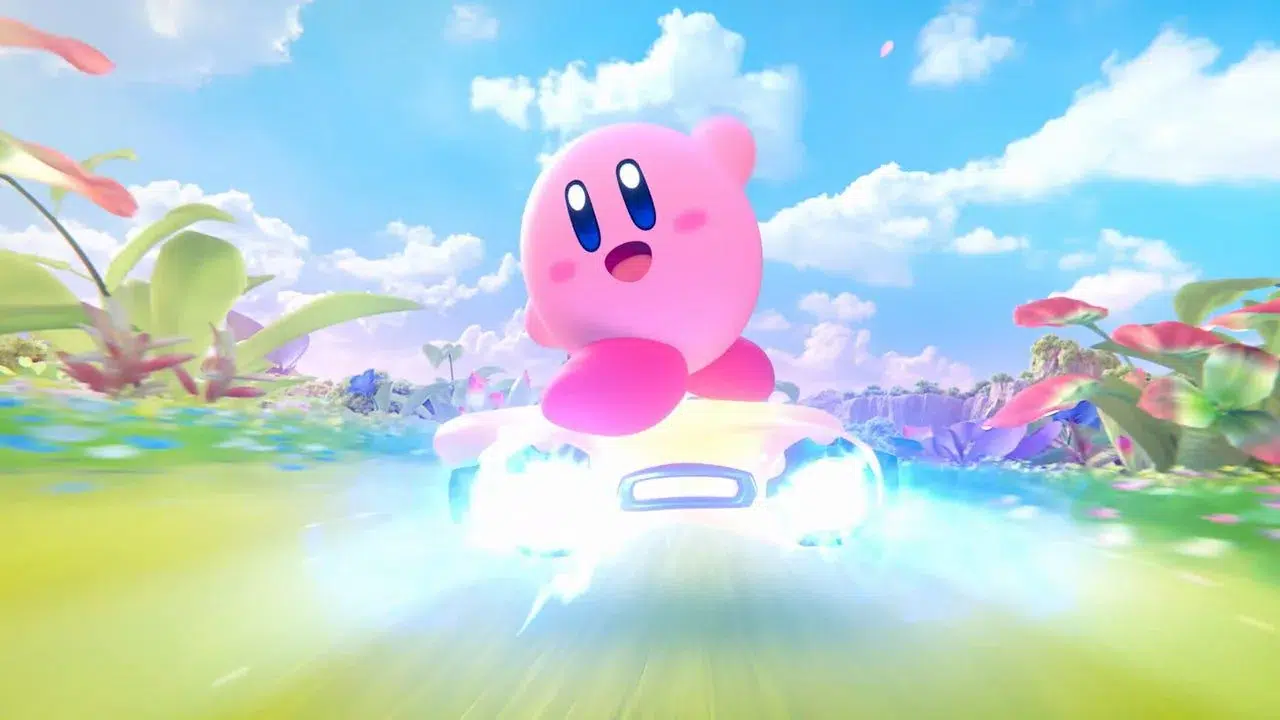
Kirby Air Riders is totally bizarre, and I love it for that. This unexpected sequel to a niche, single-button GameCube racer makes a significant leap forward. In fact, the improvement from Air Ride on GameCube to Air Riders on Switch 2 is so huge, it feels like jumping straight from Smash 64 to Ultimate with no sequels in between.
It has an enormous amount of varied content, meaningful unlockables, in-depth customization, and an unrivaled attention to detail that make it hard to imagine a better realization of this formula. The thing is, that formula simply isn’t as strong as Super Smash Bros. or Mario Kart. There’s only so far you can push a control scheme that’s sometimes too simplistic for its own good, and Air Riders occasionally crashes into roadblocks caused by its own self-imposed limitations.
But if you meet this surprise revival on its own terms and accept its unconventional handling and off-the-rails physics, you’ll find a fun, frantic action racing game with an almost unreal amount of stuff to do.
More Than 20 Machines, Each Wildly Different
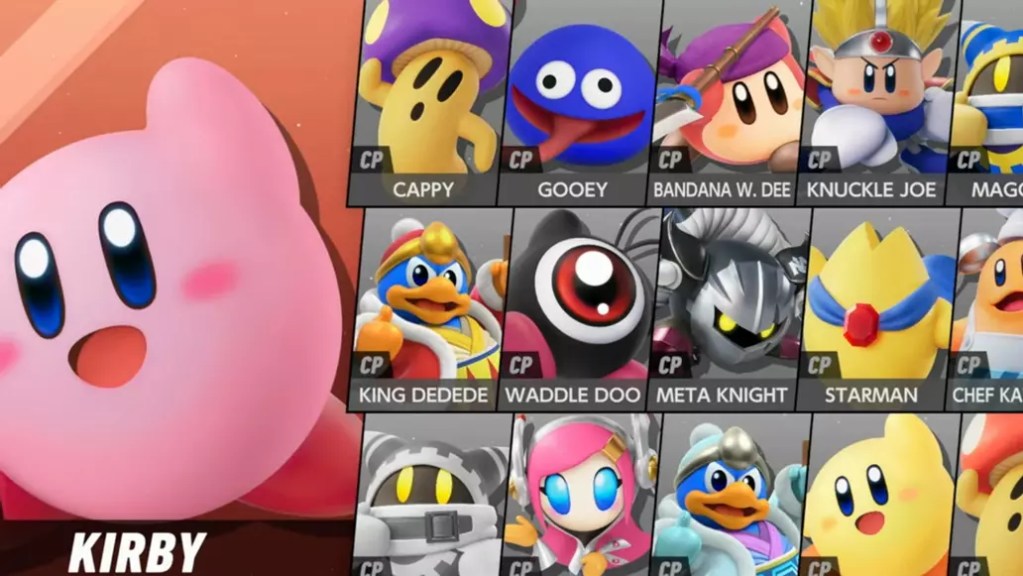
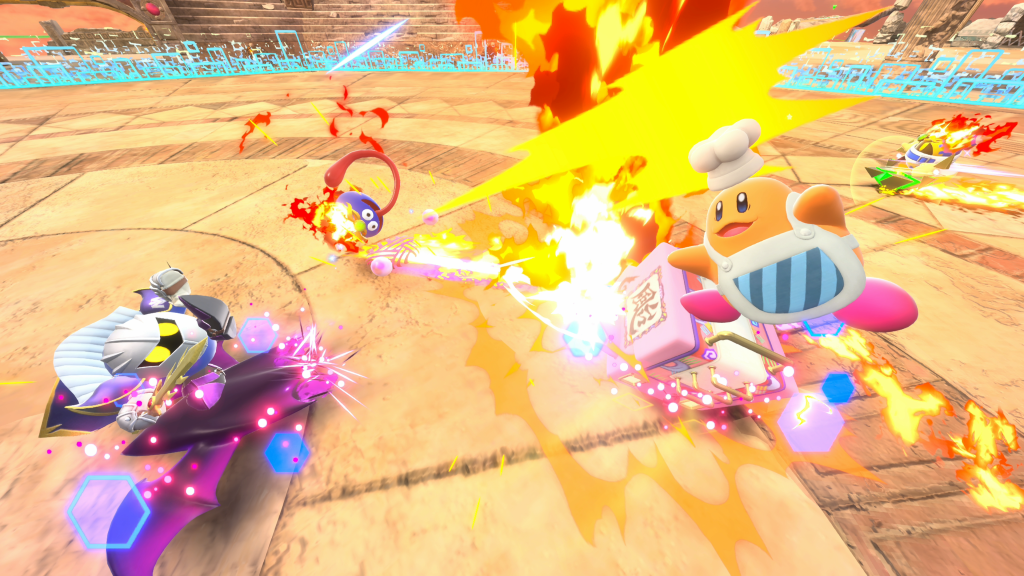
Air Riders includes more than 20 machines that each handle pretty differently, and a similar number of playable riders who come with their own stats and Final Smash-like special move. It’s a great roster filled with characters from every era of Kirby history. My main is the hilarious Chef Kawasaki, who serves spicy curry that damages rivals.
At first, there are only a few riders and machines available, but you’ll instantly start unlocking more by playing any mode you like.
Machines accelerate automatically, creating a constant feeling of on-rails forward momentum. It’s your job to steer, glide off ramps to fly in the air, drift-boost around sharp turns, and attack enemies and fellow riders. You do all this with the left stick and just one button that hits the brakes while charging your boost. (Air Riders did add a second button compared to the original, but its main use is launching your special attack.)
This takes a lot of getting used to. Skidding around corners on a floaty machine doesn’t feel natural at first, and the unique quirks of many vehicles ask even more of you, like the Swerve Star’s limitation of only being able to turn while braking.
But I love how strikingly original these mechanics and minimalist controls are, as there’s really nothing else like the two Air Ride games, and mastering each machine’s intricacies is genuinely a ton of fun. Some machines feel a little overpowered—the high-speed Chariots that turn corners with ease will likely be a very popular pick online—but they all still seem viable in some way.
The Jet Star, for instance, is slow on the ground but gets huge bursts of speed whenever it lifts off, causing you to make mental bookmarks of the best spots to catch some air. This really feels nothing like Mario Kart—but in that same vein, Mario Kart is far easier for new folks to pick up and play.
Air Riders includes in-depth lessons that explain everything in great detail, but if you’re inviting friends over to try it out for the first time, expect a similar amount of onboarding as teaching someone a new board game—unless they’re happy careening down the course like it’s a bowling lane with bumpers.
Air Ride Mode: Traditional Racing Elevated
I got used to the controls very quickly—thanks to a surprising amount of legacy skill from playing lots of the first one when I was a kid—and really fell in love with how this sequel has totally fleshed out the promise of the original. This improvement is specifically noticeable in Air Ride, the traditional racing mode that features tense six-player races (the smaller number keeps the chaos somewhat in check) on a fantastic lineup of 18 courses: nine new, and nine returning.
A common complaint of the first game (which I share) is that the racing often felt like it was playing itself without much input. While it’s still true that your machine can stumble to the end without you doing anything, there are a lot more things to consider in Air Riders that raise its skill ceiling to a satisfactory level.

Opponents in front of you leave behind a trail of stars, and you’ll want to stick to their racing line as closely as possible to increase your top speed. It’s very important to defeat enemies by inhaling them, using copy ability attacks, or rapidly spinning your machine as well, because every kill grants a small speed boost and charges your special meter.
You’ll want to keep the little things in mind too, like landing perfectly parallel to the ground to gain a speed boost on each jump. Some of these mechanics were in the first Air Ride, but they’ve been buffed here, and with an increased speed overall, I felt really locked in while keeping track of the fast-paced action and rhythmically hitting A at the right moments to attack and boost.
This is all made even better by some incredible track design. Each new course feels like a rollercoaster ride, with awesome visual effects, high-energy music, and tons of branching paths that play into different machine’s strengths, like a roadway up high that can only be reached by a machine with great gliding capabilities.
My favorite course is Mount Amberfalls, a downhill sprint filled with switchback turns through a gorgeous forest bright with fall colors, but there’s really not a weak entry in the lineup. The returning courses are a lot simpler, but it’s still fun that they’re here for longtime fans.
Top Ride: The Weakest Link
Elsewhere, Top Ride takes the action to a bird’s eye view, with top-down, bite-sized races on miniature courses inspired by the main tracks. This simple mode wears very thin very fast, and honestly only feels like it’s here out of obligation to the original.
To be fair, it is more fleshed out than it used to be as you can bring in any machine you want, but it still plays like a watered-down, zoomed out version of the standard races that I’d rather be doing instead. It’s not bad, and if you enjoyed it in the original you’ll probably like it even more here, but it’s the weakest part of Air Riders, and only really works as a quick distraction from the more enticing modes.
City Trial: Still the Highlight After 20+ Years
The last main feature is City Trial, the fan-favorite battle mode where up to 16 riders drop into an open city map and work for five minutes to build the strongest machines they can. Once time is up, everyone competes to win a minigame with that custom machine. If you played Super Smash Bros. for 3DS, it’s just like Smash Run, which was heavily inspired by Air Ride‘s City Trial. (Time is a flat circle.)
Over 20 years later, City Trial is still the highlight of this package. Riding around the new map called Skyah, hunting for stat boosts and a better machine, attacking any rivals you come across, and dealing with the random events that take place is a blast, and it’s so easy to play just one more round with friends.
It keeps things fresh by spicing up each run with dozens of potential field events, from surprise boss encounters with longtime Kirby enemies like Kracko and Dyna Blade, to energy tanks running at full blast for a limited time, to a thick blanket of fog covering the whole city.
There are slight variations to Skyah’s geography, too: its forest area rotates between seasons, warp gates appear at different spots, and if you’re lucky, far-off islands littered with powerups will appear, giving you a huge advantage if you can build a glider good enough to reach them.
Just like the courses, intimately learning every corner of the city is rewarding, and you’ll start to figure out your favorite things to do, like diving into the volcano to collect all the goodies that have spawned inside, or gathering three parts to assemble an overpowered legendary machine, which happens so rarely that it feels special every time.
Sometimes City Trial gets too hectic, though, to the point where it borders on overwhelming. It’s not uncommon to feel like you’re completely out of control if you gather too many powerups. You might think that means you should be careful to not pick up everything in sight, but given the slippery turning and constant acceleration, it’s not really realistic to pick and choose what you pick up and what you don’t beyond a certain extent.
Because of that, the machine you end up with often ends up being more about what happened to you rather than what you chose to build. That’s still entertaining, but don’t expect City Trial to be some highly competitive, skill-based mode. There’s definitely skill and strategy involved, but it’s more about being a frantic, fun party mode first and foremost.
750 Achievements and Deep Customization
If you just want to play alone, Air Riders has so much to offer. There are 750 achievements divided across checklists dedicated to each mode, and completing them earns you meaningful unlockables like characters, machines, tracks, music, alternate colors, hats, and other cosmetics.
You’re constantly unlocking achievements you didn’t know existed, and it’s really satisfying to enter a race with a few specific side objectives in mind. These goals add so much replayability that recontextualize all of Air Riders‘ content in clever ways, and after more than 25 hours, I still have over one hundred left to unlock.
Everything you do earns you money, which you can spend on additional paint options, stickers, and accessories to fully customize your machines and take them for a spin in any mode. It’s surprisingly in-depth, and I loved designing personalized versions of my favorite vehicles, and spending in-game gold (no real money microtransactions here) on other players’ creations in the online market, like an incredible Wagon Star modeled after a GameCube, complete with the iconic black handle and four controller ports.
Impressive Online Features
Air Riders even boasts an impressive suite of online options, including nifty 32-player lobbies, casual and ranked matchmaking, and an actually competent invite system for friends, none of which is a guarantee in a Nintendo game. Online play was very smooth during my test sessions ahead of launch, and I plan to play plenty more once the full game is out.
The Verdict
I’m not sure what’s crazier: the fact that Kirby Air Riders exists, or the fact that it’s this great. It’s a blast in local or online multiplayer during its traditional races and unique battle mode, and its frankly absurd amount of fun achievements to chase, meaningful unlockables, and deep customization makes it great for solo players, too.
The biggest hurdle to enjoying its dizzying amount of content is how it all controls, as its frantic pace and slippery one-button control scheme is endearingly novel, but occasionally too simple for its own good. Air Riders just can’t help itself in sticking a little too closely to its original blueprint at times, making it not as approachable to pick up and play as Mario Kart, and not as technically rewarding or competitively viable as a fighting game like Super Smash Bros.
But if you’re willing to go along for the ride, you’re in for a chaotic action racing game that’s a great time with friends and offers a ton to do on your own. After 20+ years, this unexpected sequel proves the Air Ride formula still has life—it just needed this level of commitment and content to truly shine.