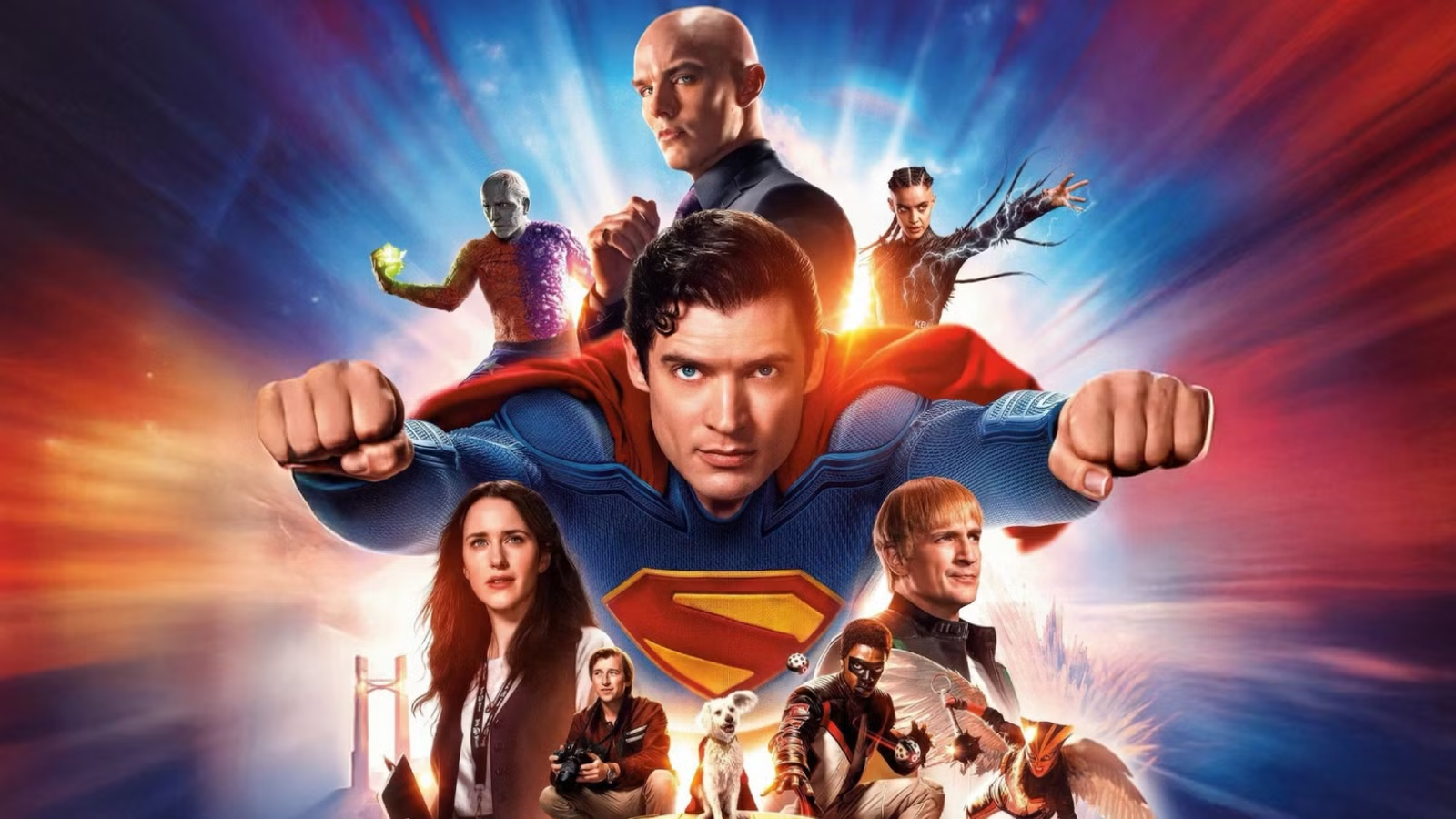
The entertainment industry just experienced another seismic shift. Netflix has apparently emerged victorious in the bidding war for Warner Bros. Discovery, positioning the streaming giant to control some of the most valuable franchises in popular culture—including Harry Potter, Game of Thrones, and the entire DC Universe. Batman, Superman, and Wonder Woman are now, pending regulatory approval, Netflix characters.
This development raises countless questions about the future of Warner Bros. as a studio and what it means for theatrical distribution. But for superhero fans, one question looms largest: What does this mean for DC Entertainment, a company that’s already weathered more than its share of turmoil in recent years?
The answer, counterintuitively, is that the best thing Netflix can do for DC is absolutely nothing.
A Decade of Leadership Chaos
DC’s creative leadership has been nothing if not turbulent over the past decade. In 2016, Warner Bros. ushered in the era of DC Films, with Geoff Johns and Jon Berg serving as co-chairmen. After Batman v Superman: Dawn of Justice and Justice League underperformed, Johns stepped down in favor of Walter Hamada in 2018.
Despite the success of 2018’s Aquaman and 2019’s Joker, the DC brand remained unstable, leading Hamada himself to leave in 2022. What followed was a brief but intense power struggle where multiple parties—including Black Adam star Dwayne Johnson—jockeyed for control of DC’s future.
Only in 2023 did things stabilize when James Gunn and Peter Safran were announced as co-CEOs of the newly rebranded DC Studios, officially ending the DC Extended Universe era.
The chaos wasn’t limited to film and television. DC’s publishing division also experienced major shake-ups. DC Entertainment President Diane Nelson left in 2018. In 2019, DC laid off approximately 3% of its staff, and co-publisher Dan DiDio departed later that year, cutting short plans for the controversial 5G initiative that would have replaced DC’s iconic heroes with a new generation of characters.
Currently, DC’s publishing division is overseen by President, Publisher, and Chief Creative Officer Jim Lee and Editor-in-Chief Marie Javins—and it’s thriving.
The Cost of Constant Change
This level of chaos would be damaging for any company, but it’s been particularly destructive for DC. There’s been a tangible lack of consistency and direction for years. The latter years of the DCEU exemplified this problem: Warner Bros. seemed afraid to abandon the foundation Zack Snyder established but simultaneously failed to build on it meaningfully. Box office returns steadily plummeted.
DC’s struggles extended beyond film. 2024’s Suicide Squad: Kill the Justice League proved that even the acclaimed Rocksteady Studios could miss with DC properties. On the comics side, while the 5G reboot was ambitious, it threatened to undo the goodwill DC had recently recaptured through the DC Rebirth initiative.
By the time Gunn and Safran were hired in 2023, DC desperately needed consistent, steady leadership. While it’s too early to declare victory, early signs are promising. Superman was the box office success DC sorely needed after a disastrous 2023-2024 film slate. Creature Commandos and Peacemaker established a strong DCU streaming track record. And the Lee/Javins era of DC Comics has been genuinely great, most notably with the chart-topping Absolute Universe imprint.
Things are finally looking up—which is exactly why the Netflix acquisition is such an unwelcome complication. The last thing DC needs is another regime change or fundamental pivot.
Netflix Needs to Trust the Plan
Once Netflix’s acquisition is approved and completed—and there are numerous potential obstacles along the way—the streaming giant will control a massive pile of new intellectual property. The question becomes: Do they continue following Warner Bros.’ roadmap for these franchises or start fresh?
It’s hard to imagine Netflix changing course with Harry Potter (currently adapting the original novels for TV) or Game of Thrones (with an ever-growing slate of spinoffs). But with DC, there’s always danger that Netflix will want to wipe the slate clean and start a brand new shared universe from scratch for their streaming service.
We can only hope they resist that urge.
After years of creative turmoil and leadership shake-ups, change is the last thing DC needs. Gunn and Safran need to be left alone to execute their vision. We’ve only gotten one live-action DCU movie so far—Superman—which will be followed in 2026 by Supergirl and Clayface, and in 2027 by Gunn’s Superman sequel Man of Tomorrow. On television, we’ve only seen glimpses of 2026’s Lanterns and other upcoming shows.
There’s clearly a plan. Gunn calls it “Chapter One: Gods and Monsters.” But we’re still in the very early stages. Despite things looking up after several bad years, DC remains firmly in rebuilding mode. Gunn’s Superman performed respectably at the box office (narrowly beating 2013’s Man of Steel domestically), but one could argue a big-budget Superman reboot from the Guardians of the Galaxy director should have performed better. Repairing the DC brand is a long-term, ongoing process.
Netflix needs to commit to letting that process continue, not toss everything out and start over again. We just found the ideal live-action Superman in David Corenswet. Don’t restart that agonizing casting process.
What About DC Comics?
Is DC’s publishing division even on Netflix’s radar? Will they have interest in overseeing a comic publisher, or simply license DC characters to other companies? DC Comics has been in an excellent place these past couple years, so ideally Netflix stays as hands-off as they’ve been with Mark Millar’s Millarworld line. Let DC Comics continue producing good, character-driven stories that can be adapted to other media.
The Gaming Wild Card
If Netflix wants to make waves anywhere with DC, it should be games. Somewhat overshadowed in the initial announcement, Netflix will take ownership of WB Games along with everything else. Given Netflix’s recent moves into interactive gaming, they may have big plans for the developers and IP coming under their umbrella.
WB Games hasn’t been making optimal use of DC properties lately. Games like 2022’s Gotham Knights and Suicide Squad: Kill the Justice League were major disappointments, while the much-anticipated Wonder Woman game was canceled after a chaotic development cycle. While Gunn and Safran seem to be including games in their long-term DC plans, that hasn’t yielded concrete announcements. Hopefully Netflix’s resources can mean better things for DC’s gaming future.
The Case for Doing Nothing
Beyond gaming, the best thing Netflix can do for DC is nothing at all. After years of shifting leadership and directional pivots, DC needs stability, consistency, and a chance to win back skeptical moviegoers. What it doesn’t need is a new captain or another reboot.
Just trust that Gunn and company know what they’re doing and leave it at that.
The DC Universe is finally on stable ground for the first time in years. Netflix’s greatest contribution to the franchise would be recognizing that sometimes, the wisest move is simply staying out of the way.