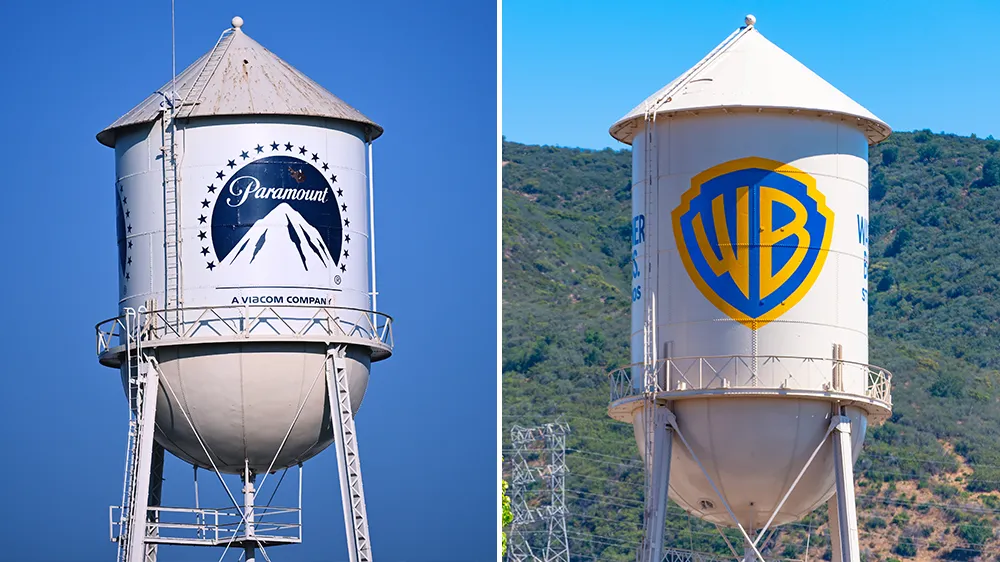
Warner Bros. Discovery has turned down a substantial acquisition offer from David Ellison’s Paramount Skydance, signaling that the media giant believes it’s worth significantly more than what’s currently being offered. According to Bloomberg News, the rejected bid came in at approximately $20 per share—a figure WBD dismissed as inadequate despite its premium over current trading prices.
The revelation, reported Saturday by Bloomberg citing anonymous sources, adds another dramatic chapter to the ongoing consolidation saga reshaping Hollywood’s landscape. With WBD shares closing at $17.10 on Friday, Paramount’s offer represented a notable premium, yet it still failed to meet the company’s valuation expectations. Interestingly, WBD stock has surged more than 36% since September 11, when news first emerged of Ellison’s interest in pursuing the rival media conglomerate—just weeks after finalizing Skydance’s $8 billion acquisition of Paramount Global.
The Numbers Behind the Bid
Warner Bros. Discovery, the entertainment powerhouse behind HBO/HBO Max, Warner Bros. Entertainment, CNN, TNT, TBS, and numerous other properties, currently holds a market capitalization of $42.3 billion. However, Bloomberg’s report didn’t clarify whether Paramount’s bid factored in the assumption of WBD’s considerable debt burden, which stood at $35.6 billion as of June 30. This omission represents a critical detail, as debt assumption would dramatically alter the deal’s true value and feasibility.
The potential transaction has already drawn interest from additional financial players. Bloomberg reports that Paramount Skydance has engaged in discussions with Apollo Global Management—the asset management firm that previously pursued Paramount Global—about joining forces for the Warner Bros. Discovery bid. This alliance could provide the financial firepower necessary to sweeten the offer and overcome WBD’s resistance.
The Ellison family’s involvement adds considerable weight to any potential deal. Larry Ellison, the billionaire Oracle founder and David’s father, provided the majority of funding for Skydance’s $8 billion Paramount Global acquisition, demonstrating the family’s commitment to building a media empire capable of competing in today’s streaming-dominated landscape.
Representatives for Paramount, Warner Bros. Discovery, and Apollo Global Management declined to comment when contacted Sunday, maintaining silence around what could become one of the industry’s most significant mergers.
Ellison’s Vision for Consolidation
While David Ellison didn’t explicitly confirm Paramount Skydance’s bid for WBD during his appearance at last week’s Bloomberg Screentime conference in Los Angeles, his comments there provided substantial insight into his strategic thinking. Ellison articulated why he believes Paramount requires additional content-producing capabilities to achieve sustainable growth in the current media ecosystem, even referencing WBD chief David Zaslav’s own statements about the industry’s need for further consolidation.
“I do think there’s a lot of [M&A] options out there in terms of what actually might be actionable in the near future,” Ellison explained at the conference. “You actually need more content to yield more engagement. And so we would actually want to be in the business, through whatever lens we’re looking at,” to produce “more movies, more television series” to achieve greater scale and engagement.
Ellison’s philosophy reflects the harsh realities of the streaming wars, where content libraries and production capacity have become the primary currencies of competitive advantage. As traditional linear television continues its decline and streaming platforms battle for subscribers, the companies with the deepest content wells and most robust production pipelines are positioning themselves for long-term dominance. However, Ellison strategically declined to identify specific acquisition targets, maintaining flexibility in his dealmaking approach.
A Bid for the Whole Company
According to the Wall Street Journal’s initial reporting, Paramount Skydance’s offer targets Warner Bros. Discovery in its entirety—a significant detail given WBD’s announced plans to split into two separate entities next spring. The proposed division would create Warner Bros., encompassing the studios and streaming operations, and Discovery Global, which would include the television networks and Discovery+ platform.
This planned split adds complexity to any acquisition scenario. A buyer acquiring WBD before the separation would inherit both businesses and could then decide whether to proceed with the split, reverse it entirely, or pursue a different structural strategy altogether. The timing of Ellison’s bid—arriving ahead of this planned division—suggests a desire to acquire the combined entity and potentially chart a different course than current management has outlined.
The Consolidation Imperative
The rejected bid underscores a fundamental tension in today’s media landscape: companies recognize the need for scale through consolidation, yet valuations remain contested. Warner Bros. Discovery itself was formed through the 2022 merger of WarnerMedia and Discovery Inc., a $43 billion combination that created one of the world’s largest entertainment companies. That deal, shepherded by Zaslav, reflected the same consolidation logic that now drives Ellison’s interest—the belief that size, content breadth, and production capacity determine winners in the streaming era.
However, the integration of WarnerMedia and Discovery has faced significant challenges, including substantial debt loads and the ongoing struggle to make streaming economics work profitably. These difficulties may partly explain why WBD rejected Paramount’s $20-per-share offer as insufficient, even as the company’s stock trades below that level. Management may believe that successfully executing their two-company split strategy will unlock value that a premature sale at $20 per share would leave on the table.
What Happens Next?
Several scenarios could unfold from here. Paramount Skydance, potentially strengthened by Apollo’s participation, might return with an improved offer that addresses WBD’s valuation concerns and clarifies the debt assumption terms. Alternatively, WBD’s rejection could end this particular acquisition attempt, leaving Ellison to pursue other consolidation opportunities in the fragmented media landscape.
The rejected bid also raises questions about WBD’s standalone strategy. If management believes $20 per share undervalues the company, they’ll need to demonstrate how their planned split and subsequent operations justify higher valuations. Investors will be watching closely to see whether WBD can execute successfully enough to validate their confidence, or whether rejecting Paramount’s premium offer proves to be a missed opportunity.
Meanwhile, the broader industry continues its consolidation march. Whether through this deal, alternative combinations, or organic growth strategies, media companies face mounting pressure to achieve the scale necessary for streaming profitability. As Ellison noted, more content drives more engagement, and more engagement ultimately drives sustainable business models in the attention economy.
For now, Warner Bros. Discovery has drawn a line in the sand, signaling that if David Ellison wants to add their considerable assets to his growing media empire, he’ll need to bring significantly more to the table than $20 per share. Whether he’ll return with a sweetened offer—and whether WBD would accept it—remains to be seen, but this rejected bid ensures that consolidation speculation will continue dominating Hollywood conversations for the foreseeable future.