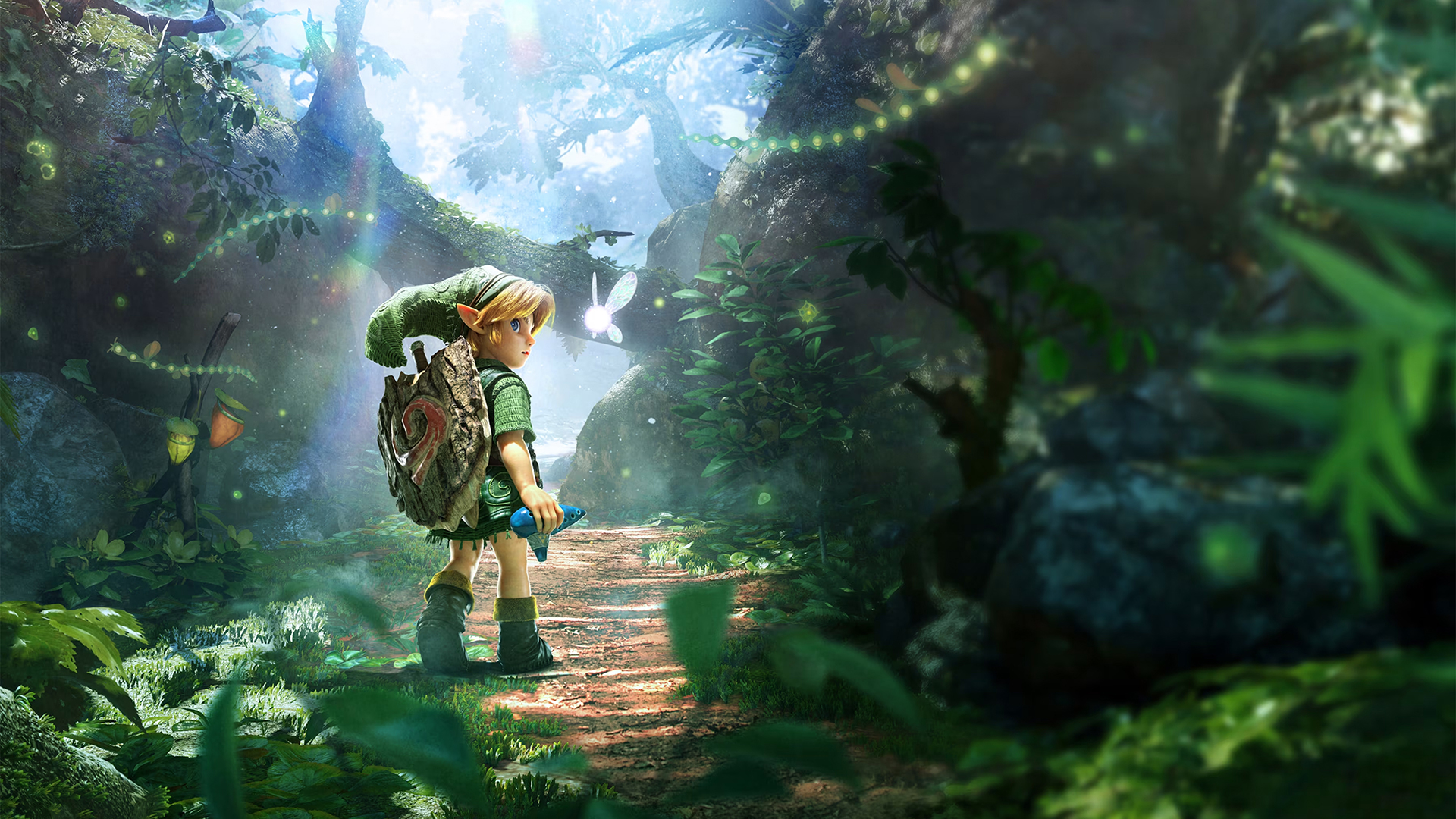
Some games you play once and file away. This one I’ve played roughly once a year for years, and I still came back for a second full run immediately after the credits rolled — 30 hours in, then straight back in to chase the secrets I’d missed.
That’s the short version of my verdict. The long version is about what this remake actually is.
Not a Remake, Not a Reimagining — Its Own Thing
It would be easy to file this under “faithful recreation” and be done with it. It isn’t that, and it isn’t a reinvention either. It’s a modern interpretation: the art style is richer, the dialogue expanded, but the bones are the bones. I made a deliberate effort to play it as a standalone game first and a remake second — partly because a lot of people picking this up will have only played Breath of the Wild and Tears of the Kingdom, and for some of them this will be their first Zelda ever. That’s worth taking seriously.
I also tried to keep nostalgia in check in both directions. It’s just as easy to excuse a flaw because it’s always been there as it is to resent a change purely because it’s a change. Any criticism below is about how a design choice feels to play, not about the fact that something is different.
The Old Formula Still Works
Stop Ganondorf. Save Hyrule. Find the dungeon, earn the item, solve the puzzles, beat the boss, use the item to open up new ground. It’s linear, and it’s satisfying in a way the open-world entries aren’t trying to be. The time-travel hook — swapping between child and adult Link, each with a familiar-but-transformed Hyrule — still holds up as a structure, not just a gimmick.

Hyrule itself is compact and dense, which is exactly why the old-school loop works so well. I passed at least ten cracked walls on the way to the dungeon that gives you bombs. Once I had 20 in my pocket, going back to blow each one open was its own reward. Nothing feels like a chore to revisit because nothing is far away. Epona turns Hyrule Field into a playground once you can ride her, the shortcuts between distant regions are smart, and the warp songs save you the walk anyway.
Presentation: The Best This World Has Ever Looked and Sounded
From the moment I stepped into Kokiri Forest, I was sold. Kokiri Forest, the towns, the dungeons, the warm fields — this Hyrule is lodged permanently in my head now.
The details are what sell it. Link takes a breath and moves his fingers on the ocarina. Bombchus are wind-up toys. Cut grass blends into the terrain. He watches his step running downstairs and shields his face in tall grass. There are Breath of the Wild-style reactions pulled in too: without the right gear he visibly overheats in Death Mountain Crater, and his tunic actually catches fire — a small change from the original’s survival timer, and a good one.
It runs at a solid 60 fps nearly all the time, docked or handheld. Gold Skulltulas thump out of trees, enemy swords clang off the shield, and Koji Kondo’s soundtrack is performed by a small group of musicians and sounds fantastic.
The presentation carries the story further than before, which is saying something for a game I replay annually. The opening cut from Link asleep to his nightmare in Hyrule Field is beautifully framed. Link is still silent, but his face does the work — the excited look at Navi after being accepted by a new ally says everything. The rest of the cast delivers enjoyably over-the-top voice acting that fits the fantasy.
Movement and Combat: Modern Hands, 1998 Enemies
The controls will feel immediately familiar to anyone coming from Breath of the Wild or Tears of the Kingdom — with one limit: you can’t climb just any wall, only ones clearly marked as climbable. But Link can dash and jump at the press of a button, no perfect line-up and auto-jump required. Tightrope sections become snappy platforming. He’s precise, and just moving through the world feels good.

Items are third-person with optional motion aiming, which turned me into a sniper. Aiming and moving at once makes the slingshot and bow genuinely useful — I’ve fired more slingshot pellets across two playthroughs of this remake than in every run of the original combined. At one point I was so pleased with the slingshot that I forgot to jump, assumed Link would handle it, and nearly went off a high bridge. He saved me by grabbing the ledge.
Sword combat lands with a crunchy, bright impact, and Link is quick on his feet. Every enemy is a small puzzle: learn the behavior, sidestep or backflip, strike in the opening. Wolfos spin themselves around with their claw swings; Stalfos leave a window while recovering from a jump attack. The enemy roster is colorful and spread thin across the map — Baby Dodongos chase and explode like fireworks, Armos statues jump-scare me every time, and armored Moblins charge with spears. Armored in front, anyway; from behind it’s mostly a thong. Beating each type installs its statue in the new Hall of Fallen Foes, a museum for admiring the designs and rematching tough enemies — it scratches the amiibo-collector itch in my brain.
I’ve never thought of Zelda as a combat-first series; it’s combat, exploration, and puzzles in equal measure, so the simplicity here is fine. But this remake is not hard, and some of that is a side effect of how well it controls. Encounter sizes and behaviors are still grounded in 1998 design, tuned to teach players how to move and fight in early 3D space. Link now handles better than ever; the enemies never rose to meet him. I enjoyed every fight — the tense two-on-one scraps in tight rooms especially — but I rarely felt at risk. Same goes for minigames: top prize at the shooting range, the race track, the bowling alley, usually first try, with motion aiming, free camera, and better movement on my side.
The missing piece is a Hero Mode. Skyward Sword HD, Echoes of Wisdom, and the Link’s Awakening remake all shipped with one; this didn’t. It would add challenge and give the new item a reason to exist. Business Scrub Seeds summon a shopkeeper on demand to restock health or items, and their description — that they “emit the overpowering scent of business” — is a great line. But resources are so plentiful I never used one, and finding a seed in a secret chest was a small deflation every time. In a Hero Mode where hearts were scarce, that calculus changes. As it stands, the one-size-fits-all difficulty left me wanting more.
Dungeons: Still Brilliant, Slightly Over-Helped
Traditional 3D Zelda dungeons are puzzle boxes built to be solved one specific way. Modern Nintendo design says any working answer is correct, and there’s beauty in that freedom. There’s also beauty in limitation — finding the only solution can feel as good as inventing your own.
Series producer Eiji Aonuma built mechanical wooden dolls in college that could dance and play instruments; he loved watching people wonder what tricks were inside and how the parts worked together. One of his first projects at Nintendo was laying out Ocarina of Time’s original dungeons, and the parallel is obvious. The best ones are one big contraption: the room you’re in only makes sense as part of a larger whole, and what you do here changes what’s possible there.
Twenty-eight years on, they’re still a delight. Each has its own identity — the Forest Temple’s twisted hallways opening into wings of a haunted mansion; the Fire Temple’s eerie chants scoring a scorching linear climb. Enter a room, clear it, work out what it’s asking: which block, which switch. I never tired of it.
But the small changes add up, and not always upward. Some locks now sit on doors closer to their keys, shrinking the search space — hit a locked door without the key and there are only so many places it could be. You’re not asked to hold the whole layout in your head the way you once were. I get toning down pain points people have been stuck on for nearly 30 years, but this overcorrects. Rooms with genuinely obscure solutions now have obvious ones; some have literal guard rails steering you to the single answer. Item-gated puzzles get telegraphed hard — the hookshot latches onto plenty of surfaces, yet several spots that once required you to realize you needed it now just have an unmistakable hookshot target. Recognize the symbol, equip the item. That’s always been part of Zelda, but it’s exaggerated here.
The Water Temple — the original’s most infamous dungeon — has fewer small keys overall. An easy-to-miss room that used to hold a key is now completionist-only, which removes a real moment of discovery from the critical path. Not every room changed this way, but enough that the trend is noticeable, and the big “aha!” moments come less often and land less hard.
That’s why I played the whole thing twice before writing this. Second time through, not scrutinizing every difference, the Water Temple still tests your logic as you shift water levels to reshape what’s reachable, and a few individual puzzles are straight-up improved on the originals. No panic needed — the dungeons are still largely fantastic. I just wish they trusted me more.
I also ran Pro Mode on the second pass, which strips nearly all UI including the minimap. The detailed minimap is easy to lean on like a GPS for chests and locked doors in the current room. If you know Zelda, turn it off from the start; you can still pause for the map when you need it.
Bosses are giant, threatening puzzles, usually solved with a specific item. They go down quickly once you know the trick, which I don’t mind when boss rush mode makes racing your own time part of the fun. The fights are full of epic beats — knocking an enormous spider off the ceiling — or goofy ones, like deflecting Phantom Ganon’s volleys with an empty bottle instead of a sword. That detail returning made me very happy.
Secrets for Secrets’ Sake
Dozens of little surprises make this game what it is. Hyrule hides things that exist only to be hidden. Some ocarina songs trigger interactions that are pure playfulness. Masks change what people say, sometimes revealing shockingly dark secrets. You dive into a cave for treasure and find a cow down there. You hear rumors of alternate ways to kill enemies you’ll wonder how you lived without. Some conversations only exist at very specific moments, and catching one feels special. The game doesn’t care if you miss any of it, which is exactly why stumbling into it lands so hard. I’m sure it’s still keeping some things secret to everybody.
The world also rewards talking to people, old-fashioned style. A helpful Zora mentions the king is worried about his daughter, which points you to the next dungeon. A woman in Kakariko Village wants her lost Cuccos back, and reuniting them pays out. A Goron admits he licked his tribe’s sacred ruby and found it saltier than expected. Conversations opened main quests, side quests, and moments I won’t forget.
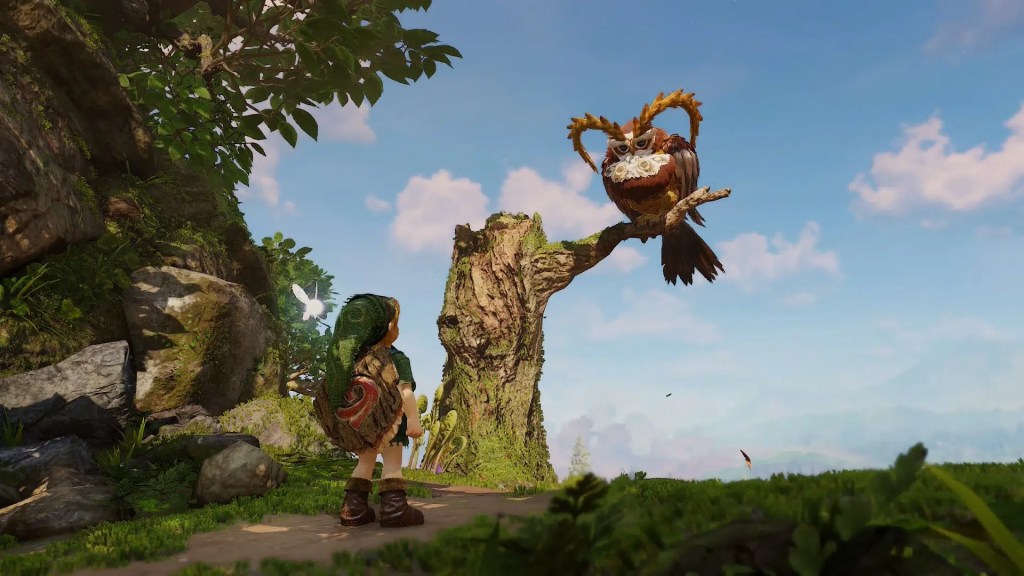
Characters react to the latest story beat, and since time now passes in towns, they have fuller daily routines — basically walking between their daytime and nighttime spots, but the gossipy culture got to me and I obsessed over everyone’s business, watching from rooftops as the hours passed below. Those characters feed you side activities: games, things that look out of place, connections across the world and its eras. The variety keeps the pace excellent — it always felt like I was doing something different. And everywhere, I kept an eye and ear out for well-hidden Gold Skulltulas. Side quests fatten your wallet, which matters, because Great Fairies charge a hefty price for worthwhile magic upgrades.
Navi, for her part, rarely interrupts with unsolicited advice, and the new quest log only gives broad strokes — “Find out what’s going on in Zora Domain.” You won’t get endlessly sidetracked in self-driven quests like the newer Zeldas, but the path forward is still yours to discover, and that’s been the heart of this series all along. It just takes different forms.
Verdict
We pass old stories down; there’s meaning in which ones we choose to revisit. The Legend of Zelda: Ocarina of Time is both an exceptional remake of an incredible game and a rich adventure that stands entirely on its own. The traditional formula still has plenty of value: a dense, intimate Hyrule stuffed with charming characters and fascinating secrets, and intricate dungeons that are satisfying to unravel even when their streamlined design dulls the edge of the solve. The depth, quality, and attention to detail in every corner match this series’ lofty reputation. Played it a hundred times, played it once in 1998, or never played it at all — I highly recommend this beautiful retelling of a legend.