As Hollywood braces for another potential superhero stumble, the man tasked with saving DC’s cinematic universe has a surprisingly zen approach to box office expectations.
James Gunn has never been one to mince words, but his latest comments about “Superman” carry the kind of confidence that either signals visionary leadership or spectacular delusion. With the weight of an entire cinematic universe resting on his shoulders, Gunn is pushing back against the narrative that his Man of Steel reboot needs to soar to astronomical heights to avoid crashing and burning.
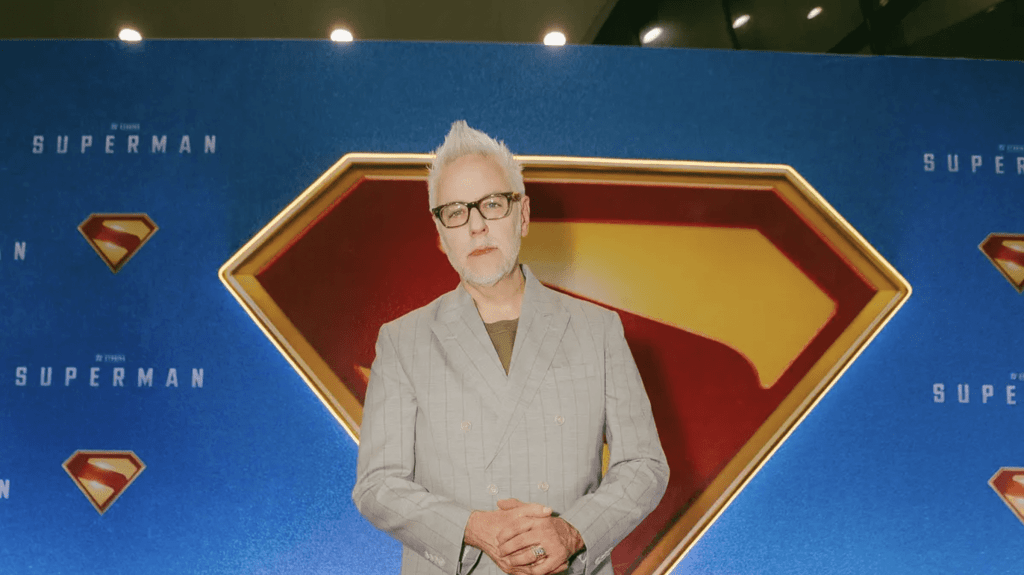
“They hear these numbers that the movie’s only going to be successful if it makes $700 million or something and it’s just complete and utter nonsense,” Gunn told GQ, his tone suggesting he’s as tired of the box office speculation as audiences are of underwhelming superhero movies. “It doesn’t need to be as big of a situation as people are saying.”
The Superhero Graveyard
It’s a bold stance, considering the carnage littering the superhero landscape. Warner Bros.’ previous DC venture ended not with a bang but with a whimper—”Shazam! Fury of the Gods” and “The Flash” became expensive lessons in how quickly audiences can lose interest in even the most established franchises. Meanwhile, Marvel’s once-invincible formula has shown troubling cracks, with “Captain America: Brave New World” face-planting at the box office and even the critically praised “Thunderbolts*” bleeding money.
The superhero genre, once Hollywood’s golden goose, now feels more like a high-stakes casino where even the house occasionally loses. In this environment, Gunn’s calm confidence feels either refreshingly authentic or dangerously naive.
The $200 Million Question
With “Superman” reportedly carrying a budget in the $200 million range—before marketing costs balloon that figure even higher—Gunn’s dismissal of pressure seems curious. This isn’t just any movie; it’s the cornerstone of his ambitious plan to rebuild DC’s cinematic universe from the ground up. “Supergirl” has already been filmed, and new versions of Batman and Wonder Woman are in development. If “Superman” stumbles, it’s not just one movie that fails—it’s an entire universe that never gets to exist.
Yet Gunn maintains this isn’t “the riskiest endeavor in the world,” a statement that suggests either impressive confidence in his vision or a masterful ability to manage expectations. Perhaps both.
The Character Conundrum
What makes Gunn’s approach particularly interesting is his diagnosis of what’s really killing superhero movies. It’s not fatigue with the genre itself, he argues, but laziness in storytelling. “People have gotten really lazy with their superhero stories,” he explained on the “Inside of You” podcast. “They have gotten to the place where, ‘Oh, it’s a superhero, let’s make a movie about it.'”
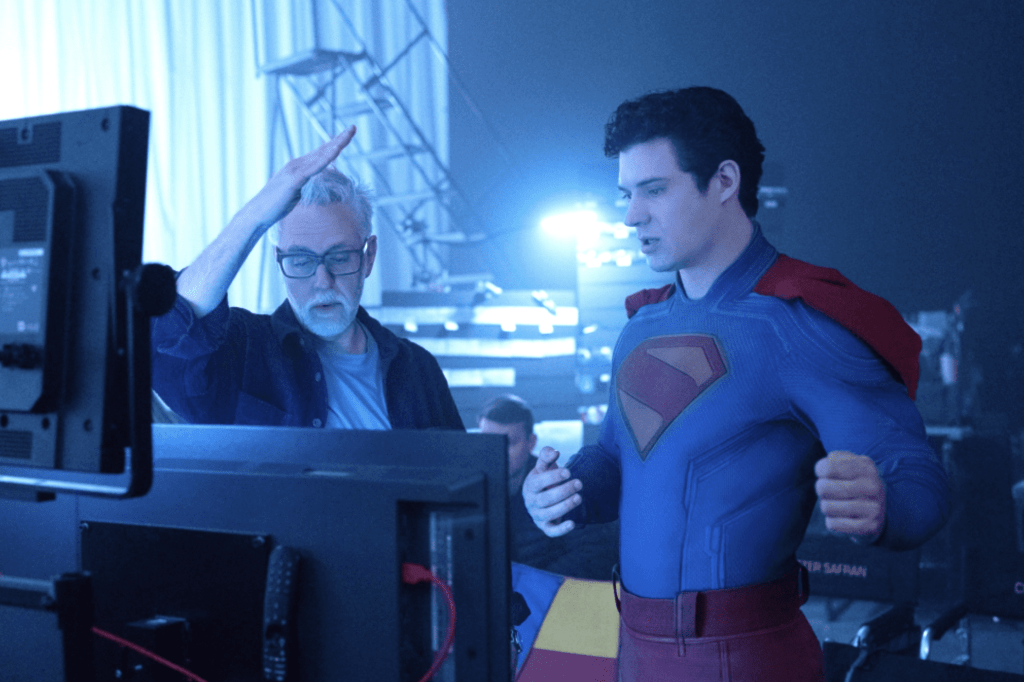
It’s a critique that cuts to the heart of Hollywood’s current superhero malaise. The industry has become so focused on intellectual property and franchise potential that it’s forgotten the fundamental question: why should audiences care about this particular story? Gunn’s emphasis on character over spectacle feels almost revolutionary in a landscape dominated by CGI battles and multiverse mechanics.
“We love Superman. We love Batman. We love Iron Man. Because they’re these incredible characters that we have in our hearts,” Gunn noted. “And if it becomes just a bunch of nonsense onscreen, it gets really boring.”
The Gunn Gamble
Gunn’s track record suggests he might know what he’s talking about. His “Guardians of the Galaxy” trilogy proved that obscure characters could become cultural phenomena when given genuine heart and personality. His approach to “The Suicide Squad” transformed a critically panned franchise into something unexpectedly moving and genuinely entertaining.
But Superman presents a different challenge entirely. This isn’t about elevating unknown characters or rehabilitating damaged ones—it’s about making the most famous superhero in the world feel essential again. After decades of film adaptations, comic book interpretations, and cultural omnipresence, finding something new to say about the Last Son of Krypton requires more than just good intentions.
Beyond the Box Office
Gunn’s insistence that success isn’t solely measured in box office receipts reflects a broader industry conversation about what constitutes a “hit” in the streaming age. Warner Bros. Discovery’s financial health depends on more than just theatrical returns; it needs content that drives subscribers, merchandise sales, and long-term franchise value.
Still, theatrical performance remains the most visible and immediate measure of success. A Superman movie that fails to capture audiences’ imagination in theaters will struggle to justify the massive universe-building investment that follows.
The Pressure Paradox
What’s fascinating about Gunn’s approach is how his very insistence that there’s no pressure creates its own form of pressure. By positioning himself as the calm voice of reason in a panicked industry, he’s essentially promised that his vision will succeed where others have failed. It’s the kind of confidence that either proves prophetic or becomes a source of embarrassment.
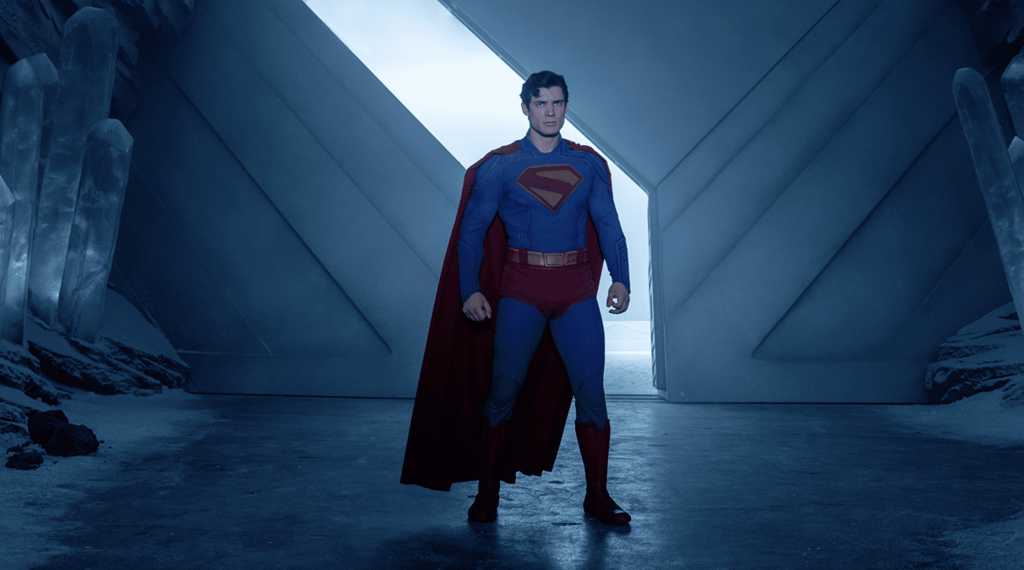
His co-leadership of DC Studios with Peter Safran means he’s not just the director of “Superman”—he’s the architect of everything that follows. Success validates his entire approach to superhero storytelling; failure calls into question not just one movie but an entire creative philosophy.
The Test of Time
Come July 11, when “Superman” arrives in theaters, we’ll learn whether Gunn’s confidence was justified or misplaced. The film carries the hopes of a studio, the expectations of fans, and the weight of an entire cinematic universe yet to be born.
But perhaps Gunn’s greatest insight isn’t about box office expectations or superhero fatigue—it’s about the fundamental promise of storytelling itself. In a world where audiences have been conditioned to expect disappointment from their heroes, both on screen and off, delivering a Superman story that genuinely matters might be the most radical thing a filmmaker can do.
The question isn’t whether “Superman” will make $700 million. The question is whether it will make audiences believe in heroes again. For James Gunn, that’s a bet worth making, box office be damned.