It’s one thing for a viral internet phenomenon to make the leap to the big screen, but it’s a whole different beast to do it with a fiercely protective, built-in fanbase ready to dissect every single frame. The terrifying reputation of the internet’s favorite creepypasta precedes it. So, the burning question on every horror fan’s mind is simple: Can the A24-backed feature film live up to the staggering promise of Kane Parsons’ original YouTube series?
Thankfully, I am incredibly relieved to tell you that the 20-year-old filmmaker has, without a doubt, got the goods. Parsons handles his feature debut with the steady, sharp instincts of a veteran director. Having already spent four years meticulously crafting this universe online, he steps into the theater as a young master of the craft, transforming a viral indie concept into a full-blown liminal masterpiece. The Backrooms is a truly terrifying cinematic rabbit hole—a dread-filled, cerebral trip that is as visually stunning as it is deeply unsettling.
Descent Into the Complex: A Grim Introduction to the Nightmare
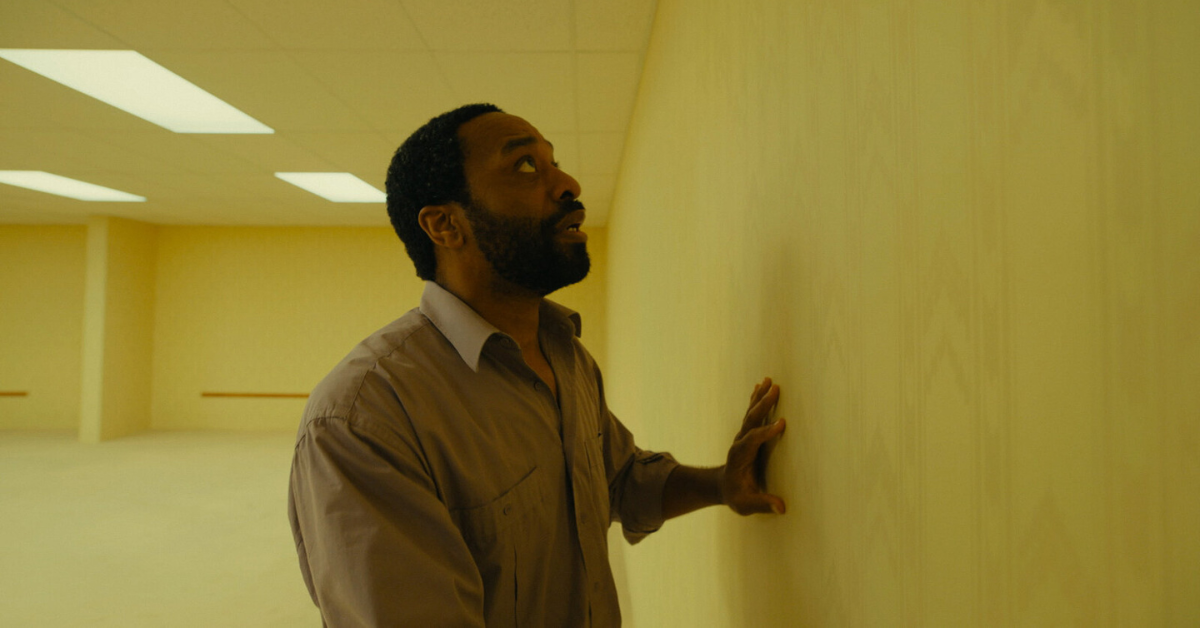
The film follows Clark, played with a brilliant, simmering intensity by Chiwetel Ejiofor. Clark is a troubled, bitter man consumed by a deep-seated resentment that infects the screen just as much as the sickly yellow, moldy wallpaper of his surroundings. He stumbles upon an entrance to the Backrooms—via a glitch in reality that hardcore lore hounds will instantly recognize as a “null zone”—hidden deep within the basement of his furniture store.
Right from the opening frame, Parsons establishes a vital rule: this place is hostile, dangerous, and we should absolutely not want to be here. Rather than letting the audience marvel at the bizarre spectacle of the setting, the film plunges us straight into immediate anxiety. The sinister tone is unrelenting. The Backrooms themselves feel alive, functioning less like a background setting and more like an apex predator. The walls practically breathe as they track and stalk their prey.
Interestingly, Clark isn’t your typical, easily rootable horror protagonist. He is genuinely unlikable at times, but looking at the story through the perspective of an irredeemable character actually works to the movie’s distinct advantage. It’s a bold creative choice. While some mainstream viewers might find his bitter attitude an off-ramp for their enjoyment, longtime fans will appreciate the harsh reality it highlights: the Complex does not discriminate. Anyone can fall victim to this nightmare, and that cold indifference makes the horror hit even closer to home.
Production Design That Rocks: Blending Practical Sets with Blender Magic
From a technical standpoint, the production design of this film absolutely rocks. The physical sets built for the Complex are jaw-droppingly massive, capturing that uncanny, endless corporate maze aesthetic perfectly. What’s even more impressive is how seamlessly these real-world sets blend with Parsons’ signature CGI sequences, which he still crafts beautifully using Blender.
For the fans who were worried the film might lose the raw charm of the web series, fear not. The digital sequences are heavily utilized and serve to anchor the horror foundation. The film smartly leans into its 1990s timeline, utilizing a gritty, shot-on-video VHS texture that builds an immersive layer of realism before dialing the scares up to an absolute maximum. Combined with brilliant, claustrophobic camera angles and an innate eye for framing, Parsons creates a visual language that feels uniquely homey and deeply horrifying in equal measure.
Deep Lore vs. Newcomer Appeal: A Delicate Balancing Act
One of the toughest challenges for any adaptation is serving two masters: the die-hard community and the casual theatergoers who don’t know a thing about “noclipping.” For the lore enthusiasts, there is a goldmine of intricate connections to the groundwork Parsons began laying back in 2022. The movie expertly weaves in the cold, technological bureaucracy of the Async Research Institute, balancing the cold science of the anomaly against the raw human tragedy of those who randomly drop out of our reality.
The script digs deep into the psychological aftermath of the maze, exploring how an endless, lonely expanse permanently alters a person’s psyche, what happens to your relationship with your own memories when time loses meaning, and how severe isolation warps your perception of reality. It is more than enough to satisfy the most hardcore fans, while remaining inherently intriguing enough to hook complete newcomers.
The Verdict: An Uncompromising, Divisive Triumph
If there is an element of the film that will divide audiences, it’s how Parsons handles his mysteries. The Backrooms firmly refuses to hold your hand. Mainstream cinema has conditioned audiences to expect tidy, spoon-fed answers by the time the credits roll, but Parsons rejects that entirely. He leaves intentional, calculated gaps in the narrative, trusting the audience to piece the puzzle together themselves.
To some, these narrative choices might look like plot holes, but they are actually mysteries meant to be uncovered later. If you are willing to surrender to the unknown and let the story take you on the ride it wants, it’s an incredibly rewarding experience.
My only real nitpick lies in the audio department. Aside from a fantastic, energetic remix of a licensed track during a meta sequence, the music relies heavily on a decent but somewhat unexceptional orchestral score. Given the brilliant precedent set by the industrial, synth-heavy soundtracks of classic 90s horror, a few more distinct electronic needle-drops would have really pushed the atmosphere over the edge.
Ultimately, The Backrooms is a harrowing, visually spectacular trip to the dark heart of isolation and fractured memory. It takes the psychological horror of everyday liminal spaces and transforms them into pure silver-screen gold. The future of independent horror is incredibly bright with Kane Parsons at the helm of the maze.
Final Score: 8.5/10
The Bottom Line: A24’s The Backrooms is an uncompromising, atmospheric triumph that respects its audience’s intelligence. It swaps cheap jump scares for lingering psychological dread, making it a must-watch for anyone who appreciates the art of modern horror.
Join the Complex: Let’s Talk in the Comments!
Now that the doors to the Async Institute have been opened on the big screen, we want to hear your theories. Did the movie live up to the dread of the original Kane Parsons YouTube videos? Let us know if you dug the ambiguous ending or if you wanted more concrete answers, and drop your best theories in the comments below so we can dissect the lore together.