
Here we go again.
A woman-led superhero movie hits theaters, and almost immediately, the internet erupts with gleeful bashing, premature box office analysis, and a wave of criticism that feels disproportionate to what’s actually on screen. If you’ve been paying attention to the discourse surrounding Supergirl, you’d think it was the worst superhero film ever made.
It’s not. Not by a long shot.
In fact, Craig Gillespie’s (I, Tonya, Cruella) take on Kara Zor-El is a refreshingly different entry in the superhero genre—one that trades the usual formula for something darker, more personal, and surprisingly grounded. But it’s also a film that struggles to find its rhythm, juggling too many influences and never quite committing to any of them.
The result? A 7/10 movie that’s worth your time, even if it doesn’t quite reach the stratospheric heights of its source material.
Before We Dive In: A Word About the Backlash
I’ll admit it—before I watched Supergirl in theaters this past weekend, my expectations were medium to low.
Part of that was the reviews. The second film in James Gunn and Peter Safran’s rebooted DC Universe currently sits at a “rotten” 55% on Rotten Tomatoes (though the audience score tells a very different story). Part of it was plain old superhero fatigue. I’ve seen nearly every live-action superhero movie in theaters during its opening weekend for the last 20 years. I’m a fan, but even I can admit studios are pushing these things out faster than we can breathe.
But here’s the thing: I loved Gunn’s Superman, which opened last summer to positive reviews and earned $618 million globally. And I trusted his vision. Plus, House of the Dragon‘s Milly Alcock was leading the film. How bad could it be?
As it turns out, not bad at all.
What Is Supergirl About?
Based on Tom King’s critically acclaimed comic book series Supergirl: Woman of Tomorrow, the film follows Kara Zor-El—Superman’s cousin—as a reluctant (and often drunk) superhero who teams up with Ruthye Marye Knoll (Eve Ridley), a teenage girl seeking revenge after her family is murdered.

It’s a darker, more grounded story than Superman, but it still feels like it belongs in the same universe. The visuals, dialogue, and world-building are all in line with the new DCU. And at its core, it’s a story about a depressed, super-powered woman who is pulled out of her bar-hopping existence to help other people and find her purpose.
That’s a refreshingly different take, and one that deserves more attention than it’s getting.
What Works: The Performances and Visuals
Let’s start with the positives, because there are a lot of them.
Milly Alcock Is a Revelation
Alcock’s Kara Zor-El is the best thing about this movie. She nails the reluctant hero trope about as well as you could hope for. Kara’s a mess—depressed, cynical, and nursing old wounds from the destruction of Krypton—and Alcock plays her with just the right balance of vulnerability and defiance.
The reluctant hero thing is actually very difficult to pull off. It’s hard to play “I don’t care” in an engaging way because if the character on screen doesn’t care, then I certainly don’t care either. Alcock manages it here with surprising ease.
The chemistry between her and David Corenswet’s Superman is also a highlight. Their dynamic is electric—one positively looking toward the future, the other still nursing old wounds—and it makes me genuinely excited to see more of this duo on screen when they reunite in 2027’s Man of Tomorrow.
The Alien Design Is Top-Notch
If there’s one thing Supergirl absolutely nails, it’s the creature design. The practical makeup FX and costuming throughout the movie are genuinely top shelf. The alien designs feel straight out of Star Wars’ Mos Eisley Cantina, with a grimy, lived-in aesthetic that suits the film’s darker tone perfectly.
Matthias Schoenaerts as the villain, Krem of the Yellow Hills, looks incredible. The beads studded into his face, the machinery grafted into his body, the weird little red button he needs to activate to speak—all of it adds up to a striking and genuinely pretty cool image that would have felt at home in the Thunderdome.
Lobo Is a Blast
Jason Momoa’s Lobo is just as much fun as fans have been anticipating. The Main Man is a cigar-chomping, impervious anti-hero who steals every scene he’s in. Momoa more than earns the comparison to J. Jonah Jameson or Hellboy in all the best possible ways.

His face paint and prosthetics are chef’s kiss, cutting an imposing figure that fans of the comics will immediately recognize and appreciate.
What Doesn’t Work: A Tale of Two Movies
And now, the not-so-good news.
Supergirl is a tale of two movies. For everything the film does right, there’s an alter ego doing it wrong. As a result, the movie shuffles forward—a few steps forward, a few steps back—and never quite finds its rhythm.
Kara Doesn’t Have Much of a Journey
For all of Alcock’s strong performance, Kara is not a markedly different person at the end of the movie than she is at the beginning.
Not because of anything Alcock did or didn’t do, but because the story doesn’t give her much to do. She’s protective of Ruthye from the start, sticking her neck out to do the right thing. By the end of the film, she does exactly the same thing.
Part of the point there is that it highlights the impact she has on Ruthye (Eve Ridley, who ultimately gets the lion’s share of the character work in the film). But it leaves Kara feeling static in a way that flattens the movie out and makes it drag in places.
The Influences Are Too Familiar
Supergirl wears its influences proudly—perhaps too proudly.
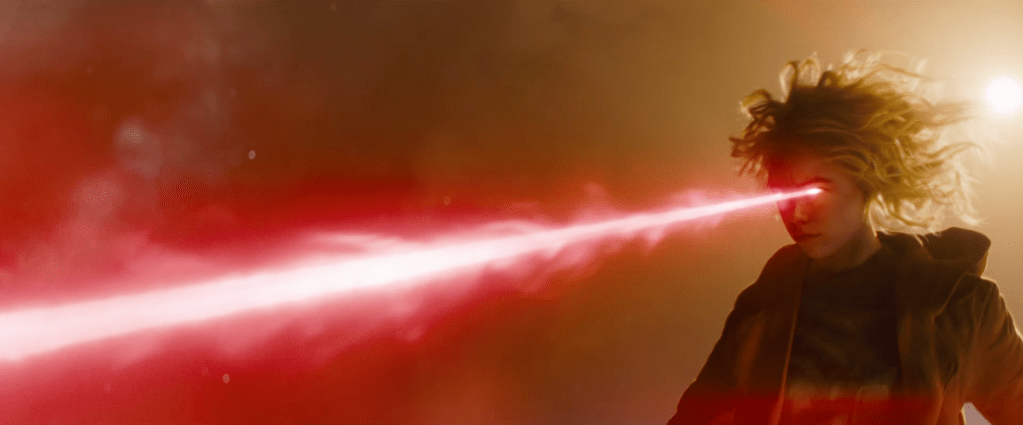
We knew the True Grit/archetypal Western structure would be a big part of the film because of the source material. A Mad Max influence is just as obvious in the grimy, lifeless terrains and dying worlds on which most of the movie takes place. And the Guardians of the Galaxy comparisons have been obvious since the first trailer dropped.
While I’ll happily take “True Grit meets Mad Max by way of Guardians and Star Wars,” there’s a dulled edge to the whole movie. Instead of taking the post-apocalyptic vibes of Mad Max, they lift a whole plot point straight from Fury Road and handle it, frankly, a little clumsily. And instead of the emotionally relevant needle drops of Guardians, Kara gets slow-paced montages set to a Jimmy Eat World cover that I found… well, baffling.
The Villains Are Underserved
Schoenaerts’ Krem looks incredible. But for all his post-apocalyptic biker gang aura, he gets nothing else to go on. He has some affectations—like how he’s eating something in almost every scene—but those are all they really are: affectations. There’s nothing that makes him scary or formidable other than a few throwaway lines about his relative strength.
It’s a waste of a great actor and a great design.
The same goes for Lobo. He’s incredibly fun to watch, but he doesn’t need to be there. The one scene he has with Kara has real reshoot energy. He’s added on to a scene that didn’t need any extra motivation, nor is he a particularly unique foil for Kara that propels her character in any meaningful way. He just happens to be looking for the same group of guys Kara and Ruthye are after.
The only real added value he gives the movie is a few admittedly fun one-liners. And maybe that’s all Lobo needs to be. But ultimately, he shows up to put his stamp of approval on Kara’s actions, which feels both unnecessary and more than a little pandering.
The Elephant in the Room: The Backlash
Now, let’s talk about the backlash—because ignoring it would be doing a disservice to the conversation surrounding this film.
In the weeks leading up to the June 26 release, men mocked 26-year-old Alcock’s appearance across social media. The narrative was clear: Alcock, who spends most of Supergirl wearing loose T-shirts and minimal makeup, wasn’t styled to fit the male gaze.

It’s quite the opposite. With a human trafficking plot tied to the villain, the story calls out those who sexualize young girls and women. And Kara doesn’t have a love interest—the film isn’t interested in giving her one.
To be clear: The story isn’t for everyone, and I don’t think you’re a bad person if you don’t like it.
But we need to talk about how the public responds to women-led stories in a genre that historically has been consumed by male-majority audiences. Supergirl was set up to fail with the backlash that started as soon as the first trailer hit the internet.
Now, after an opening weekend that earned the film $38 million domestically** against a budget of over **$170 million, everyone is quick to call it a failure—when the film hasn’t even been in theaters for a week.
DC Studios doesn’t appear to be confidently promoting its film, either. Safran told the New York Times on Monday: “While Supergirl didn’t meet our box office expectations, it’s just one component of a broader, long-term strategy at DC Studios that we remain confident in.”
The statement doesn’t exactly inspire audiences to jump to see it during the upcoming holiday weekend.
Verdict: A Decent Debut That Deserves a Fair Shot
Supergirl is not the awful film the public is being led to believe it is.
It’s a decent standalone movie that gives Kara Zor-El a backstory before she next appears with David Corenswet in 2027’s Man of Tomorrow. There’s humor, an emotional core, and engaging performances. It deserves more attention than it’s getting.
But it’s also a film that never quite commits to its best ideas. The performances are great, the visuals are stunning, and the world-building is solid. But the story feels like it’s treading water, and the villains are underserved in ways that leave the whole thing feeling less than the sum of its parts.
If you’re a fan of the DCU, Milly Alcock, or just good superhero stories, Supergirl is worth your time. Just don’t expect it to reach the heights of Superman or Guardians of the Galaxy. It’s a different kind of movie—one that’s trying to do something new, even if it doesn’t always succeed.
Grade: 7/10
What Did You Think of Supergirl?
Have you seen the film? Are you planning to? Do you agree with our review, or do you think we’re being too harsh?
Sound off in the comments below! We want to hear from you—whether you loved it, hated it, or fall somewhere in between.