The prospect of a brand-new Steven Spielberg film will always send a jolt of pure adrenaline through the film community.
The man is an undisputed titan of cinema who practically invented the modern summer blockbuster. But when he steps back into the arena of big-budget, original science fiction—and he brings extraterrestrials with him—it becomes a massive cinematic event.
Disclosure Day is a movie about the ultimate “what if” scenario: could humanity actually handle the definitive, undeniable proof that aliens exist? The plot gives us the classic, delicious genre tropes we crave: a shadowy, government-adjacent agency that has spent decades keeping the truth under wraps, contrasted against a ragtag group of regular folks determined to blow the whistle. But the real meat of the story isn’t the conspiracy itself; it is the psychological weight of that looming truth.
For the first two acts, this film feels like a beautiful, nostalgic reminder of why we fell in love with movies in the first place. It is packed to the brim with signature Spielberg flourishes—the dynamic camera movements, the dramatic backlighting, the lens flares, and those iconic, slow dollies into the awe-stricken faces of his characters. It isn’t an imitation of a classic style; it’s the master himself reminding everyone exactly how it’s done.
Grounded Humanity: Emily Blunt and Josh O’Connor Carry the Emotional Weight
Spielberg’s absolute greatest superpower has always been his ability to anchor massive, cosmic concepts in raw, ground-level human emotion. We don’t just love E.T. because a bicycle flies across a moonlit sky; we love it because of the palpable, heartbreaking bond between a boy and his alien friend. In this film, that vital emotional heartbeat rests entirely on the shoulders of a spectacular cast.
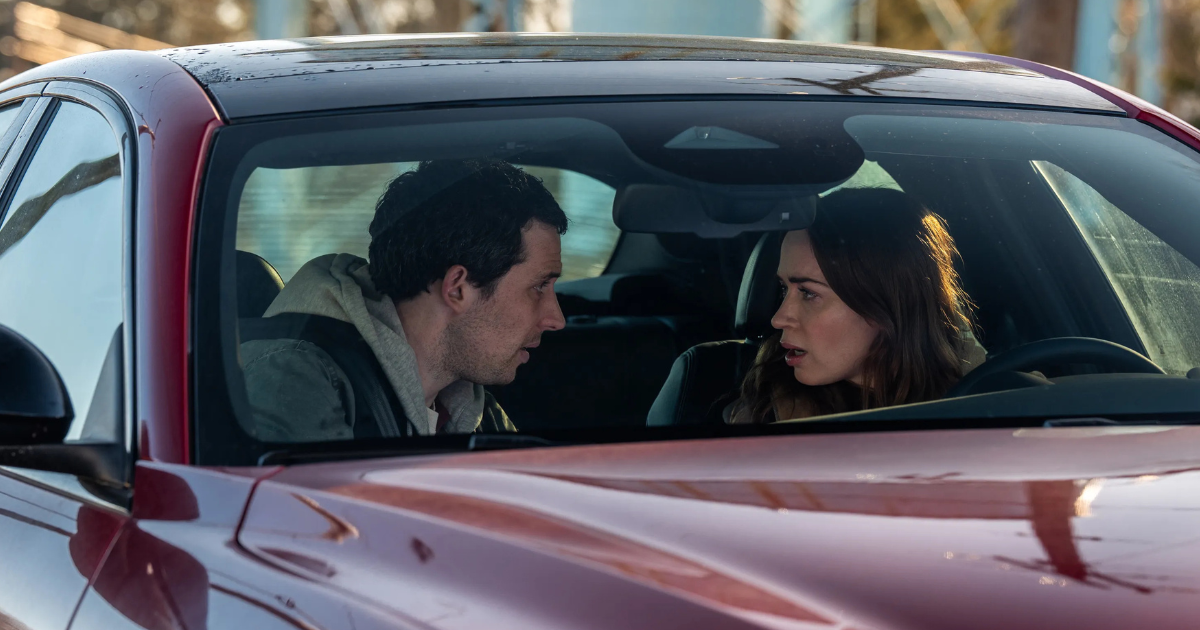
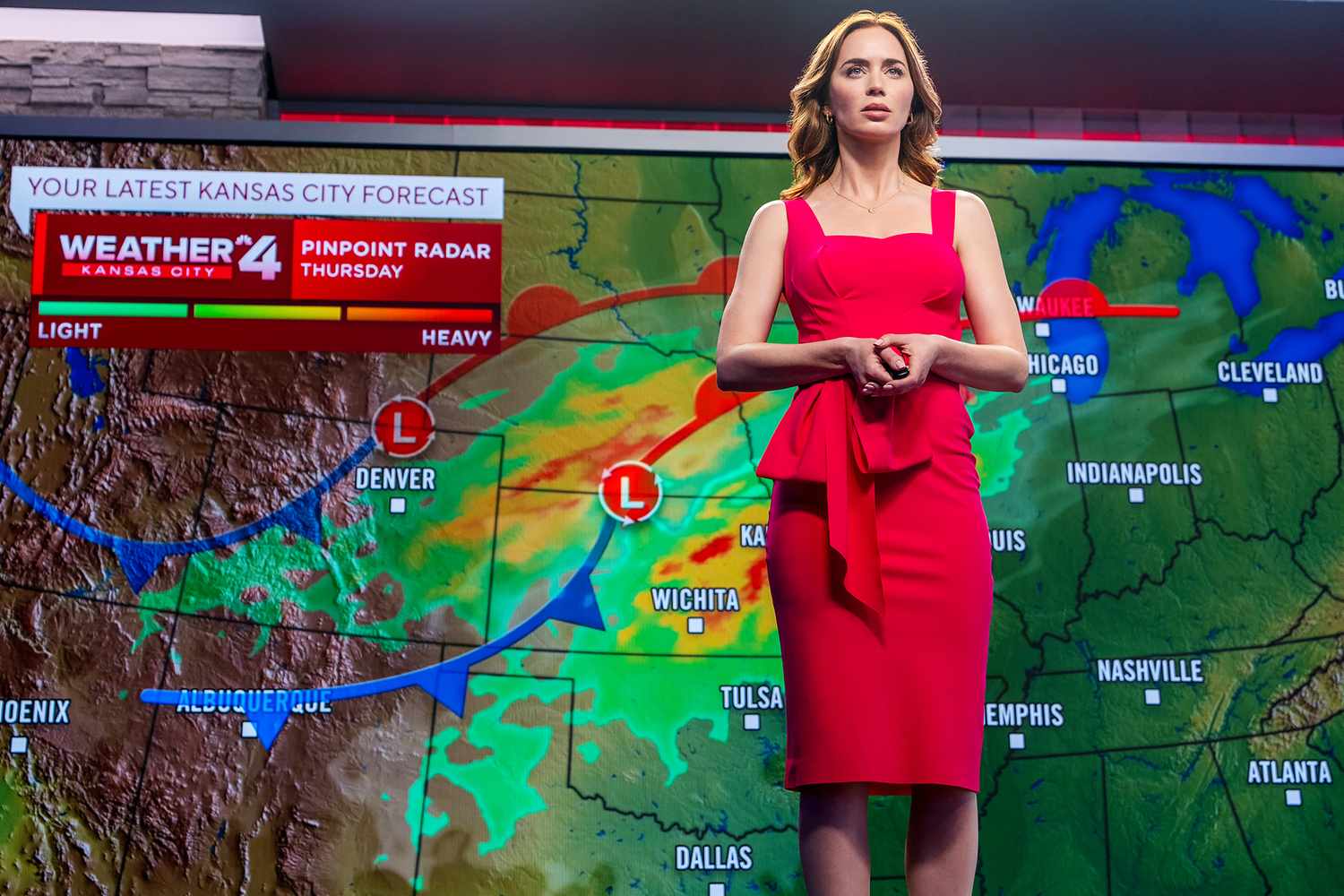
Emily Blunt is magnificent as Margaret, a regular Kansas City weather presenter who suddenly finds herself thrust into the center of a cosmic storm, involuntarily speaking in a clicking, complex alien language. Blunt plays the role with a seamless blend of fierce determination, visceral terror, and genuine confusion.
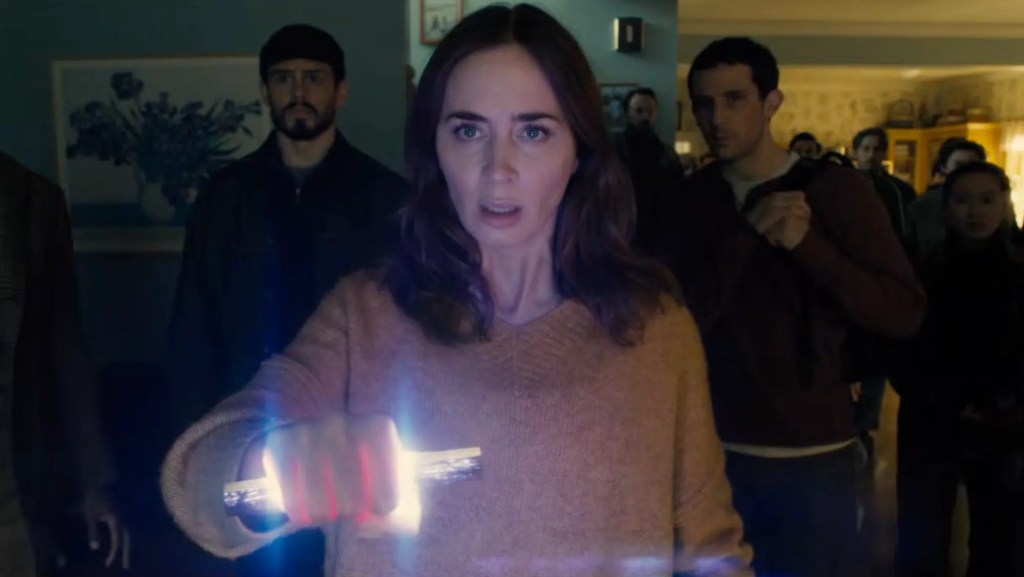
In a standout, breathtaking single-take sequence, the camera tracks her through a pivotal moment of sheer panic where her character transitions from absolute dread to inexplicably rattling off fluent Korean in a matter of seconds. It is a masterclass in subtlety that keeps a wild premise completely believable.
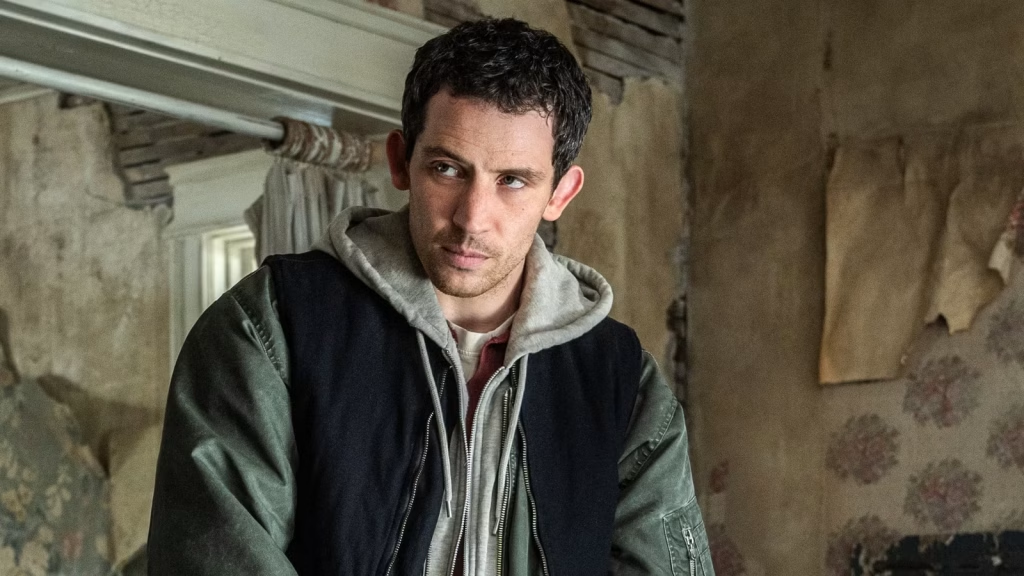
Matching her beat for beat is Josh O’Connor as Daniel. O’Connor plays the quintessential Spielbergian underdog—a man clearly in over his head, armed with nothing but his core principles and a past he isn’t particularly proud of. He isn’t an action hero, but his quiet determination to do the right thing makes him the perfect emotional anchor for a massive tentpole movie.
The supporting cast is equally stellar. Colman Domingo and Colin Firth bring their undeniable gravity to the screen, while Eve Hewson provides a refreshing, sharp outsider’s perspective to the unfolding conspiracy. Wyatt Russell also pops up, lending his trademark, effortless everyman charm to the screen without ever overstaying his welcome.
Action Bookended by Emotion: The High Point of the Film
There is a sequence right in the center of the film that perfectly encapsulates why Spielberg remains an absolute virtuoso behind the lens. After narrowly escaping a team of relentless federal agents, Margaret and Daniel find themselves trapped on a moving train.
What follows is an incredible ten-minute stretch of cinema that serves as a masterclass in pacing. It begins with a quiet, surprisingly funny, and loose moment of genuine connection between the two leads, transitions instantly into a sequence of white-knuckle, nerve-wracking action, and concludes with a heavy, intense look at the immediate psychological aftermath of that violence.
It is a spectacular reminder that the best action sequences mean absolutely nothing if you don’t care about the people caught in the crossfire.
The “Motel Window” Rule: When to Let Logic Gaps Slide
Every single movie ever made has minor logic gaps. For me, liking a film often comes down to a simple, personal guiding principle: if the overall story charms me enough, those little nagging plot holes easily melt into the background.
For instance, at one point in the film, the shadowy government goons completely surround our heroes at a cheap, roadside motel. Margaret and Daniel manage to escape by simply slipping out of a back window and casually walking away completely unnoticed.
The cynical film critic in me immediately wanted to object—we’ve all seen The Fugitive, and we know that real tactical teams cover every single exit. But because the sequence is shot with such style and propulsive energy, I found myself smirking, letting it go, and eagerly following them into the next scene.
The Third Act Problem: A Divisive Finale to a Great Setup
Unfortunately, that goodwill hits a massive speed bump when the film enters its final act. It is incredibly difficult to discuss the climax without veering into heavy spoiler territory, but the way the script chooses to resolve its massive, world-altering questions left a distinctly frustrating aftertaste.
The ultimate answers the film offers feel surprisingly naive, trading the grounded, complex reality established in the first two acts for a childishly hopeful resolution that completely derailed my investment in the climax.
Suddenly, characters begin reacting in ways that feel entirely dishonest to how they were set up. When you build a movie around the fascinating, realistic friction of how different factions of humanity would react to an alien knowledge drop, wrapping it up with a clean, overly idealistic bow feels like a massive misstep.
That being said, the ending also functions a bit like a cinematic Rorschach test. The finale leaves just enough room for interpretation that your personal reaction to it might say more about your view of the modern world than it does about the film itself.
Even if the resolution feels overly optimistic, the journey to get there is an absolute blast. In an era dominated by endless sequels, reboots, and interconnected cinematic universes, a massive, original sci-fi blockbuster that sparks genuine conversation is something we should celebrate.
The Verdict: A Compelling Conversation Starter
Disclosure Day is a beautiful, thrilling, and ultimately flawed piece of original science fiction. While the landing doesn’t stick perfectly, the sheer joy of watching a legendary director operate at the absolute top of his technical game makes this an essential theatrical experience.
Final Score: 7/10 stars
The Bottom Line: Driven by phenomenal performances from Emily Blunt and Josh O’Connor, Disclosure Day is a gorgeous, tense, and deeply nostalgic sci-fi thriller. The ending will undoubtedly divide audiences, but it will keep you talking long after the lights come up.
Join the Discussion: Could We Handle the Truth?
Now that Spielberg has officially blown the lid off the ultimate cosmic secret, we want to hear your thoughts on the big reveal!
Did you find the childishly hopeful ending of the film to be a beautiful message of classic Spielberg optimism, or did it feel too detached from reality? How did you feel about Emily Blunt’s spectacular single-take scene? If a real-life event happened tomorrow, do you think humanity would handle it better or worse than the characters on screen?
Sound off in the comments below and let’s debate the lore!