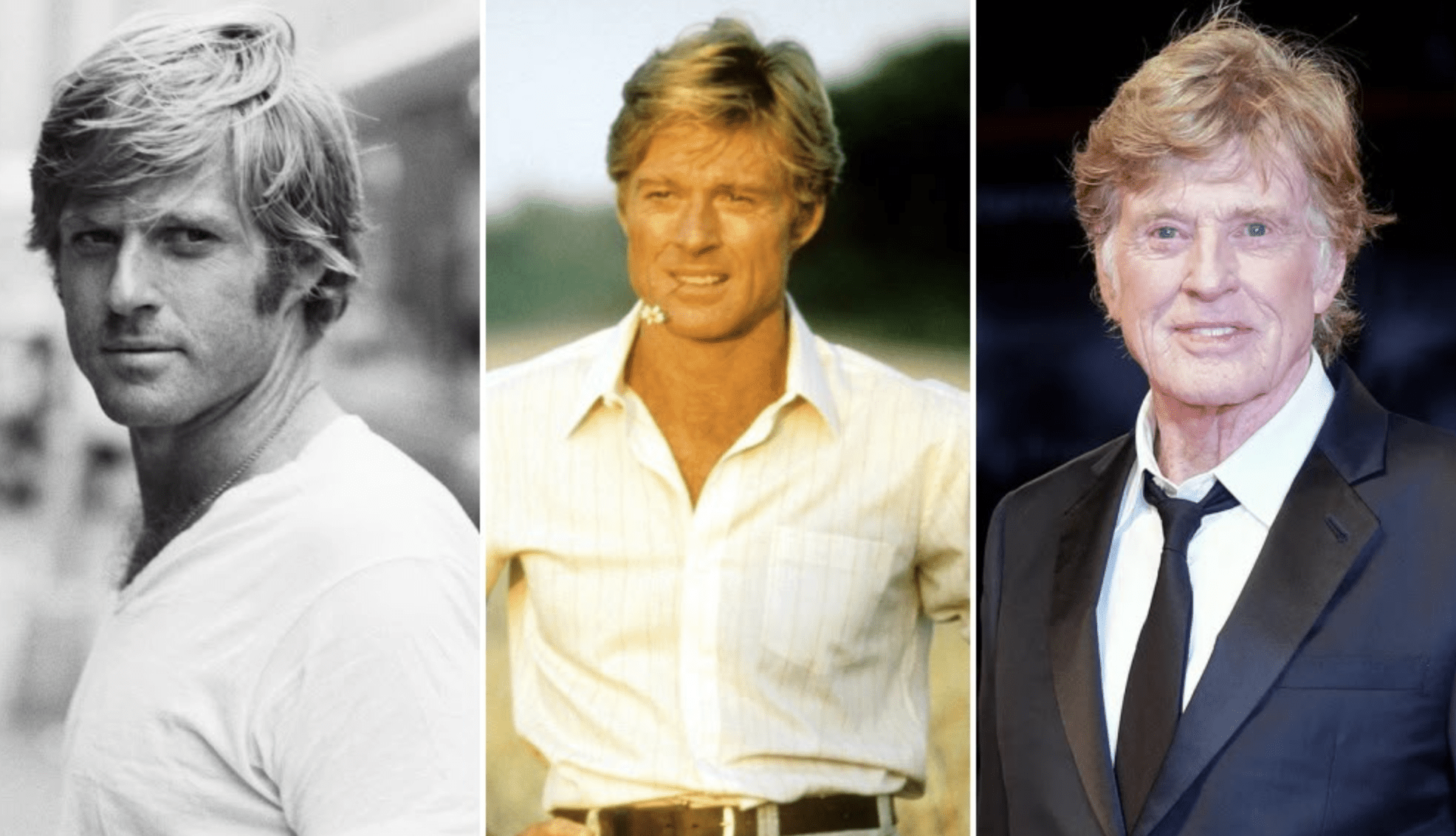
Robert Redford, the golden-haired leading man who became one of Hollywood’s most influential figures both in front of and behind the camera, died Tuesday at his beloved Sundance retreat in Utah. He was 89 years old.
The Oscar-winning director and founder of the Sundance Film Institute passed away peacefully at his mountain home, surrounded by family members, according to Cindi Berger, chief executive of Rogers & Cowan PMK. “He will be missed greatly,” Berger said in a statement, with the family requesting privacy during this difficult time.
From Golden Boy to Hollywood Royalty
Few actors in cinema history possessed the magnetic screen presence that defined Redford’s prime years in the 1970s. With his tousled blond locks, granite jaw, and million-dollar smile, he embodied the American ideal of rugged masculinity while bringing unexpected depth to characters who were often aloof, sardonic, and complex.
Like Gary Cooper, Gregory Peck, and Steve McQueen before him, Redford’s appeal wasn’t built on range but on an undeniable charisma that made him one of Hollywood’s most bankable stars. His breakthrough came in 1969 when he played the Sundance Kid opposite Paul Newman’s Butch Cassidy in what became the year’s top-grossing film. This partnership would prove to be one of cinema’s most memorable, culminating in their Oscar-nominated reunion in “The Sting” (1973), which won the Academy Award for Best Picture.

The early 1970s marked Redford’s ascension to superstar status. Following the successful Western “Jeremiah Johnson,” he became the nation’s number one box office draw for three consecutive years. His romantic leading man credentials were cemented in “The Way We Were” (1973) opposite Barbra Streisand, a film that, despite lukewarm reviews, earned $50 million and solidified his heartthrob status.
A Master Behind the Camera
While Redford’s acting achievements were substantial, his directorial debut proved equally impressive. “Ordinary People” (1980) earned him an Academy Award for Best Director, establishing him as a filmmaker capable of handling deeply personal, psychologically complex narratives. The film’s success demonstrated his remarkable sensitivity behind the camera, a stark contrast to some of the more ruthless characters he portrayed on screen.
His directorial portfolio continued with critically acclaimed films including “A River Runs Through It,” “Quiz Show,” and “The Legend of Bagger Vance.” Later political dramas like “Lions for Lambs” and “The Conspirator” showcased his commitment to socially conscious filmmaking, even when critics dismissed them as “glorified civics lessons.”
Revolutionary Impact on Independent Cinema
Perhaps Redford’s most enduring legacy lies in his founding of the Sundance Film Institute in 1981. What began as a modest filmmakers’ laboratory in the Utah mountains evolved into the most important platform for independent cinema in America. The Sundance Film Festival became synonymous with the independent film revolution, launching countless careers and changing the landscape of American cinema.
“Sundance is only one of his truly remarkable achievements,” said Frank Pierson, former Academy president. “When you look at the sum total of everything he has done as a producer, director and actor, there are not many people who have dedicated themselves so completely to their ideals as Bob Redford.”
Geoff Gilmore, longtime co-director of the festival, noted Redford’s constant pursuit of new challenges: “I think he’s constantly trying to figure out different directions for himself because he’s someone who’s always taking on new challenges.”
The Activist and the Artist
Redford’s career was marked by his willingness to tackle politically charged subjects and his commitment to environmental causes. His production company, Wildwood Enterprises, focused on films that examined the American Dream’s darker aspects. “The Candidate” and “Downhill Racer” were part of a planned trilogy about what he called “the Pyrrhic victory of winning.”
“I wanted to tell these stories about America, the America that I knew,” Redford explained in 2009. “I remembered these slogans you were given as a kid, like ‘It doesn’t matter if you win or lose, but how you play the game,’ and it was a lie. I wanted to make a film about that lie.”
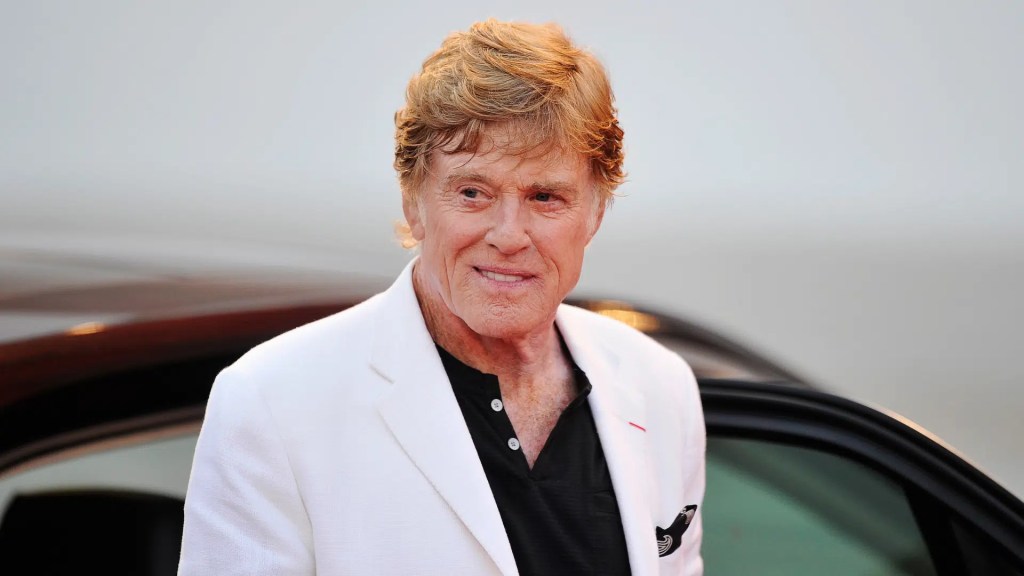
His environmental activism included protecting Alaska’s Arctic Wildlife Refuge from oil interests, and he consistently used his celebrity status to advance causes he believed in.
A Career That Evolved Across Decades
Redford’s later career showcased his versatility as both actor and filmmaker. His nearly silent performance in “All Is Lost” (2013) demonstrated his continued power as a performer, while his role as the villain in “Captain America: The Winter Soldier” showed his willingness to subvert audience expectations.
His final acting appearance came in 2019’s “Avengers: Endgame,” reprising his role as Secretary Alexander Pierce, bringing his six-decade career full circle from television appearances on “Perry Mason” and “The Twilight Zone” to the biggest blockbuster franchise in cinema history.
From California Rebel to Utah Icon
Born in Santa Monica in 1936, Redford’s anti-establishment streak emerged early. After being kicked out of the University of Colorado for poor grades and mischievous behavior, he traveled to Europe with dreams of becoming a painter. Instead, he found his calling in New York, studying at the American Academy of Dramatic Arts and launching a career that would span television, Broadway, and eventually Hollywood.
His distrust of authority was crystallized in childhood when he met then-Senator Richard Nixon during Boys Week. “The vibe that went through me was so extreme,” Redford recalled, describing Nixon as “a false, artificial person.” This encounter shaped his lifelong skepticism of political power, which would influence many of his film choices.
An Incomparable Legacy
Sydney Pollack, who directed Redford in seven films, perhaps best captured his essence: “A big part of what made Bob popular is what he withheld. He’s a very brave actor when you get down to it in that sense.” This quality of holding something back, of suggesting depths beneath the surface, defined both his screen presence and his approach to filmmaking.
As Pollack reflected on Redford’s legacy: “There’ll be those who remember him for offbeat movies like ‘The Candidate’ or ‘Downhill Racer.’ There will be those who’ll remember him as a great romantic leading man in movies like ‘The Way We Were.’ There will be those who will consider him a great force in the emergence of independent filmmaking… The one thing he has always been is difficult to anticipate.”
Robert Redford leaves behind a transformed industry, countless filmmakers whose careers he helped launch, and a body of work that captured both the beauty and contradictions of American life. He is survived by his wife Sibylle Szaggars, daughters Shauna Schlosser Redford and Amy Redford, and seven grandchildren.
In an era when celebrity often seems divorced from substance, Redford’s life stands as a testament to using fame as a force for artistic and social progress. His passing marks the end of an era, but his influence on American cinema and independent filmmaking will endure for generations to come.