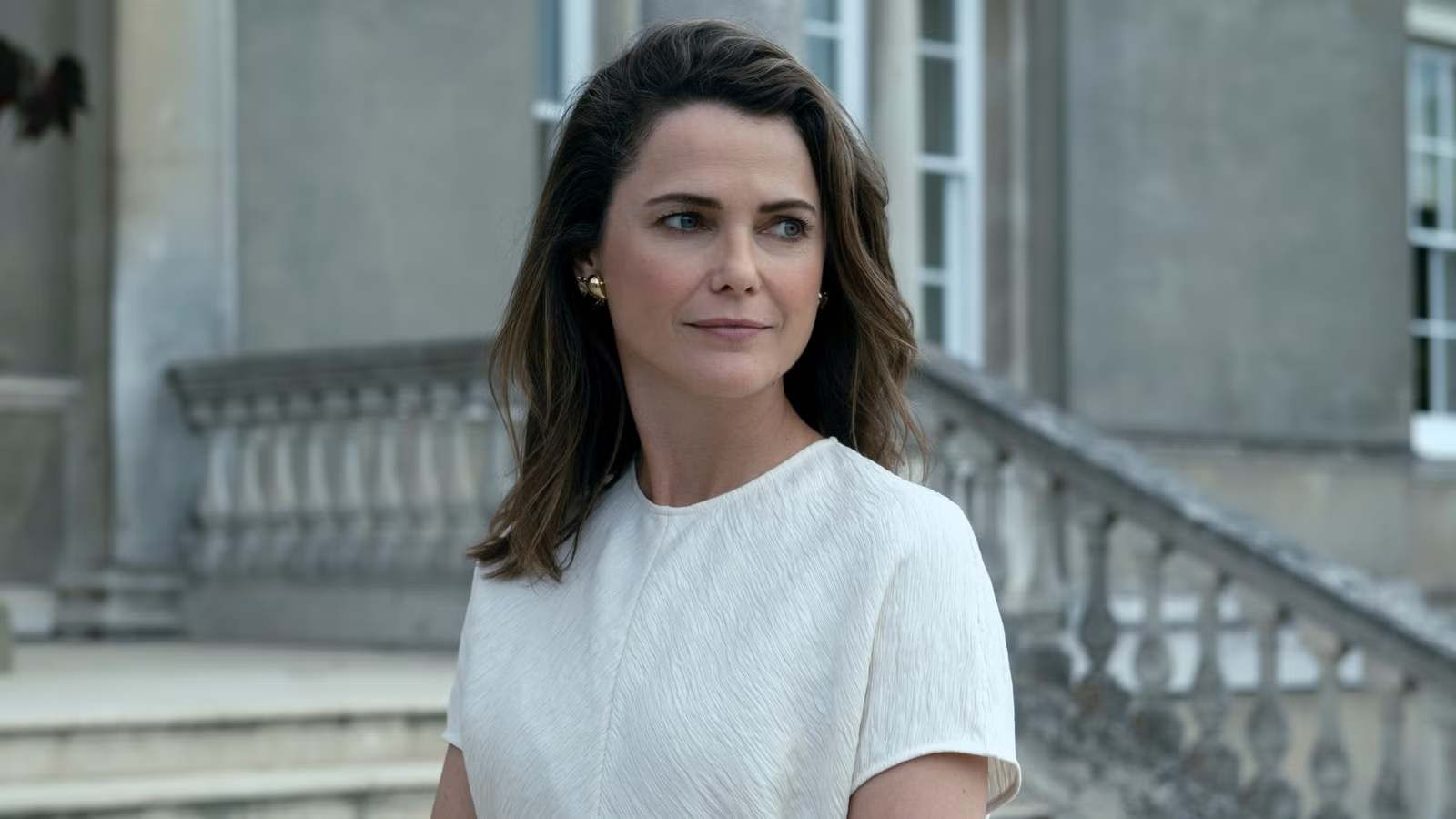
Full spoilers for The Diplomat Season 3 follow.
In an era where political dramas often choose between gravitas and entertainment, Netflix’s “The Diplomat” refuses to compromise. Season 3 of this exceptional series cements its status as the definitive political thriller of our time—a show that somehow bottles the aspirational idealism of “The West Wing,” the razor-sharp comedy of “Veep,” and the knife-edge tension of “House of Cards” into something that feels both comfortingly familiar and thrillingly original.
A Marriage Under Siege
At its core, “The Diplomat” remains a masterclass in dual storytelling. Yes, it’s about international intrigue, nuclear submarines, and presidential machinations. But it’s equally about Kate and Hal Wyler’s combustible marriage—a relationship that serves as both the show’s emotional anchor and its most unpredictable element.
Keri Russell and Rufus Sewell form the beating heart of this series, delivering performances so nuanced and lived-in that every glance, every cutting remark, and every moment of reluctant solidarity feels earned. These are two people who understand each other better than anyone else in the world, yet often can’t bear to occupy the same space. Their dynamic crackles with an electricity that makes even mundane diplomatic conversations feel like high-stakes warfare.
Season 3 opens precisely where Season 2’s cliffhanger left us: Vice President Grace Penn (Allison Janney, in a tour-de-force performance) has just ascended to the presidency following William Rayburn’s sudden death. The woman who orchestrated an attack on a British warship to prevent Scottish secession—all to preserve America’s nuclear submarine access in Europe—now holds the most powerful office in the world.
Power Plays and Personal Costs
The season’s early twist cuts deep. Kate, who was originally thrust into her ambassadorship as a potential VP candidate, watches as that coveted position goes to Hal instead. The decision forces the couple into a literal transatlantic separation, with Hal departing for Washington while Kate remains in London. It’s a geographical distance that mirrors the emotional chasm already dividing them.
This separation sets up one of the season’s most compelling arcs: watching two brilliant diplomats navigate not just international crises, but the dissolution of their partnership. By mid-season, they’ve officially separated, freeing Kate to pursue a romance with British political operative Martin (Aidan Turner of “The Hobbit” fame). Turner brings a smoldering intensity to scenes with Russell, though his character serves primarily as a vehicle to draw Kate into the season’s central mystery: a disabled Russian nuclear submarine stranded in British waters.
The Penn-Whitford Dynamic
If Russell and Sewell are the show’s heart, Allison Janney is its ruthless, brilliant brain. Janney imbues President Penn with such forceful determination that you almost forget the character is fundamentally morally compromised. She’s committed treason, yet Janney plays her with such conviction that Penn feels like someone who genuinely believes she’s serving her country—even as she serves herself.
The inspired casting of Bradley Whitford as Penn’s husband Todd creates a delightful meta-textual layer for “West Wing” fans. Watching these former colleagues now play spouses makes you completely forget their previous on-screen relationship. Whitford’s Todd provides both comic relief and genuine pathos as he navigates becoming what he jokingly calls the “First Lady.”
Their chemistry reaches its zenith in a late-season dinner scene that exemplifies why “The Diplomat” might be “Veep’s” only true successor. As Todd prepares oysters for the Wylers, he cuts his hand, bleeding all over the appetizer. What follows is a perfect encapsulation of political absurdity: four of the world’s most powerful people—the president, the vice president, the ambassador to the UK, and the first gentleman—squinting at shellfish, trying to distinguish blood from cocktail sauce. It’s simultaneously hilarious and horrifying, a moment of banal stupidity that perfectly captures our modern political reality.
A Supporting Cast That Delivers
While the leads command attention, “The Diplomat” succeeds because every character feels essential. The ensemble—including David Gyasi’s British Foreign Secretary Austin Dennison, Ali Ahn’s shrewd CIA Station Chief Eidra Park, Ato Essandoh’s steadfast Deputy Chief of Mission Stuart Heyford, Nana Mensah’s calculating White House Chief of Staff Billie Appiah, and Rory Kinnear’s complicated Prime Minister Nicol Trowbridge—elevates every scene.
Each performer brings such specificity to their role that even minor diplomatic skirmishes feel weighted with consequence. You find yourself paying close attention to throwaway lines because every character matters, every interaction builds toward something larger.
Pacing Issues and Genre Tropes
The season isn’t without flaws. After an explosive opening, the middle episodes meander somewhat, with the Russian submarine plot spinning its wheels before gaining traction. A mid-season time jump reinvigorates the momentum, propelling the remaining episodes toward a stunning finale that sets up intriguing possibilities for Season 4.
The show also occasionally suffers from what might be called “political TV-itis”—those moments where realism bends for dramatic necessity. A character who realistically would never secure a cabinet position suddenly has one. Crucial diplomatic situations unfold in exotic international locations when they’d logically happen in Washington. These are minor quibbles in a show that otherwise balances authenticity with entertainment so deftly.
A Feast for Political Drama Enthusiasts
What sets “The Diplomat” apart from its predecessors is its refusal to be just one thing. It’s simultaneously a tense political thriller, a sharp workplace comedy, a meditation on marriage, and a showcase for some of television’s finest acting. Creator Debora Cahn (a “West Wing” and “Homeland” veteran) understands that the best political dramas aren’t really about politics—they’re about people under extreme pressure making impossible choices.
The writing consistently surprises, finding humor in tension and gravity in absurdity. The show looks gorgeous, making full use of its London locations while never letting scenery overshadow story. And the performances are uniformly excellent, with Russell and Janney delivering career-best work.
The Verdict
Over three seasons, “The Diplomat” has evolved into the premier political drama on television. It’s smarter than it needs to be, funnier than you’d expect, and more emotionally resonant than most prestige dramas. Season 3 stumbles slightly in its middle chapters, but bookends those lulls with episodes so strong that the season ultimately soars.
Whether you’re a political junkie who lives for procedural details or a casual viewer who just wants compelling characters and sharp dialogue, “The Diplomat” Season 3 delivers. It’s a veritable feast of acting, writing, and laugh-out-loud moments wrapped around genuine stakes and real consequences.
In a television landscape crowded with political dramas, “The Diplomat” has established itself as the standard-bearer—a show that honors the genre’s traditions while forging its own distinctive path. Season 3 proves that the series is only getting sharper, smarter, and more essential.