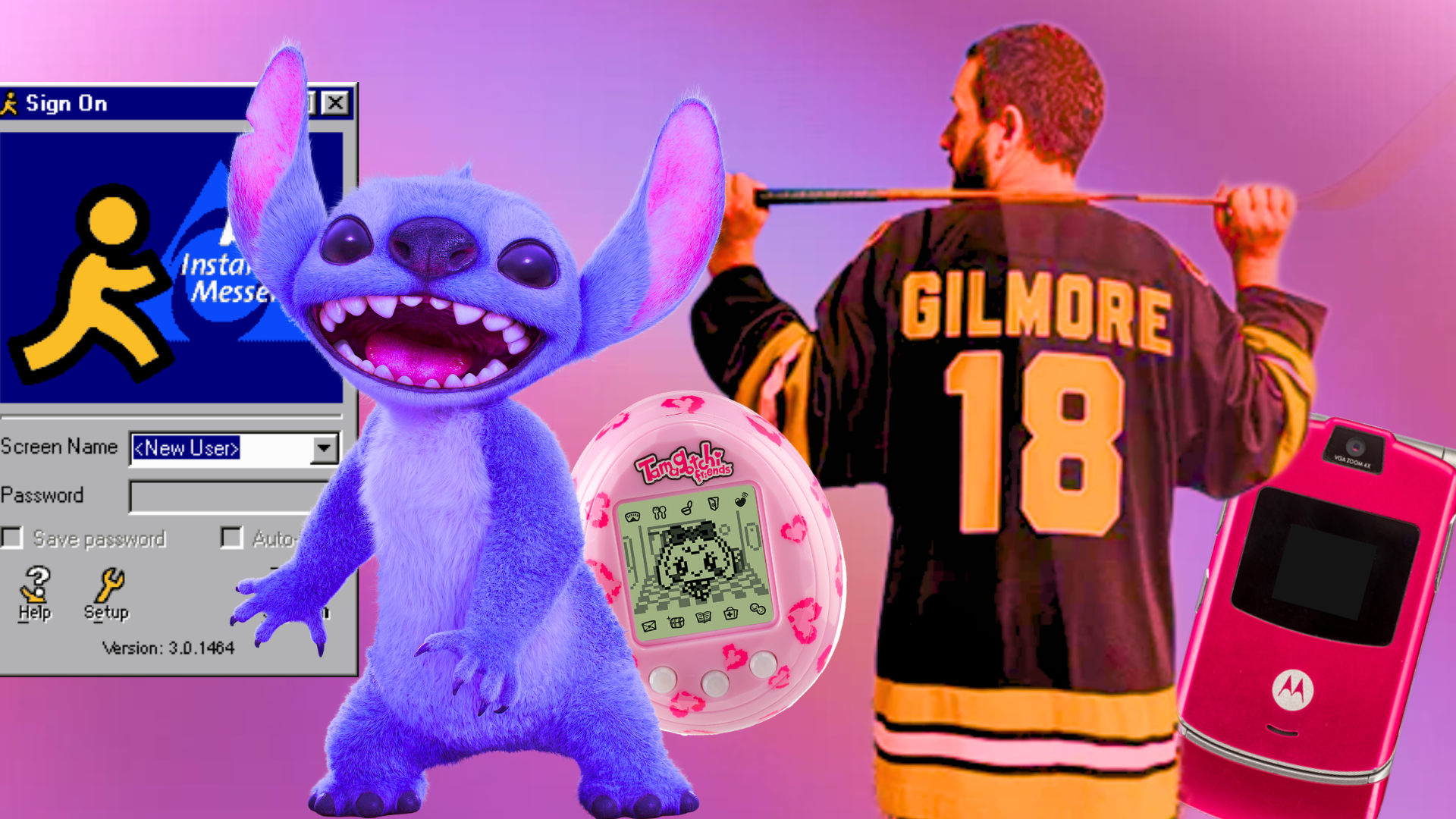
I was born in 1993. I grew up with dial-up internet, Blockbuster nights, and the golden age of Cartoon Network.
Like many millennials, I have a deep, almost sentimental attachment to the pop culture of my childhood. The music, the movies, the TV shows that shaped me. The early viral YouTube videos that were absolutely nonsensical. And like many millennials, I’ve noticed something unsettling: our nostalgia isn’t just a fond look backward; it’s become a cultural blockade, preventing new generations from having the same creative freedom we did.
We didn’t mean for this to happen. Nostalgia is a natural human impulse, a longing for the familiar in an increasingly chaotic world. But when nostalgia becomes the dominant force in entertainment, it stops being a comfort and starts being a constraint.
When Nostalgia Was a Disease
In 1688, Swiss physician Johannes Hofer coined the term nostalgia to describe a debilitating condition affecting soldiers, students, and servants displaced from their homelands. Symptoms included melancholy, confusion between past and present, even hallucinations. Doctors prescribed everything from leeches to opium—but the best cure was simple: going home.
By the 20th century, nostalgia had transformed from a medical diagnosis into a cultural phenomenon. As Svetlana Boym writes in The Future of Nostalgia, what was once considered a “passing ailment” became “the incurable modern condition.” And nowhere is this more evident than in today’s pop culture landscape.
The Remake Industrial Complex
Look at the 2025 box office:
- Snow White (live-action remake)
- Lilo & Stitch (live-action remake)
- The Naked Gun (remake)
- 28 Years Later (sequel)
- I Know What You Did Last Summer (reboot)
- Freaky Friday (sequel)
Even Happy Gilmore 2 broke Netflix streaming records.
This isn’t just a trend, it is an entire business model. Studios know that millennials, now in their 30s and 40s, are the ones with disposable income. And when faced with the choice between an untested original film and a familiar property, we’ll almost always choose the latter.
We complain that Hollywood is out of ideas, but we’re the ones paying for the same stories over and over. Who can blame us? If you have a spouse and kids, it could be up to $100 just to go watch a movie in theaters. Why risk a possible bad, original movie when it might be free on streaming in a couple months anyway? This wasn’t always the case. When Lilo & Stitch first came our in 2002, a child begging their parents to go see it was all it could’ve taken to go to the theaters that weekend.
Now, movies can’t just appeal to the kiddos though, it has to appeal to the parent too. And studios need more than just families to go see these movies. They need all movie goers to shell out for a ticket in order to feel as if they investment in these movies was “worth it.” So, it’s just natural to target the age group who may feel nostalgic about a movie release vs. a younger audience who don’t have any sort of power anyway.
The Pop-Punk Time Machine
A strange thing is happening in music too: bands that (for a lack of a better term) “peaked” 20 years ago are suddenly back on the radio. All Time Low, The All-American Reject, Yellowcard, AFI, Good Charlotte—all releasing new music that sounds like it was pulled straight from a 2005 Warped Tour lineup.
Don’t get me wrong, I love this. I hope all these bands continue their success forever, but think about how bizarre it would’ve been if, in 2005, a once popular 1985 band, who was ultimately forgotten by mainstream media suddenly topped the charts again. It would’ve felt like a glitch in the matrix. Yet today, it’s normal.
Why? Because millennials are the ones streaming, buying concert tickets, and shaping algorithms. The music industry isn’t catering to Gen Z or Gen Alpha—it’s catering to us.
The Death of Counterculture
Every generation has its counterculture—the underground music, fashion, and art that rebels against the mainstream. For boomers, it was Woodstock and punk. For Gen X, grunge and hip-hop. For millennials, it was emo, indie sleaze, and early internet weirdness.
But here’s the problem: millennials took our counterculture mainstream and never let go.
Instead of allowing new generations to develop their own movements, we’ve forced them to exist within our cultural framework. Kids today don’t get to organically discover their own tastes—they’re handed ours, repackaged and resold.
The Algorithmic Feedback Loop
Millennials were the first generation to grow up online, and our digital habits shaped the internet as we know it. Social media, streaming platforms, and recommendation algorithms all evolved to serve our preferences.
Now, when a Gen Alpha kid watches YouTube or TikTok instead of traditional TV, it’s not because they’re rejecting originality—it’s because originality isn’t being made for them. Mainstream media is still chasing millennial dollars, leaving younger audiences to find their own spaces online.
And when we criticize them for it, we’re ignoring our own role in creating that reality.
The Political Backslide of Pop Culture
After the 2024 election, media companies began rolling back diversity initiatives, removing LGBTQ+ storylines, and shifting toward “safer,” more centrist content. On the surface, this seems like a reaction to political polarization—but the truth is more cynical.
Gen Z and Gen Alpha are the most progressive generations in history. If only their votes counted in 2024, the election would’ve looked very different. So why would studios move away from progressive content?
Because millennials are the ones with the money. And if nostalgia sells better than progress, corporations will keep feeding it to us.
Breaking the Cycle
None of this is malicious. Millennials aren’t trying to stifle creativity. We just want to enjoy the things we love. But if we don’t step back, we risk turning pop culture into a museum of our own childhoods.
So what do we do?
- Support original content. Next time you’re at the movies, skip the remake and take a chance on something new.
- Let go of the past. It’s okay to love the things we grew up with, but we shouldn’t demand that newer generations love them the same way.
- Listen to younger voices. If we want pop culture to evolve, we need to make space for the next counterculture—not just recycle our own.
Nostalgia doesn’t have to be a prison. It can be a foundation—a way to honor the past while leaving room for the future. But right now, we’re not building on it. We’re just living in it.
And if we don’t change that, the next generation might not get a chance to build anything at all.